
Shruti Mittal
Product Manager @ Cloudflare
About
I’m the host of Shoptalk with Shruti Mittal (https://open.spotify.com/show/5VGxPVjQlsMNOSePG5GD7g?si=kFlUphoBS8GWGUgg1Atmqw), a modern podcast exploring health, fitness, nutrition, and the psychology behind everyday decisions. I’m deeply curious about why we eat what we eat, buy what we buy, and how culture, media, and science shape our choices.If there’s a topic you think we should dive into, I’d love to hear from you at shoptalkwithshruti@gmail.com. And if you’d like to collaborate, feel free to message me here on LinkedIn.I also founded Getting Candid (https://the-shruti-mittal.medium.com/), an interview series featuring global leaders across product, design, and business. I’ve had the opportunity to speak with leaders like Michelle Parsons (CPO, Hinge; previously Netflix & Spotify), Anneka Gupta (CPO, Rubrik; Stanford Lecturer), and Khalid El Khatib (CMO, Stack Overflow), among others. Through these conversations, I’ve explored product strategy, leadership journeys, and the realities of building influence, while also creating space for conversations around women in tech, ambition, and navigating high-performance environments.Professionally, I’m a Product Manager at Cloudflare, where I work on internet-scale infrastructure powering ~20% of the web. I lead product strategy across DNS and network security products, defining roadmaps, and driving execution across cross-functional teams. My work involves partnering with enterprise customers operating at massive scale and shipping products that demand performance, reliability, and real-world impact.Previously, at Sprinklr and Contentstack, I built and scaled enterprise SaaS products and worked closely with global several global customers. My approach has always been rooted in customer insight, data, and sharp prioritization.I studied Electrical and Computer Engineering at Carnegie Mellon University (MS, 3.9 GPA) and IIT Guwahati (B.Tech, 8.92 GPA, Minor in Computer Science), which gave me a strong technical foundation to build products that operate in complex systems.What defines me is simple. I’m someone who can move from ambiguity to clarity, connect technical depth with business outcomes, and communicate effectively from engineers to executives. I care deeply about building things that matter, asking better questions, and continuously refining how I think.I’m always interested in meaningful conversations, collaborations, and ambitious ideas. Feel free to reach out.
United States
San Francisco
Computer Software
Business Analysis, Operational Excellence, Transparency, Key Metrics, Technical Understanding, Networking Products, Market Requirements Documents, Acceptance Testing, User Stories, Critical Thinking, Teamwork, Strategy, Business-to-Business (B2B), Documentation, Business Requirements, Presentations, Customer Satisfaction, Google Workplace, Oral Communication, Attention to Detail
Experience

Product Manager
Cloudflare

San Francisco, California, United States

Product Manager Intern
Contentstack
San Francisco, California, United States
- Led Requirements Gathering through UX Research & customer feedback calls, pinpointing pain points from 9+ customers. This informed the enhancements for 2 Contentstack products: Releases and Workflows - Strategic Prioritization: Aligned Feature Requirements with business goals, analysis of growth metrics and market potential, driving strategic cohesion - Competitive Edge through Analysis: Executed Comprehensive Competitve Analysis across 4+ competitors to spotlight high-impact features, enhancing competitiveness

Senior Product Analyst
Sprinklr
Gurugram, Haryana, India
- Collaborated seamlessly with design and engineering teams, conducted thorough market research, engineered a comprehensive product roadmap, crafted precise product requirement documents, analyzed intricate business requirements, and leveraged valuable customer feedback to develop impactful CCaaS features. - Orchestrated the delivery of personalized solutions for large-scale customers, guiding the product from discovery through User Acceptance Testing (UAT) to a successful product launch, ensuring the realization of desired business outcomes. - Secured new customers by delivering tailored product demos to prospects, effectively showcasing the product's value proposition and successfully converting them into satisfied customers.

Associate Engineer
Qualcomm
Hyderabad, Telangana, India
As a part of the RFSW (Radio Frequency Software) - Calibration team, the objective was to create services to automate the calibration of mobile devices and the characterization, that is, measuring and hence automating the computation of the Tx, Rx and FbRx (Feedback loop) powers with different input parameters changing. My task was to create an Antenna Switching Diversity Characterization service, where the Transmission and Receiver powers were to be measured and later computed with respect to switching antennas(the input parameter), which is an important phenomenon to improve radio communication and increase the probability of better and more accurate reception of data packets at the receiver. The task was based on coding in C and C++.

Researcher
Indian Institute of Technology, Guwahati
Guwahati, Assam
Massive Machine-Type Communications The objective of this project is to explore the feasibility of multiplexing data using hundreds of antennas to a massive number of IoT devices that are likely to be connected to the network in 5G cellular systems. Massive connectivity deals with a large number of Internet of Things (IoT) devices (generally greater than 1 million) connected to a single cell having a finite number of antennas, of which a maximum of a certain fraction of the total devices are assumed to be active at all times owing to the sporadic nature of traffic in any coherence interval. The main study is to identify the activity of the devices and jointly estimate the channels in use, followed by performance analysis of activity detection and channel estimation by essentially measuring the probability of false alarms and missed detection.
Interim Engineering Intern
Qualcomm
Hyderabad, Telangana
Summer Internship 2019 with Qualcomm: The objective was to generate a Qualcomm Test Framework consisting of several virtual access points and virtual mobile stations implementing the concept of roaming, based on factors such as SSID, BSSID, preferred Channels and distance from the respective access points. The project also tested and studied the various kinds of frames that could be exchanged between the access points and the mobile stations (sniffing of packets implemented using WireShark), especially the edge case frames and unexpected frames that could result in errors, and trained the mobile stations to handle these exceptions. The project was completed and required major use of coding in C language.

Lecture Series and Pro-Nites Head
Techniche, IIT Guwahati
Guwahati, Assam
To head a group of 8 Lecture Series and Pro-Nites event organizers involved in inviting eminent speakers and established personalities from all walks of life to deliver a Keynote lecture at Techniche, the annual Techno-Management festival of IIT Guwahati along with inviting and organizing performances ranging from Technical to Cultural interests for Pro-nites during Techniche.
Lecture Series and Pro-Nites, Events Organizer
Techniche, IIT Guwahati
Guwahati, Assam
To organize Lecture Series event for Techniche 2017, which included inviting eminent personalities to deliver a keynote lecture from a wide range of fields including Technocrats, Scientists, Astronauts, Nobel Laureates, Architects and Designers. As a part of the Pro-nites organizing team, the task was to invite and organize fun-filled and interesting technical and cultural performances during Techniche, including performers from all over the world.

Researcher
Hanyang University
South Korea
Interval Type-2 and General Type-2 Approach to Affinity Propagation Devising an algorithm to apply Affinity Propagation clustering technique to Interval Type-2 and General Type-2 fuzzy sets followed by applications on image segmentation, to significantly improve the results of unsupervised clustering. Affinity Propagation(AP) is an unsupervised clustering algorithm that does not require the number of clusters to be pre-determined or estimated. AP initially considers all of its pattern points to be exemplars(that is, cluster prototypes) and evaluates a similarity matrix that measures the similarity between two points selected from the dataset. Depending on these similarities, responsibility and availability matrices are obtained, from which, the final clusters and exemplars are resulted. In case of Crisp AP, or AP using the idea of classical sets, this similarity matrix is obtained using distances. However, in real-life practical examples, fuzzy sets come into the picture and hence in my proposed algorithm, I extended this algorithm to IT2 and GT2 AP. The idea was to consider a fuzzifier denoted by β to measure the membership value of a pattern set to a particular cluster, which could now range from [0,1]. On performing type-reduction, defuzzification and hard-partition, clusters were ultimately obtained. The number of clusters could be varied and adjusted as required by varying the parameters like the damping factor and the Cluster Threshold Scalar.
Researcher
Hanyang University
South Korea
Interval Type-2 and General Type-2 Approach to Possibilistic Fuzzy-C-Means Extending possibilistic fuzzy-c-means clustering algorithm to type-2 fuzzy sets to account for fuzziness in various parameters of clustering to result in better accuracy and enhanced robustness. PFCM was an improvement over previously introduced Fuzzy C Means(FCM ), Possibilistic C Means(PCM) and Fuzzy Possibilistic C Means(FPCM). PFCM produces memberships and possibilities simultaneously, along with the usual point prototypes or cluster centers for each cluster. PFCM is a hybridization of possibilistic c-means (PCM) and fuzzy c-means (FCM) that often avoids various problems of PCM, FCM, and Fuzzy Possibilistic C Means(FPCM). PFCM uses a fuzzifier denoted by m to determine the membership values and η to determine the possibilities or typicalities of a datapoint belonging to a particular cluster(which can range from [0,1] as PFCM uses type-1 fuzzy sets). In my proposed algorithm, I used a range of fuzzifiers [m1,m2] and a range of the parameter [η1,η2] to account for type-2 fuzziness.These ranges resulted in a range of membership vales and possibility values, which was taken as a uniform distribution in case of IT2 PFCM and as a particular secondary grade membership function in GT2 PFCM. On performing type-reduction using EIASC algorithm, defuzzification and hard-partition, desired clusters were obtained.

Internship Trainee
Tata Communications
Pune Area, India
-Evolution of Wireless technology from 2G, 3G, 4G and now 5G networks. -Parameters used to design an RF network for a Geography, such as coverage, throughput, Capacity and clutter in terms of urban/suburban/rural areas -Interference mitigation techniques and related link budgets. -Techniques for larger throughput and coverage such as MIMO and Beamforming by way of multiple antennas -Internet Protocol: OSI Layers, TCP/ IP, LAN, WAN, IPv4, IPv6, Routing Protocols (EIGRP, OSPF, BGP, RIP), Switching, VLANs, ACL, NAT -Transmission: SDH, PDH, Pulse Code Modulation, E1 frames, T Frames

Product Developement Team
ORACLE FINANCIAL SERVICES SOFTWARE LIMITED
Mumbai Area, India
OBP-Dev Team REST Service Generator : The purpose of this utility is to generate a REST Facade around the OBP Framework to expose OBP Application Services as REST API, complying to the Principles of the REST Architectural Style. This utility was developed using JSON.simple (Apache) libraries to parse and retrieve JSON information from the REST Resource Configurations and using JavaParser ( an Abstract Syntax Tree (AST) parser) for Java code generation. Additionally, it involved dynamic generation of JSON configuration for Swagger Documentation based on the REST Resource Configurations.
Education

Carnegie Mellon University
Electrical and Computer Engineering
Engineering Courses: Entrepreneurial Engineering, Networks in the Real World, Computational Problem Solving, Modern Computer Systems, Building Reliable Distributed Systems Product Courses: Management of Research, Development and Innovation, Launching New Products, Pricing Strategy for Products and Services, Agile Methodologies, UX Research, Data Analytics with Tableau, Negotiation, A/B Testing

Indian Institute of Technology, Guwahati
Electrical, Electronics and Communications Engineering
Key courses taken: Information Theory and Coding, Communication Networks, Electromagnetic Theory, Pattern Recognition and Machine Learning, Computer Architecture, MIMO Wireless Systems, Microwave Engineering, Microwave Engineering Lab, Fundamentals of VLSI CAD, Data Structures and Algorithms; Analog Integrated Circuits; Digital Signal Processing; Digital Circuits and Microprocessors(with laboratory); Linear Algebra; Introduction to VLSI (with Laboratory); Communication Systems (with Laboratory); Real and Complex Analysis; Probability and Random Process; Principles of Communication; Measurement and Instrumentation; Signals and Systems; Semiconductor Devices; Theoretical Foundations of Computer Science; Calculus; Differential Equations, Control Systems; Digital Signal Processing.
Shruti Mittal's Contact Information
Phone
Find the Right Leads
Find Verified Contact Data

What LeadContact does well
Find verified emails, phone numbers, and decision-makers with 98% accuracy.

Find Leads
Find the right people by company, role, industry, location, and more.
925M+ professional profiles


Find Emails
Access verified email addresses for your target contacts.
657M+ emails


Find Phone Numbers
Get cross-validated phone data from multiple top sources.
239M+ phone numbers

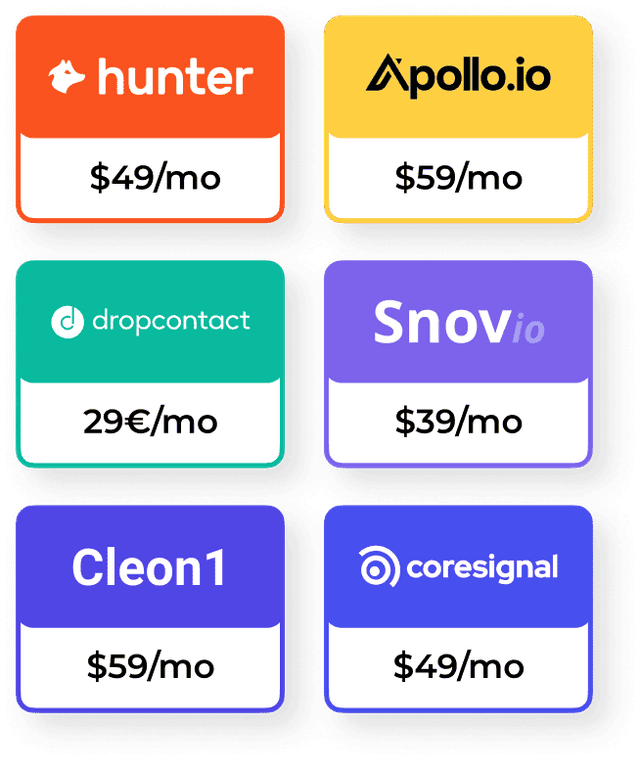
More Accurate. Lower Cost.
Find contact data in 1 tool with 98% accuracy
LeadContact integrates leading enrichment tools to deliver more accurate contact data—without paying for each one.

Great conversations start with the right contact.
It’s time to find yours.