
Rupasri Chalavadi
Data Scientist @ Layer Health
About
Email: rupasri.chalavadi@gmail.com I'm a recent graduate from Johns Hopkins University (May 2025) with a background in Computer Science and Neuroscience, and an MSE in CS with a focus on data science. My passion lies at the intersection of data science, machine learning, and medicine. I’ve worked on projects spanning medical imaging, healthcare datasets, and neuroscience research—especially in applying computer vision and ML to complex biomedical problems. These days, I’m diving deeper into clinical text data and the challenges (and opportunities!) it presents for automation and insight generation in healthcare workflows. I’m always eager to connect and chat about medical AI, NLP, brain-computer interfaces, and innovations in pharma, medical devices, and tech-enabled research. Let’s connect!
United States
Baltimore
Higher Education
Image Analysis, Machine Learning, SciPy, Convolutional Neural Networks (CNN), Statistical Modeling, Scikit-Learn, Seaborn, Critical Thinking, Compassion, Teamwork, Analytical Skills, Active Listening, Python (Programming Language), Java, C++, PyTorch, OpenCV, Neuroscience, ImageJ, C (Programming Language)
Experience

Data Scientist
Layer Health

Boston, MA
Leveraging Natural Language Processing to explore Medical Charts!

Undergraduate Researcher (Machine learning)
The Johns Hopkins University
Baltimore, Maryland, United States
Radiology and AI Laboratory (RAIL) at Johns Hopkins University Malone Center for Engineering in Healthcare. • Machine Learning in Python, with a focus on PyTorch, NumPy, Pandas, SciPy and SciKitLearn, to lead stroke damage prediction projects driven by deep learning approaches. • Pioneer the development of a deconvolution-free method using 4D CT perfusion (CTP) data. This approach predicts core and penumbra infarct volumes on MRI through an end-to-end neural-network-based methodology, addressing challenges in data-intensive deconvolution-based methods. • Analyze and process 4D CT perfusion data, extracting features using NumPy and Pandas. Utilize OpenCV for intricate image processing tasks ensuring robust handling of medical imaging data. • Implement and fine-tune neural network model architectures, largely CNNs, enhancing accuracy and efficiency of stroke damage predictions. Utilized Matplotlib and Seaborn for data visualization and model evaluation.
Teaching Assistant
The Johns Hopkins University
Baltimore, Maryland, United States
• Artificial Intelligence - Fall 2024 • Computer Vision - Spring 2024 • Cognitive Neuroscience - Spring 2023, Spring 2024 • General Physics 2 for Engineering - Spring 2024 • General Physics 1 for Engineering - Fall 2023
Patient Educator
Johns Hopkins Hospital
Baltimore, Maryland, United States
• Patient education volunteer as part of the Violet Project from the Johns Hopkins Hospital Ob/Gyn department working to discuss with and educate patients regarding menstrual, sexual, and reproductive health in the Pediatric Emergency Department, Harriet Lane Clinic. • Developed and conducted 3-month-long educational workshops on menstrual, sexual, and reproductive health at Baltimore City Schools.

Software Engineer Intern
Johns Hopkins Applied Physics Laboratory
Baltimore, Maryland, United States
Dept: Research and Exploratory Department (REDD) Human and Machine Intelligence Research Group Project: Cohort Research Investigating Micro-Scale Optimized Networks • Engineered a novel, computationally efficient approach to cell segmentation using virtual agents. • Published results in "A Novel Semi-Automated Proofreading and Mesh Error Detection Pipeline for Neuron Extension." DOI: https://doi.org/10.1101/2023.10.20.563359. • Worked primarily in Python using NumPy, Pandas, SciKit Learn, PyTorch, OpenCV, and Trimesh for robust automation of meshes representing cells and synaptic connections for automating cell segmentation extension. • Designed and deployed an advanced error detection pipeline for forward and reverse neuron extension on the MICrONS dataset. Successfully recovered 2.8 million synaptic sites for 4138 unique neurons with an 80% accuracy rate. Utilized Matplotlib and Seaborn for data analysis and visualization.
Data Science Intern
Johns Hopkins Applied Physics Laboratory
Laurel, Maryland, United States
Dept: Research and Exploratory Department (REDD) Human and Machine Intelligence Research Group • Developed a Proofreader Evaluation and Analysis ToolKit (PEAK) in Python to analyze the performance of manual proofreaders in contributing edits to the cell segmentation of the Minnie65 MICrONS dataset. • This toolkit assesses proofreader performance using metrics (historical accuracy, time taken, perceived difficulty, etc.) to evaluate edits proposed across multiple proofreaders, predicting a singular edit per error (using the Bayesian paradigm) with an accuracy rate of 93.3% as compared to 88% accuracy for conventional methods of combining edits from multiple proofreaders. Statistically proved significance of data. • Poster presentations: NIH BRAIN initiative's 9th Annual conference (June 2023); Johns Hopkins School of Engineering poster session (May 2023) - won the Deans’ Design Day award on behalf of the Applied Mathematics and Statistics Department; Johns Hopkins Undergraduate Research Symposium (April 2023).

Undergraduate Researcher
Johns Hopkins Medicine
Baltimore, Maryland, United States
• Worked as an undergraduate researcher at the Fuchs' Lab @Johns Hopkins Medical Institute to quantitatively analyze the density and distribution of 'ribbons' (biological structures) in the ear's inner hair cells in mice. • Analyzed the relationship between these ribbons and AMPA receptors in order to investigate the causes of age-related hearing loss. • Worked extensively with ImageJ in Fiji to analyze synapse densities, and the 3D visualization software IMARIS to analyze synaptic connections between inner hair cells and type II afferent neurons, arguing for a role in the pathway for noxious sound.

Student Researcher
International Institute of Information Technology (IIIT), IB Diploma program
Hyderabad, Telangana, India
• Supervisor: Dr. Deva PriyaKumar, Dr. Deepalatha Subramanian. • Worked with the computational chemistry software Gaussian09 to analyze the effects of isoelectronic substitutions of N+ and B- in place of C in the buckybowl Corannulene on its structural properties (electronic nature, size, position, and HOMO-LUMO gap energies) • Detailed research procedure and findings in a summary paper - attached below.
Education

The Johns Hopkins University
Data Science
The Johns Hopkins University
Computer Science, Neuroscience
Double Major in Computer Science and Neuroscience

Oakridge International School
Completed the International Baccalaureate Diploma Program (IBDP) with a 43/45 final score. Took IB Mathematics, Chemistry, Biology at the higher level, and Economics, Spanish, English at the standard level. Prior to this, completed the IB Middle Years Program (IB MYP).
Rupasri Chalavadi's Contact Information
Phone
Find the Right Leads
Find Verified Contact Data

What LeadContact does well
Find verified emails, phone numbers, and decision-makers with 98% accuracy.

Find Leads
Find the right people by company, role, industry, location, and more.
925M+ professional profiles


Find Emails
Access verified email addresses for your target contacts.
657M+ emails


Find Phone Numbers
Get cross-validated phone data from multiple top sources.
239M+ phone numbers

More Accurate. Lower Cost.
Find contact data in 1 tool with 98% accuracy
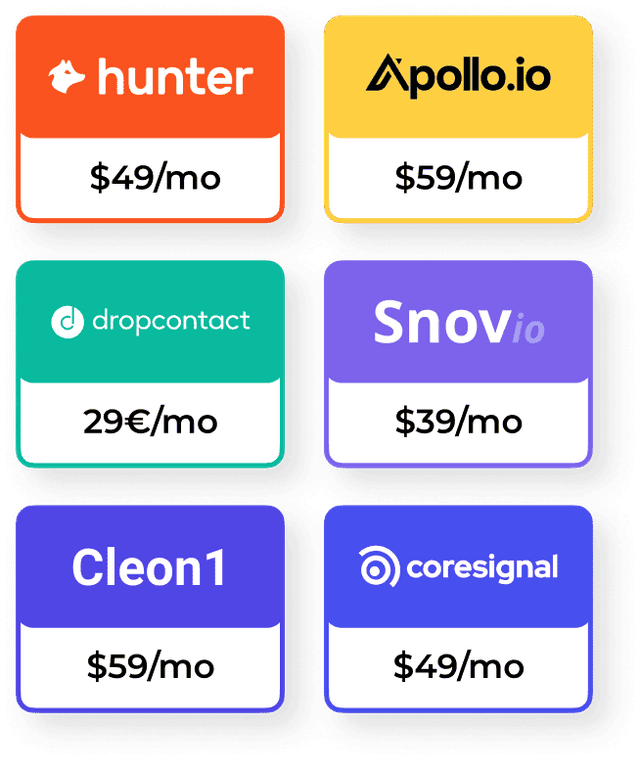
LeadContact integrates leading enrichment tools to deliver more accurate contact data—without paying for each one.


Great conversations start with the right contact.
It’s time to find yours.