
Jane Hartung
Senior Scientist @ Avista Therapeutics
About
Scientist and leader with a Swiss army knife of skills: patch clamp electrophysiology, small molecule drug discovery, calcium imaging, AAV gene therapy and platform development, rodent behavioral assays and surgeries, gene therapy payload development, molecular cloning, biochemistry, microscopy, and primary tissue culture.As a Senior Scientist at Avista, I help develop CNS-specific AAVs through an ML-driven Artemis platform and assess their efficacy using molecular and protein-based approaches. My roots are in electrophysiology — a field that gave me a deep appreciation for small molecules — but I've increasingly found myself drawn to the transformative potential of gene therapies and what they make possible.I earned my PhD in Neurobiology at UNC-Chapel Hill, where I built my foundation in rodent behavioral assays, small animal surgery, and biochemical methods. I then sharpened my skills as a postdoctoral fellow at the University of Pittsburgh, developing expertise in patch clamp electrophysiology in both human and rodent dorsal root ganglia.
United States
Greater Pittsburgh Region
Biotechnology
Neuroscience, Molecular Cloning, Cell Culture, Patch Clamp Electrophysiology, Data Analysis, Fluorescence Microscopy, Immunohistochemistry, Scientific Writing, Research, Electrophysiology, Calcium Imaging
Experience

Senior Scientist
Avista Therapeutics

Scientist II
Avista Therapeutics
Pittsburgh, PA
At Avista, my role has centered around the generation, discovery, and assessment of novel AAV capsids for use in gene therapies for diseases in the CNS and retina.

Postdoctoral Researcher
University of Pittsburgh
As a postdoctoral fellow in Michael Gold's laboratory, I characterized the functional properties human sensory neurons using patch clamp electrophysiology, with the aim of developing effective pain therapeutics. My research focused on nicotinic currents, voltage-gated calcium currents, voltage-gated sodium currents (NaV1.7, 1.8, and 1.9), as well as work on the effects of opioid receptors on voltage-gated calcium currents. My research has helped to describe critical functional differences in the density and types of currents/receptors expressed by human sensory neurons compared to sensory neurons from other, more commonly used animal models, such as those from mouse or rat.
Adjunct Lecturer
University of Pittsburgh
Adjunct Lecturer: Brain and Behavior (NRSCI0080) at the University of Pittsburgh
Education

The University of North Carolina at Chapel Hill
Neurobiology
As a graduate student at UNC, I studied the ways in which catecholamine dysregulation could lead to increased nociception. I used a variety of techniques to answer research questions. These included assessing animal behavior, immunohistochemistry, fluorescent microscopy, and biochemistry. While conducting pain and nociception research as a graduate student, I mentored four undergraduate and one graduate student. Through our shared efforts, these students and I worked to publish two different scientific articles. I successfully secured over $150,000 in grant funding from the National Institute of Health (NIH) during my tenure as a graduate student. These funds included the Ruth L. Kirschstein Graduate NRSA Institutional Research Training Grants (F31), in which I was scored in the top 5% of grant applicants.

Furman University
Biology
Jane Hartung's Contact Information
Phone
Find the Right Leads
Find Verified Contact Data

What LeadContact does well
Find verified emails, phone numbers, and decision-makers with 98% accuracy.

Find Leads
Find the right people by company, role, industry, location, and more.
925M+ professional profiles


Find Emails
Access verified email addresses for your target contacts.
657M+ emails


Find Phone Numbers
Get cross-validated phone data from multiple top sources.
239M+ phone numbers
More Accurate. Lower Cost.
Find contact data in 1 tool with 98% accuracy
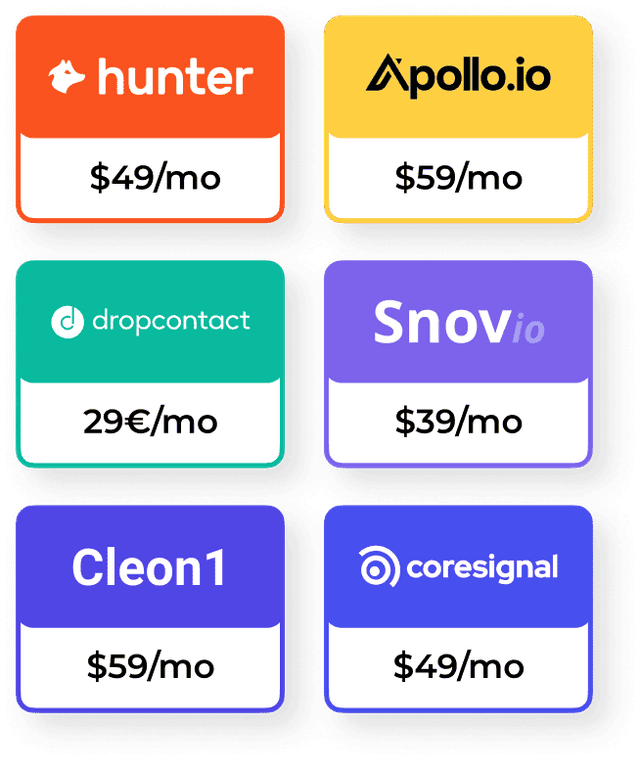
LeadContact integrates leading enrichment tools to deliver more accurate contact data—without paying for each one.

Great conversations start with the right contact.
It’s time to find yours.