
Muhammad Ali, Ph.D.
Development Engineer @ Morphotonics
About
I'm a Ph.D. physicist with 5+ years of hands-on R&D experience in optical systems, precision metrology and product validation , currently based in Eindhoven at the heart of the Brainport high-tech ecosystem.My work spans the full development cycle: from defining functional requirements and writing test plans, to executing validation protocols and reporting results to stakeholders, both internal teams and external customers. I've worked on optical characterization of nanoimprinted precision components, electro-optical device qualification, and functional system validation in EIC-funded R&D programmes.Beyond the lab, I'm experienced in supplier evaluation, cross-functional team coordination, and translating technical findings for non-specialist audiences, skills I actively apply and continue to develop.I thrive in roles where physics meets engineering rigour: whether that's functional/systems design, characterization and metrology, product development or R&D research engineering. I'm comfortable operating in structured, documentation-driven environments as well as early-stage exploratory R&D. I have studied and worked across six countries and collaborated with universities, research institutes, and industry partners internationally such as to name a few, RIKEN (Japan), Polish Academy of Sciences (Poland) and NanoLab (The Netherlands).
Netherlands
Eindhoven Area
Research
Process Validation, Material Characterization, Minitab, Quality Control, FIB-SEM x-section, Confocal Microscopy, Zemax, OpticStudio, Introduction to Zemax OpticStudio, Morphology, Rehology, Polymers, UV/Vis Spectroscopy, Optimization, Clean Rooms, Documentation, Product R&D, Root Cause Analysis, Functionality, Design of Experiments (DOE), Data Analysis
Experience

Development Engineer
Morphotonics

Veldhoven
- Lead end-to-end supplier evaluation and technology selection for 100% defect inspection on bare and imprinted wafers, managing feasibility assessment, tool benchmarking, stakeholder alignment and production line integration planning. - Optical characterization of polymer-resin–imprinted nanostructures on glass, plastic, and silicon substrates for augmented reality (AR) and display applications (surface inspection using confocal microscopy and nanostructure analysis using FIB-SEM cross-sections). - Internal validation/quality check of the product, leading external validation activites such as collaborating externally to expand metrology solutions, including access to FIB-SEM through NanoLab Eindhoven. -Developing and standardizing advanced metrology methods in line with customer sampling requirements. - Performing defect analysis, assessing the quality of incoming materials, and establishing quality standards for the in-house research and applications team, such as substrates characterization using advanced optical tools (analyzing defects such as particles, stains, scratches, and film voids). - Driving process validation and quality checks in collaboration with R&D teams, production, and external partners. -Mentoring university students for their internship projects. Summary: I lead both internal and external validation of products and processes, working closely with the research and development team. I oversee metrology solutions and act as the primary point of contact for external validation and metrological development activities. My responsibilities include enhancing and qualifying characterization tools, as well as conducting material and optical functionality characterization to ensure product performance and reliability.

Product Development Engineer
eyrise® (Closed)
Veldhoven, North Brabant, Netherlands
• Driving R&D initiatives to advance electro-optical systems, focusing on developing and optimizing next-gen technologies. • Executing detailed validation studies and process improvements to support new technology introduction. • New equipment recognition, qualification, and introduction to production and pilot lines, including surface characterization tools. Executing GR&R for new equipment. • Enhancing optical measurement systems by utilizing computational tools and simulations using Wolfram Mathematica, similar to Matlab, ensures high-quality and precise output aligned with performance and cost targets. Also using such tools for comprehensive data analysis. • Collaborating globally and cross-functionally to qualify materials, deploy technologies, and enhance operational outcomes. • Ensuring the quality and safety standards at R&D laboratories and the production site. • Visiting sites for product quality and root cause analysis for the reliability of the product. • Guiding workflow optimization and scalability while ensuring thorough documentation for stakeholders. Summary: I develop technology for liquid crystal-based smart windows focused on solar shading and privacy. My role centers on advancing electro-optics for thin films, refining processes, and improving product quality through computational tools, optical simulations, and rigorous experiments. I also collaborate with electronics, software, and engineering teams for seamless integration. My technical expertise spans thin-film electro-optics and pixel-level uniformity, enabling innovative solutions in a dynamic setting.
Postdoctoral Researcher
RIKEN
Wako, Saitama, Japan
Laboratory: Physicochemical Soft Matter Research • Collaborating extensively with cross-functional teams and external researchers to integrate findings into cutting-edge solutions. • Presenting and discussing experimental results with external collaborators. • Leading thermal and electro-optic anisotropic characterization to improve precision in measurement development. • Performing optical characterizations of microfluidic devices, focusing on soft condensed matter systems. • Conducting electro-optical characterizations of liquid crystal thin films using both numerical simulations (based on electromagnetic theory) and experimental methods. Summary: Characterization of modulated nematic phases (twist-bend and splay bend nematic) and ferroelectric nematic phase. I worked on the in-plane switching of the twist-bend nematic phase, so that the phase transition from twist-bend to splay-bend phase can be achieved. Such phases can be used in integrated optics. Moreover, I worked on the thermal anisotropic properties of twist-bend and ferroelectric nematic phases. This could help in better understanding of such exotic phases. As ferroelectric has a great potential to revive the liquid crystal display technology and as well as a great prospect for electro-optic, electro-mechanical applications.
Ph.D. researcher
University of Warsaw
Ph.D. Student
University of Warsaw
Warsaw, Masovian District, Poland
Faculty of Chemistry Project: Chiral structures by achiral molecular building blocks • Conducting literature reviews and data analysis using tools like Wolfram Mathematica and Matlab, supporting the development of advanced optical models and simulations. • Collaborating with leading research institutes and presenting findings at national and international conferences to drive innovation in optical technologies. • Managing time, tracking progress, and designing experiments for efficient execution of both theoretical and experimental work, ensuring alignment with project milestones. • Overseeing the maintenance and operation of clean room equipment, ensuring high-quality standards for optical research and experimentation. • Glenn Brown Prize Award from the International Liquid Crystal Society for Ph.D. Thesis. Summary: I worked on the electro-optical properties of soft condensed matter (Liquid crystals). Liquid crystals are best known for their application as displays (LCD: liquid crystal display). These liquid crystals can change their properties depending on factors like temperature and pressure. In my research work, I focused on a specific type of liquid crystal called bent-core liquid crystals. These materials can naturally form periodic patterns without any surface engineering, making them useful for creating diffraction gratings that can be used in beam steering devices and integrated photonics. This project was done in collaboration with the University of Maribor in Slovenia, where I did mathematical modeling, and the University of Warsaw in Poland, where I conducted experiments. Throughout my research, I worked closely with various teams, both within and outside my organization. I also had the opportunity to work on a related project involving Langmuir-Blodgett films at the Institute of Physical Chemistry, Polish Academy of Sciences, within their soft condensed matter group.

Junior Project Manager (Industry trainee)
Brainnest
Bremen, Germany
During this remote training, teamwork is being conducted on one of the partners' companies of Briannest (that is to improve the partners' company business by creating a project plan within the services provided by Brainnest).

Summer Research Intern
National Chiao Tung University
Taiwan
Project: Determination of fracture toughness of stainless steel by vicker indentation. The literature review was carried out on the mathematical modeling of different steel alloys characterized by vicker indentation and analysis of toughness behavior under irradiation.

Trainee Design and Application Engineer
Lean Automation
Abbottabad,Pakistan
Training Included, •Studied basics instrumentation •Learn basics control loops •HMI overview •PLC PROGRMING: •Learning ESD "EMERGENCY SHUTDOWN SYSTEM" for safety of whole plant and currently design the ESD for training purpose one of the project of LEAN.To understand ESD and implemented it on "TRICONIX" for specific ITR "Instrument technical room". •DCS “DISTRIBUTED CONTROL SYSTEM” implement different loops of P&IDs for learning process.
Internee
NTDC LAHORE
Ravi Grid Lahore
We gained experience in the following systems, •Transmission and distribution system of Wapda •Operation and maintenance of GIS •Maintenance and protection of power transformers •Maintenance of current transformers
Education

Univerza v Mariboru / University of Maribor
Physics
Experimental work and theoretical modeling was done at the Faculty of Chemistry, University of Warsaw, Poland and Faculty of physics, University of Maribor, Slovenia. Thesis Title: Spontaneous formation of polarization diffraction gratings by bent-core liquid crystals in the twist-bend nematic phase. I am also one of the awardees of Glen Brown Prize award for my PhD dissertation.
National University of Science and Technology "MISIS" (Moscow Institute of Steel and Alloys)
Science and Materials of Solar Energy
In this master's program, we learned the fundamentals of photovoltaics. The program was structured around theoretical knowledge of solar cell types (crystalline, thin film, multi- and single-junction, and emerging PV), materials, technology, and industrial applications (hybrid grid, BIPV, solar concentrators, and solar thermal). Additionally, the program included industrial visits to solar panel production facilities and techniques for material characterization, such as SEM, TEM, and X-ray analysis. The master's degree required the completion of a dissertation. Master's thesis: "Porous Silicon Photo-Electrodes for Splitting of water".
COMSATS Institute of Information and Technology
Electrical power Engineering
During the first two years, we focused on the fundamentals of various engineering fields, while the final two years were centered on specialization. My focus areas included control systems, electrical power generation, distribution, and power electronics. The final year was dedicated to completing a final-year project and dissertation to fulfill the degree requirements.
Muhammad Ali, Ph.D.'s Contact Information
Phone
Find the Right Leads
Find Verified Contact Data

What LeadContact does well
Find verified emails, phone numbers, and decision-makers with 98% accuracy.

Find Leads
Find the right people by company, role, industry, location, and more.
925M+ professional profiles


Find Emails
Access verified email addresses for your target contacts.
657M+ emails


Find Phone Numbers
Get cross-validated phone data from multiple top sources.
239M+ phone numbers

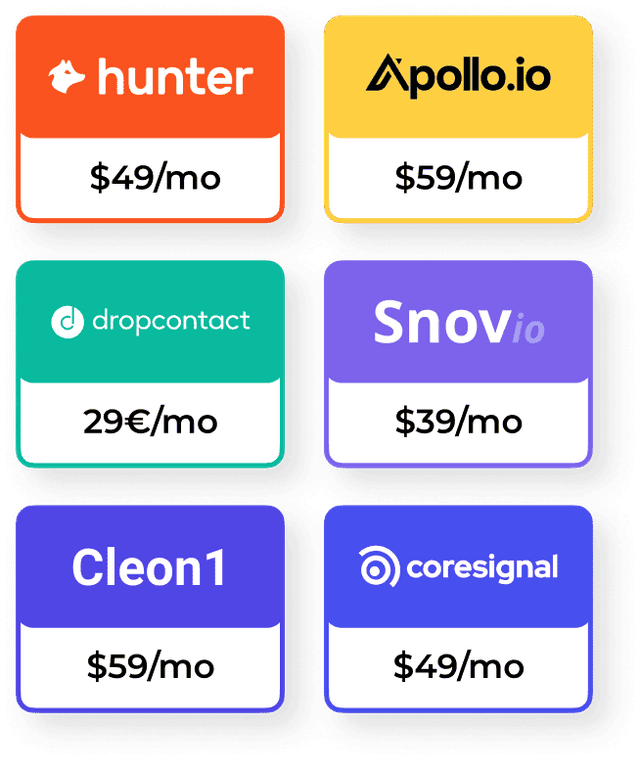
More Accurate. Lower Cost.
Find contact data in 1 tool with 98% accuracy
LeadContact integrates leading enrichment tools to deliver more accurate contact data—without paying for each one.

Great conversations start with the right contact.
It’s time to find yours.