
Zhongyu Mou
Research Advisor @ Eli Lilly and Company
About
AI/ML, cheminformatics, and ADME-Tox modeling for drug discovery, with a decade across global pharma, U.S. regulatory science, and national-lab research. Currently at Eli Lilly, embedded on small-molecule and ADC discovery programs while contributing to the ADME-Tox modeling roadmap. Scope spans model development and benchmarking, Matched Molecular Pair analysis, AI agent orchestration across cheminformatics workflows, and cross-site integration including the TuneLab federated-learning platform (Lilly 2025 Top 100 Innovation Award). Prior: cheminformatics leadership at Interline Therapeutics; regulatory-grade QSAR modeling at FDA (cardiotoxicity models on LeadScope); computational research at NIH and Oak Ridge National Laboratory. The pharma–regulatory–national-lab stack shapes a particular question habit — whether a prediction survives scrutiny from a chemist, a reviewer, and a regulator before whether a metric improved. Featured peer-reviewed publications include JACS Spotlights and Angewandte Hot Papers, with methodology work on useful-model criteria, applicability domain, and uncertainty quantification under publication.
United States
Indianapolis
Biotechnology
Density Functional Theory, Scientific Writing, Teaching, Quantum Mechanics, Protein Modeling, Structural Biology, Computational Biology, QSAR Modeling, Toxicology, Regulatory Science, Pharmacovigilance, Platform Engineering, Computer-Aided Drug Design (CADD), ADMET Modeling, Drug Discovery, Process Automation, ADMET, Data Visualization, Database Development, Biophysics
Experience

Research Advisor
Eli Lilly and Company

Indianapolis, IN
Embedded computational scientist on discovery programs across therapeutic areas and modalities, with shared responsibility for the ADME-Tox modeling roadmap. — PROJECT SUPPORT — ▪ Computational point of contact on small-molecule and ADC programs, working with medicinal chemists and ADME project leaders so predictions and SAR insights inform Go/No-Go decisions. ▪ Portfolio-first: define the question, then deploy the right tool — global ADME-Tox models, project-local models, SAR frameworks, or structure-based methods. ▪ Built a global Matched Molecular Pair framework from scratch — efficient database backend, accessible front-end, integrated into the design pipeline. Combines historical MMP analytics with an MMPT generative layer (transfer-learned foundation model + RAG). — MODEL AND PLATFORM BUILDING — ▪ Develop and deploy ADME-Tox models on Lilly's internal compute, including GPU-based training for deep-learning and foundation-model workloads. ▪ Operationalize multi-task learning, pre-trained representations, and modern deep architectures, ready for chemist use and design-platform deployment. ▪ Orchestrate AI agents across cheminformatics scripting, literature triage, data wrangling, and code generation to multiply throughput. ▪ Co-author Lilly's ADME-Tox benchmarking standard — defining model usefulness beyond accuracy via uncertainty quantification, applicability domain, explainability, and decision thresholds. — CROSS-SITE INTEGRATION AND FEDERATED LEARNING — ▪ Drove integration of ADME-Tox data and models across Lilly sites in Indianapolis, Louisville, Boston, and South San Francisco, including newly acquired subsidiaries and new modalities. ▪ Contributed to TuneLab, Lilly's federated-learning platform with Catalyst 360 — infrastructure integration, validation, and benchmarking. Recognized with the Lilly 2025 Top 100 Innovation Award. ▪ Assay-variability analyses that surfaced and corrected systemic multi-site data issues.

Senior Scientist, Computational & Cheminformatics
Interline Therapeutics
San Francisco Bay Area
Owned the cheminformatics and AI/ML modeling stack at a precision-medicine biotech, supporting compound design from hit ID through lead optimization. — PROJECT SUPPORT — ▪ Embedded computational scientist on discovery teams, owning the computational path end-to-end across multiple programs in parallel — choosing, orchestrating, and building the tools each program actually needed at each stage. ▪ Built AI/ML models for the core ADME-Tox endpoints driving compound design decisions — logD, permeability, intrinsic clearance, Kp,uu, and hERG inhibition. ▪ Integrated structure-based methods (docking, MD) and ligand-based workflows (2D/3D similarity, virtual screening, library curation and enumeration, fragment hopping) into a unified design hub. ▪ Operated at biotech startup speed — owned and built the computational stack hands-on as part of a small, fast-moving team, from infrastructure through model delivery. — PLATFORM AND DATA INFRASTRUCTURE — ▪ Led end-to-end automation of biochemical and ADMET data flow into a central data lake — built parsers, protocols, and pipelines that materially improved efficiency and data integrity. ▪ Acted as LiveDesign administrator — model building, deployment, and third-party software integration via API gateways and AWS services. Owned the unified design platform that other scientists used daily. ▪ Deployed GPU-based quantum mechanics methods for high-throughput conformer search and property prediction. ▪ Evaluated and integrated models from multiple third-party programs into a centralized environment, building in-house and vendor-hosted APIs to bring disparate tools under a single interface.
Scientific Researcher
FDA
Washington DC-Baltimore Area
Built regulatory-grade in silico toxicology capability within the FDA Office of Translational Sciences, working at the intersection of cheminformatics, ADME-Tox, and pharmacovigilance. ▪ Developed and deployed QSAR models covering 12 cardiotoxicity endpoints, integrating diverse data sources — clinical reports, drug labels, literature alerts, and FDA Adverse Event Reporting System (FAERS) data. Published in Chem. Res. Toxicol. (2024) and presented at the Society of Toxicology. ▪ The resulting models are now hosted on industry-standard in silico toxicology platforms (LeadScope and MultiCase), providing public access for researchers worldwide — a tangible regulatory science contribution beyond the typical project lifecycle. ▪ Curated cardiotoxicity databases via natural-language-based data mining of chemical structures, ADME(Tox) properties, and pharmaceutical registrations, supporting downstream pharmacovigilance efforts. ▪ Served as a reviewer for the FDA Office of the Chief Scientist Grant Program, evaluating proposals for impact and methodological rigor.

Staff Scientist
The National Institutes of Health
Bethesda, MD
Applied interdisciplinary computational methods — bioinformatics, structural biology, molecular dynamics, and machine learning — to questions in human microbiome biology and viral infection mechanisms. ▪ Mapped the taxonomic distribution of histamine-secreting bacteria across the human gut microbiome, combining comparative genomics, bioinformatics, and structural biology approaches. First-author publication in BMC Genomics (2021). ▪ Investigated SARS-CoV-2 vs. SARS-CoV spike–ACE2 binding dynamics by integrating molecular dynamics, free-energy perturbation, and machine learning — identifying critical interactions underlying viral infection. Published in J. Phys. Chem. Lett. (2021).

Postdoctoral Researcher
Oak Ridge National Laboratory
Oak Ridge, TN
Postdoctoral research at the interface of machine learning and quantum mechanics, applied to enzyme engineering and reaction mechanism elucidation. ▪ Designed a machine learning protocol integrating quantum mechanics, protein modeling, docking, ligand fingerprints, and experimental assays to predict enzyme–substrate specificity for bacterial nitrilases. First-author publication in Proteins (2021). ▪ Authored three quantum-mechanical mechanistic studies — dimethylmercury formation on sulfide mineral surfaces, Co(salen)-catalyzed lignin oxidation, and Kraft-pulping pretreatment chemistry — all peer-reviewed.

Research Assistant
Georgetown University
Washington, DC
PhD research on the physical and chemical properties of organic radicals, using ab initio and density functional theory methods to quantify intermolecular interactions in π-stacked systems. ▪ First-author publications in J. Am. Chem. Soc., Angew. Chem. Int. Ed., and Chem. Eur. J. — featured as a JACS Spotlight (2016), an Angew. Chem. Int. Ed. Hot Paper (2017), and a Chem. Eur. J. Hot Paper (2015). ▪ Foundational training in quantum chemistry, electronic structure theory, and high-throughput computational methods that later transferred to ADME-Tox modeling and AI for drug discovery. ▪ Teaching assistant for organic chemistry (3 years), general chemistry, and analytical chemistry.
Education

Georgetown University
Computational Chemistry

University of California, Berkeley

Beijing Institute of Technology
Chemistry
Zhongyu Mou's Contact Information
Phone
Find the Right Leads
Find Verified Contact Data

What LeadContact does well
Find verified emails, phone numbers, and decision-makers with 98% accuracy.

Find Leads
Find the right people by company, role, industry, location, and more.
925M+ professional profiles


Find Emails
Access verified email addresses for your target contacts.
657M+ emails


Find Phone Numbers
Get cross-validated phone data from multiple top sources.
239M+ phone numbers

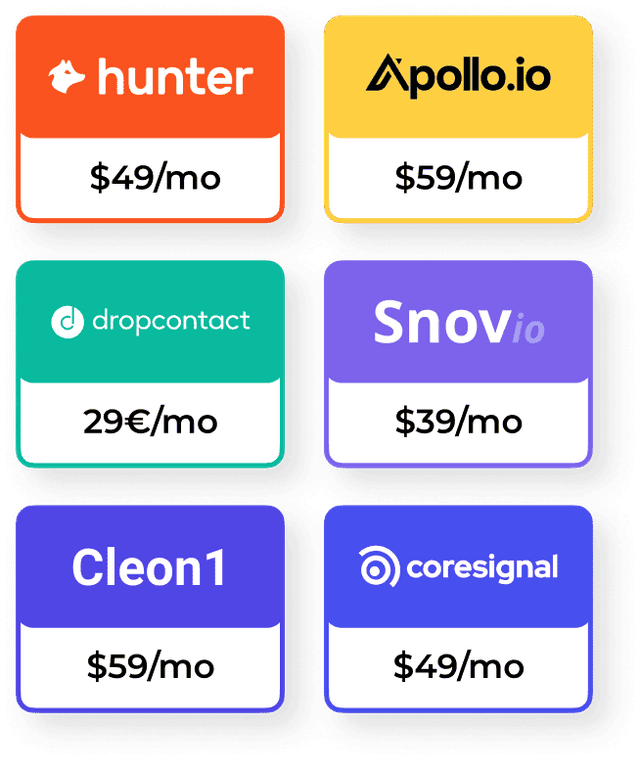
More Accurate. Lower Cost.
Find contact data in 1 tool with 98% accuracy
LeadContact integrates leading enrichment tools to deliver more accurate contact data—without paying for each one.

Great conversations start with the right contact.
It’s time to find yours.