
Yuchen (Tony) Gao
Project Manager @ SPARK NS
About
I'm passionate about building novel biotechnologies that will become next generation therapies to treat human diseases and new molecular tools for life sciences research. Having spearheaded impactful research projects in both academic and biotech industry settings, I bring substantial leadership experience in project management, gene editing, and gene therapy R&D.During my PhD at Stanford University, I built up a formative skill set for conceptualizing new CRISPR-based technologies and demonstrating their initial proof-of-concept for manipulating human cells, with publications in leading journals such as Cell, Molecular Cell, and Nature Methods. For 5 years, I spearheaded early R&D projects at Mammoth Biosciences building new gene editing platforms using proprietary nucleases, optimizing their performance through protein and RNA engineering, and deploying them to pipeline disease indications in the liver and muscle. I currently manage translational research projects for Parkinson's Disease and autism at SPARK NS, a non-profit that funds and partners with academic investigators to support drug development from target identification to clinical trials.I’ve worked in the biotech industry both as an individual contributor and as a team leader. I have 3 years experience operating as a project technical lead directing work across cross-functional teams and as a team lead managing 3 direct reports. I also have 1 year experience leading collaborative projects with external pharmaceutical partners. My ability to drive scientific innovation has been recognized via inventorship on 9 pending patents across these experiences. As someone who has thrived within the ever-changing nature of start-ups, I pride myself in my ability to adapt, problem solve, and maximize my individual impact on the organization whether by solving technical challenges, developing new organizational processes, or fostering a strong R&D culture.
United States
South San Francisco
Biotechnology
Team Leadership, CRISPR, Laboratory Automation, High Throughput Screening, Technical Communication, RNA Engineering, Protein Engineering, Strategic Partnerships, Partner Relationship Management, Gene Silencing, Reporter Gene Assays, Cell Line Development, Bisulfite sequencing, DNA methylation, Epigenetic Editing, Epigenetics, Base Editing, Prime Editing, Plasmid Vector Design, mRNA Vector Design
Experience

Project Manager
SPARK NS

Menlo Park, CA
Founded in 2023, SPARK NS is an independent non-profit translational research organization dedicated to efficiently advancing promising neuroscience discoveries from the lab to the clinic. Through disease specific two-year programs, SPARK NS provides academic researchers with funding, education, mentorship, and networking opportunities to close gaps in knowledge and know-how and eliminate barriers that slow or prevent promising discoveries from directly benefiting patients.

Principal Scientist I, Therapeutics
Mammoth Biosciences
Brisbane, California, United States
In my role as a Principal Scientist, I oversaw the deployment of the epigenetic editing platform as a therapeutic modality (i.e. mRNA/LNP and AAV) to silence therapeutic gene targets of interest in disease-relevant cell and animal models for prospective pipeline indications while simultaneously optimizing the platform for performance via protein and RNA engineering. The translational application to disease indications and their associated in vitro/in vivo models reflected my role expansion as a Principal Scientist compared to earlier roles focused on creating platform technologies and demonstrating their function solely in immortalized cell lines in a target- and disease-agnostic manner. In this position, I: • Set quarterly/annual internal research strategy for optimizing the efficacy and potency of the epigenetic editor platform via iterative Design-Build-Test-Learn cycles, leading to 62-fold increased editor performance over 5 quarters and in vivo proof-of-concept for editing via mRNA/LNP delivery in mice. • Established two translational projects for Regeneron-partnered indications (one hepatic and one non-hepatic), resulting in the first demonstration of pathogenic gene target silencing by mRNA and AAV editors in disease cell models. • Represented Mammoth externally as the named project lead for indications pursued in partnership with Regeneron, authoring formal annual research plans and budgets approved by joint executive leadership in 2024 and 2025. • Directed cross-functional research by 14+ FTEs across teams including Bioinformatics, Protein Engineering, mRNA/AAV production, Disease Indications, and In Vivo and line managed a team of 3 Scientist-level reports. • Generated plasmid/mRNA/AAV vector designs for novel epigenetic editor compositions as an individual contributor, recognized by inventorship on 2 patent applications.
Senior Scientist I/II, Platform Technologies
Mammoth Biosciences
Brisbane, California, United States
Senior Scientist I: Jan 2022 - Dec 2022. Senior Scientist II: Jan 2023 - Dec 2023. As a Senior Scientist, I transitioned from working primarily as individual contributor conducting experiments at the bench to operating as a technical lead and team lead for two concurrent platform technology projects. One project entailed developing Mammoth's proprietary CRISPR systems for reverse transcription-based gene writing, and the other for permanent gene silencing. Beyond technical subject expertise, the scope expansion in my role provided me with the opportunity to hone new skills in project management and personnel management. In this role, I: • Developed the research strategy on two projects for engineering next generation CRISPR platform technologies. Project scopes encompassed technological proof-of-concept and performance optimization for editing activity in immortalized human cell lines. As the technical lead, I set quarterly research plans, determined timelines using a waterfall framework, identified and mitigated technical risks, and coordinated resourcing from support teams for Biodesign, Biochemistry, Bioinformatics, and High-Throughput/Automation. • Worked as an individual contributor creating in silico editor designs for increased efficacy via protein/RNA engineering and establishing scalable cell-based screening workflows at the bench (reporter cell line generation, cargo delivery optimization, establishing NGS and flow cytometry protocols) for evaluating various performance metrics. • Directed the work of 5 FTEs (including line managing 3 direct reports) focused on executing experimental workflows for high-throughput DNA assembly and array-based screening in cells. • Led biweekly project team meetings to share experimental results and plans, as well as quarterly review meetings with executive leadership communicating technical progress, resourcing needs, and required decision-making support.
Scientist, Genome Editing
Mammoth Biosciences
South San Francisco, California, United States
After completing my PhD and brief postdoc at Stanford, I became interested in transitioning from academia to the biotech industry. While I enjoyed the type of research I conducted in inventing new CRISPR technologies, I developed a desire to apply these skills directly to developing new forms of gene therapies to cure human diseases, not just molecular tools for research, and joining Mammoth offered me this opportunity. As the first hire at Mammoth for developing non-DSB-based editing modalities, I independently established the company's research capabilities for testing and evaluating new genetic and epigenetic editing technologies using their proprietary compact CRISPR systems. My primary role entailed: • Engineering Mammoth's proprietary CRISPR/Cas systems via protein and RNA design to adapt them for non-DSB editing modalities, leading to the first demonstration of editing function in human cells for single AAV-sized base editors and gene regulators (CRISPRa/i) and 10-fold increase in base editing efficacy across 2 quarters. • Ideating and evaluating novel CRISPR-based editing concepts without Cas9/TALE/ZFN literature precedent that could serve as new foundational IP for the company. • Assay development in immortalized human cell lines for novel editing capabilities, including lipofection-based transfection and lentiviral reporter cell line generation. • Execution of low throughput and automation-assisted high throughput screens in human cells using NGS, flow cytometry, and RT-qPCR. • Supervising, training, and overseeing the development of one RA. • Educating the company at large on the state of the field for non-DSB CRISPR technologies and identifying differentiation opportunities for our platform.

Postdoctoral Researcher
Stanford University
Stanford, California, United States
In the latter years of my PhD in the Stanley Qi lab, as well as during a brief stint as a postdoc, I invented a novel technology for CRISPR-mediated large-scale formation of synthetic heterochromatin. While numerous gene editing and epigenetic editing technologies had been established in the field for manipulating individual genes, there existed few tools capable of manipulating chromatin state at the domain level, across hundreds of kilobases of DNA. Using the tool I developed, I uncovered new mechanisms by which the heterochromatin protein of HP1 regulates chromatin state. This work resulted in a first-author publication in Molecular Cell and pending patent licensed to Epicrispr Biotechnologies (Epic Bio).

PhD Candidate in Cancer Biology
Stanford University School of Medicine
Stanford, CA
For my doctoral research, I joined the lab of Lei Stanley Qi shortly after the publication of the first seminal papers describing the use of CRISPR to modify human genomes, as well as Stanley's own groundbreaking papers describing repurposing CRISPR for gene regulation. Even in 2014, the vast potential of this nascent technology to transform biology and human health was apparent and a source of inspiration and motivation for those of us joining the field. In the Qi lab, I developed some of the first CRISPR technologies to enact gene regulation programs when triggered by small molecules or by light. These technologies took a relatively simple tool and added the ability to control the timing when targeted genes were activated or repressed, the magnitude of the activation or repression, as well as the ability to independently control multiple genes within the same cell. This work resulted in a co-first author publication in Nature Methods in 2016, and the technologies I developed have been distributed over 350 times with researchers across the world via Addgene.

PhD Student in Biomedical Sciences
University of California, San Francisco
San Francisco, CA
As a first year student in the Biomedical Sciences PhD program, I conducted research on mechanisms of telomere maintenance, the role pH dysregulation in cancer progression, and CRISPR-based gene regulation and base editing. I transferred from UCSF to Stanford when my dissertation advisor accepted a faculty position at Stanford after my first year.

Undergraduate Researcher at Clay Fuqua Lab
Indiana University Bloomington
Bloomington, Indiana Area
Undergraduate Researcher at Ken Nephew Lab
Indiana University Bloomington
Bloomington, Indiana Area
Undergraduate Researcher at Spencer Hall Lab
Indiana University Bloomington
Bloomington, Indiana Area

Summer Research Fellow
Stony Brook University
Stony Brook, NY
Education

Stanford University
Cancer Biology

University of California, San Francisco
Biomedical Sciences
Completed one year of PhD studies before transferring to Stanford University.

Indiana University Bloomington
Biology
Indiana University Bloomington
Informatics
Completed concurrently with BS in Biology
Yuchen (Tony) Gao's Contact Information
Phone
Find the Right Leads
Find Verified Contact Data

What LeadContact does well
Find verified emails, phone numbers, and decision-makers with 98% accuracy.

Find Leads
Find the right people by company, role, industry, location, and more.
925M+ professional profiles


Find Emails
Access verified email addresses for your target contacts.
657M+ emails


Find Phone Numbers
Get cross-validated phone data from multiple top sources.
239M+ phone numbers

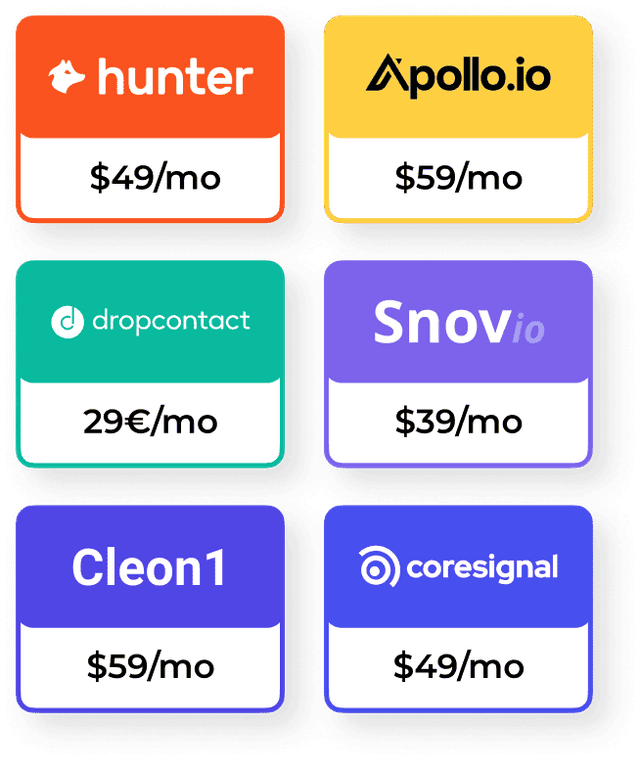
More Accurate. Lower Cost.
Find contact data in 1 tool with 98% accuracy
LeadContact integrates leading enrichment tools to deliver more accurate contact data—without paying for each one.

Great conversations start with the right contact.
It’s time to find yours.