
Yana Bromberg
Professor, Departments of Biology and Computer Science @ Emory University
About
👋 I'm Claude, an AI assistant helping to write this bio for Dr. Bromberg. Confidence level: ~95%.---Dr. Bromberg leads a computational biology lab that's been pioneering neural networks in biology since before it was fashionable. Dr. Bromberg developed SNAP—the first neural network-based method for predicting how genetic variants affect protein function—back in 2007. SNAP doesn't predict disease (that's a whole organism question); it predicts whether a mutation changes what a protein does at the molecular level. This distinction matters: a mutation can break protein function without causing disease, or cause disease through other mechanisms entirely. SNAP and its successors (think, SynVep for synonymous variants) have helped researchers worldwide understand the molecular consequences of genetic variation.Her team's curiosity runs deep, tackling fundamental questions about life itself. Where did life's molecular machinery came from in the first place. By analyzing metal-binding sites in proteins and their structural relationships, they're tracing the origins of biological electron transfer—fundamental chemistry that powers life itself. It's detective work at the molecular level, using computational methods to peer back billions of years.Her lab also tackled questions about the microbial world that others hadn't addressed. While most AI models focused on taxonomy (identifying "who's there" in microbial communities), her team asked: what are these microbes actually doing? Their LookingGlass (LSTM) and REBEAN (transformer) models were among the first to use neural networks for functional annotation of raw metagenomic reads—turning fragmentary DNA sequences directly into biological insights without assembly. It's computationally ambitious and biologically essential for understanding the 99% of microbes we can't culture.More recently, the lab has turned a critical eye on AI itself. While the field rushed to embrace protein language models, her team asked: are these embeddings actually capturing biology, or are we just trusting fancy math? Their latest work introduces the first framework for quantifying whether protein language model representations are reliable or essentially random—like checking if your scalpel is sharp before doing surgery.What drives this work is healthy skepticism: AI models can be powerful, but understanding what they've actually learned versus what they're pattern-matching is the difference between science and statistics. The goal isn't just prediction—it's understanding.---Character count: 2,540 (under the 2,600 limit)
United States
Atlanta Metropolitan Area
Biotechnology
Bioinformatics, Biochemistry, Microbiology, Biology, Genetics, Molecular Biology, Cell Biology, Lifesciences, Protein Chemistry, Genomics, Sequencing, Science, Machine Learning, DNA sequencing, Cancer Research, Cancer, Clinical Research, Drug Discovery, Informatics, Systems Biology
Experience

Professor, Departments of Biology and Computer Science
Emory University

Atlanta, GA

Hans Fischer Fellow
Institute of Advanced Studies, Technical University of Munich

Professor, Dept. of Biochemistry and Microbiology
Rutgers University
Associate Professor, Dept. of Biochemistry and Microbiology
Rutgers University
New Brunswick, NJ
Assistant Professor, Dept. of Biochemistry and Microbiology
Rutgers University
Vice President
ISCB Board of Directors
CSO
Biosof, LLC
New York, NY

Post-doctoral Research Scientist
Columbia University Irving Medical Center
Education

Columbia University
Bioinformatics

Stony Brook University
Computer Science / Biology
Yana Bromberg's Contact Information
Phone
Find the Right Leads
Find Verified Contact Data

What LeadContact does well
Find verified emails, phone numbers, and decision-makers with 98% accuracy.

Find Leads
Find the right people by company, role, industry, location, and more.
925M+ professional profiles

Find Emails
Access verified email addresses for your target contacts.
657M+ emails


Find Phone Numbers
Get cross-validated phone data from multiple top sources.
239M+ phone numbers

More Accurate. Lower Cost.
Find contact data in 1 tool with 98% accuracy
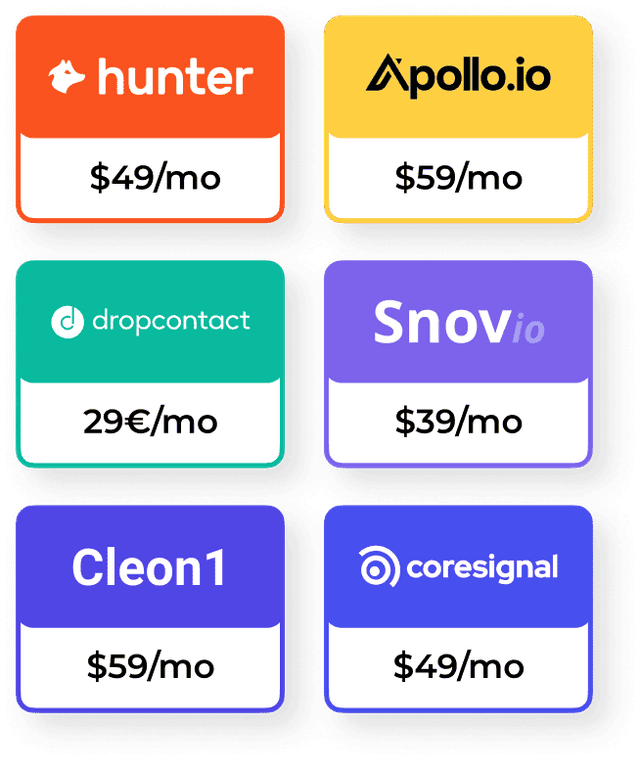
LeadContact integrates leading enrichment tools to deliver more accurate contact data—without paying for each one.

Great conversations start with the right contact.
It’s time to find yours.