
Wilford Zhiyu W.
Senior Scientist @ Amgen
United States
South San Francisco
Biotechnology
Research, Simulation, Characterization, SEM-EDX, XRD, XRF, LECO-Analysis Sulfur and Carbon, Simulations, ELISA, Polymerase Chain Reaction (PCR), High-Performance Liquid Chromatography (HPLC), Nuclear Magnetic Resonance (NMR), Mass Spectrometry, Organic Synthesis, Western Blot, Flow cytometry, Drug Discovery
Experience

Senior Scientist
Amgen

South San Francisco, California, United States
Scientist
Amgen
South San Francisco, California, United States
Senior Associate Scientist
Amgen
South San Francisco, California, United States
Cell-based assay development for target engagement, mechanism-of-action study, lead identification, and characterization.

Postdoctoral Researcher
Stanford University School of Medicine
My project involves assay developments, target validations, and lead identifications for neurodegenerative diseases.

Postdoctoral Fellow
University Health Network
Toronto, Ontario, Canada
Research Student
University Health Network
Toronto, Canada Area
Drug design of Alzheimer's Disease, targeting on protein-misfolding and neuroinflammation.

PHD Student
University of Toronto
Aβ triggered proteopathic and immunopathic processes are a postulated cause of Alzheimer’s disease (AD). Aβ aggregates into oligomers and fibrils, which disrupt neuronal membrane integrity and induce cellular damage. Aβ is directly neurotoxic, but may also induce neuroinflammation through activation of microglia. My project aims to identify drug candidates that may concomitantly inhibit Aβ aggregation and neuroinflammation, and further investigate their mechanism of actions. Furosemide was initially identified as a lead compound. The results demonstrate that furosemide is a probe molecule for the treatment of neuroinflammation in AD. It inhibits proinflammatory responses, enhances anti-inflammatory responses, and promotes phagocytic activity. Mechanism studies further demonstrate that furosemide suppresses upregulation of ER-stress marker genes during inflammation, suggesting an interplay between ER-stress and inflammation. To further explore the pharmacologic effects of furosemide, my study devised and synthesized a series of furosemide analogs that target both Aβ aggregation and neuroinflammation. Forty compounds were synthesized and evaluated. Compounds 3c, 3g, and 20 inhibit Aβ oligomerization; 33 and 34 inhibit Aβ fibrilization; 3g and 34 inhibit the production of TNF-α, IL-6, and nitric oxide while downregulating the expression of COX-2 and iNOS and promoting microglial phagocytosis, addressing the combined proteopathic-immunopathic pathogenesis of AD. My study further investigates the mechanism of compound 3g focusing on the downstream signaling of ER-stress, autophagy. I identify a beneficial anti-neuroinflammatory role for mild ER-stress mediated autophagy. This protective mechanism is impaired during prolonged neuroinflammation. Compound 3g is capable of restoring the protective effects of autophagy through mTOR. In addition, 3g attenuates the downregulation of ER-phagy receptor TEX264 during neuroinflammation, suggesting promoted ER self-renovation.

Research Assistant
University of Ottawa
Ottawa, Canada Area
Working on Portable Purifier Desin, Vacuum Desiccant Cooling Garment Design

Research Student
Natural Resources Canada (NRCan)
Ottawa
Working in CO2 storage group Responsible for sample preparation, data analysis, simulation of gas transportation and geochemical reactions, writing reports.

Research Assistant
Tianjin Univerisity of Science and Technology
Tianjin University of Science and Technology
Research Assistant in pharmaceutical labs and fermentation labs.
Education

University of Toronto
Medicinal Chemistry, Neuroinflammation
Tryptophan Metabolism as a druggable target for the Proteopathy and Immunopathy of the Alzheimer's Disease

University of Ottawa
Chemical Engineering
MASc student Research Area: chemical engineering, thermodynamics and geochemistry Thesis: Effects of impurities on CO2 geological storage

Tianjin University of Science & Technology
Pharmaceutical Sciences
BASc in Pharmaceutical Science Research Assistant in microbiology lab and molecular pharmacology lab. Research Area: molecular biology, pharmacology, biochemistry, genetic engineering, protein expression. Thesis: The protein expression, purification conditions optimization and design of recombinant human bone morphogenetic protein BMP
Wilford Zhiyu W.'s Contact Information
Phone
Find the Right Leads
Find Verified Contact Data

What LeadContact does well
Find verified emails, phone numbers, and decision-makers with 98% accuracy.

Find Leads
Find the right people by company, role, industry, location, and more.
925M+ professional profiles


Find Emails
Access verified email addresses for your target contacts.
657M+ emails


Find Phone Numbers
Get cross-validated phone data from multiple top sources.
239M+ phone numbers

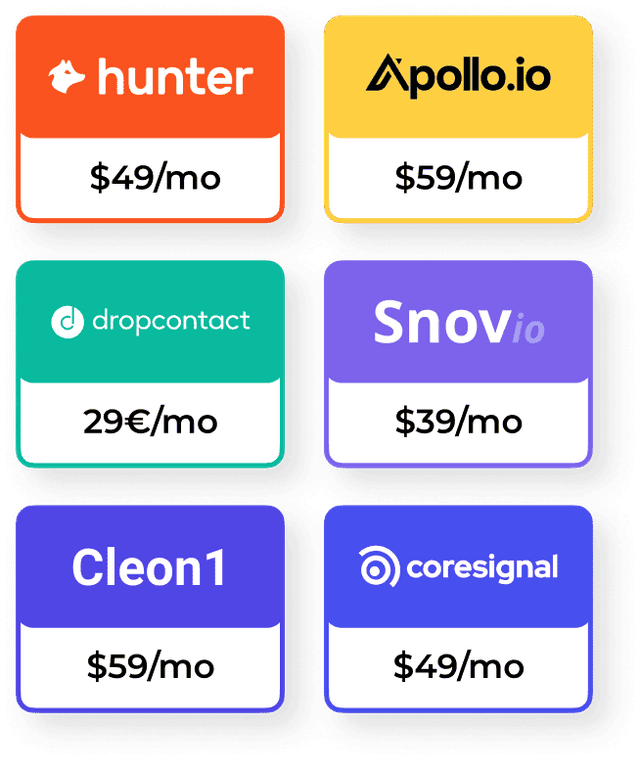
More Accurate. Lower Cost.
Find contact data in 1 tool with 98% accuracy
LeadContact integrates leading enrichment tools to deliver more accurate contact data—without paying for each one.

Great conversations start with the right contact.
It’s time to find yours.