
Vikram Sundar
Scientist I, Machine Learning @ Generate:Biomedicines
About
I am a computational structural biology and machine learning researcher with a strong background in math and physics. My research interests are in using machine learning and other computational methods to better understand important problems like protein structure and binding with pharmaceutical applications. I work as a machine learning scientist at Generate:Biomedicines and just finished my PhD in MIT's Computational and Systems Biology program as a Hertz Fellow. Previously, I worked as an AI resident at Google and finished an MPhil at the University of Cambridge on a Churchill Scholarship. My PhD research was focused on engineering the specificity of TEV protease to cleave alternative substrates. During my PhD, I developed FLIGHTED, a method using Bayesian inference to denoise high-throughput experiments. I also examined the use of protein language models and very large fitness datasets to predict fitness and design new proteins, learning a great deal about dataset design and model selection in the process. Previously, I worked in the application of machine learning to understand protein/ligand binding and to model DNA-encoded libary datasets; specifically, I developed tools to measure the ability of models to generalize and attribute, new models that proved better at generalizing to unseen proteins, and uncertainty prediction methods for molecular property models. I have also completed internships on diffusion models for de novo design of protein binders at Generate:Biomedicines and on the use of molecular dynamics with permeability modeling at Inductive Bio. Skills: • Capable of directing my own research project, identifying interesting and important questions, and generating simple solutions. • Experienced in collaborating closely with experimentalists and enabling experiment-computation closed-loop cycles. • Machine learning, including traditional approaches and modern deep learning. • Bayesian modeling and inference. • Generative modeling, including diffusion models and variational autoencoders. • Generalization, interpretability, and careful experimental design in evaluating machine learning models. • Linear algebra, analysis, and other areas of math and physics, especially as applied in machine learning. • Application of computational methods to solve important structural biology problems. • Strong verbal and written communication skills, as demonstrated by publications, posters, and presentations at conferences. • Comfortable with Python, scikit-learn, tensorflow, and pytorch.
United States
Boston
Research
Computational Biology, Research, Machine Learning, Mathematics, Physics, Algorithms, Programming, Molecular Biology, Drug Discovery, Chemistry, Data Analysis, Science, Statistics, Data Science, Mathematical Modeling, Python, Java, Mathematica, Matlab, LaTeX
Experience

Scientist I, Machine Learning
Generate:Biomedicines

Somerville, Massachusetts, United States
Researcher
Massachusetts Institute of Technology
Cambridge, Massachusetts, United States
PhD thesis research, with Prof. Kevin Esvelt under a Hertz Fellowship. Developing machine learning models for fitness inference from noisy experimental data. Helping develop new high-throughput assays for protein fitness data generation. Developing methods to denoise single-step selection assay data and correct benchmarking of popular ML models. Examining noise in phage-assisted continuous evolution through simulation.
Summer Intern
Inductive Bio
New York, New York, United States
Explored incorporating molecular dynamics simulations into permeability modeling.
Summer Machine Learning Intern
Generate:Biomedicines
Somerville, Massachusetts, United States
Developed diffusion models for generating de novo binders to proteins and for loop infilling.
PhD Rotations
Massachusetts Institute of Technology
Cambridge, Massachusetts, United States
With Prof. Kevin Esvelt: researched applications of machine learning to phage-assisted continuous evolution data. With Prof. Connor Coley: explored meta-learning for low-data drug discovery. With Prof. Amy Keating: developed neural network models for structure-based protein design.

AI Resident
San Francisco Bay Area
Research project in uncertainty modeling for molecular property prediction in drug discovery. Examined effectiveness of calibration methods on data from DNA-encoded libraries for hit estimation. Developed applicability domain modeling for DNA-encoded library data.
Researcher
University of Cambridge
Cambridge, United Kingdom
Supervisor: Dr. Lucy Colwell Explored applications of machine learning to understanding protein-ligand binding. Evaluated accuracy of random-matrix-theory models compared to benchmarks. Analyzed effects of dataset bias and debiasing algorithms on generalizability. Developed attribution methods for fingerprint-based cheminformatics models. Developed models for generalizing to unknown proteins and unknown ligands. Research project for MPhil degree in Chemistry under Churchill Scholarship.

Course Assistant for Math 55ab (Honors Abstract Algebra and Honors Real and Complex Analysis)
Harvard Math Department
Greater Boston Area
Ran discussion sections and graded problem sets for one of the hardest undergraduate math courses in the country. Also was Course Assistant for the same course in the 2015 - 2016 school year.
Researcher
Harvard University
Greater Boston Area
Supervisor: Dr. David Gelbwaser-Klimovsky, Prof. Alan Aspuru-Guzik Used the Wigner-Kirkwood expansion to compute nuclear quantum corrections to classical force fields for simple liquids like neon. Tested force fields on radial distribution function, density, and phase diagram for neon.
Early-College Research Intern
D. E. Shaw Research
Greater New York City Area
Worked on the EXtreme Force Field (XFF) team, helping develop new training and test data sets for generating an extremely accurate valent force field.
Education
Massachusetts Institute of Technology
Computational and Systems Biology
Hertz Foundation Fellow. Advisor: Prof. Kevin Esvelt.
University of Cambridge
Chemistry
Churchill Scholar Supervisor: Dr. Lucy Colwell
Harvard University
Physics
Harvard University
Mathematics
Secondary in Chemistry. summa cum laude, Highest Honors in Mathematics.
The Harker School
Vikram Sundar's Contact Information
Phone
Find the Right Leads
Find Verified Contact Data

What LeadContact does well
Find verified emails, phone numbers, and decision-makers with 98% accuracy.

Find Leads
Find the right people by company, role, industry, location, and more.
925M+ professional profiles


Find Emails
Access verified email addresses for your target contacts.
657M+ emails


Find Phone Numbers
Get cross-validated phone data from multiple top sources.
239M+ phone numbers

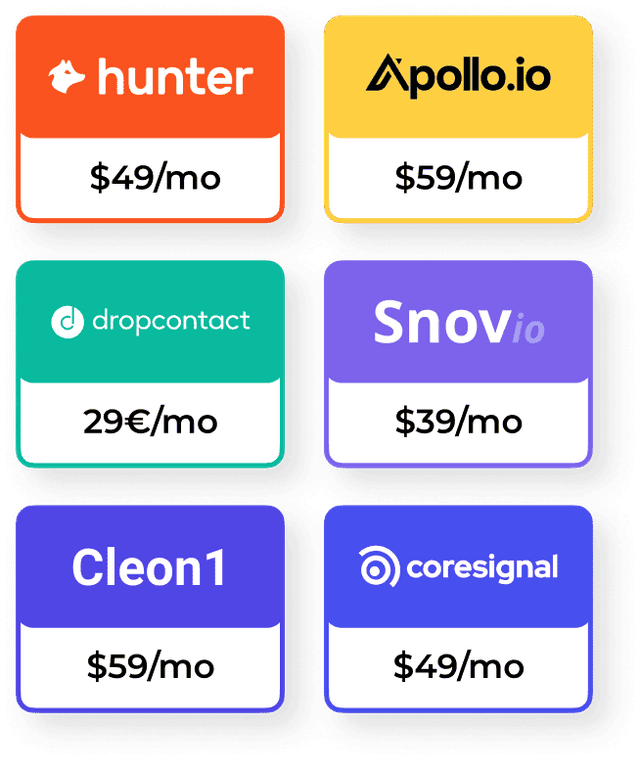
More Accurate. Lower Cost.
Find contact data in 1 tool with 98% accuracy
LeadContact integrates leading enrichment tools to deliver more accurate contact data—without paying for each one.


Great conversations start with the right contact.
It’s time to find yours.