Shan Chen
Senior Director of AIDD @ Innovent Biologics
About
AI-driven drug discovery leader with deep experience spanning peptide discovery, small-molecule modeling, translational bioinformatics, and scientific platform buildout across biotech, pharma, and academic research.I currently lead AI-Driven Drug Discovery efforts at Innovent, where I have helped build the computational and data backbone for AIDD, including GPU computing infrastructure, lakehouse data foundations, peptide design workflows, AI + physics pipelines for small-molecule pose prediction, and in-house deployment of FEP-based affinity modeling capabilities.My work focuses on translating advanced methods—including transformers, diffusion models, reinforcement learning, LLM agents, molecular dynamics, and structure-based modeling—into practical industrial drug discovery workflows. Across prior roles at Insilico Medicine, Regeneron, BenevolentAI, and Baylor College of Medicine, I have contributed to target discovery, biomarker strategy, AI platform development, peptide and cyclic peptide design, and multimodal bioinformatics applications.I am especially interested in building high-impact AIDD organizations that connect computation with biology, chemistry, and translational decision-making to accelerate discovery. Open to connecting with leaders in AI drug discovery, platform strategy, computational chemistry, peptide therapeutics, and translational R&D.
China
Shanghai
Biotechnology
Agentic Automation, Agentic Workflows, Computational Biology, FEP, Molecular Dynamics, AI for Drug Design, NextGen, Genome Sequencing, Bioinformatics, Biostatistics, R, SAS Programming, Stata, Molecular Cloning, Molecular Biology, Cell Biology, Western Blotting, Confocal Microscopy, Genetics, Fluorescence Microscopy
Experience

Senior Director of AIDD
Innovent Biologics

Shanghai, China
. Established GPU cluster infrastructure to support enterprise-scale AIDD computational workflows. . Initiated construction of a scientific data lakehouse to standardize affinity, druggability, and PK data for future AI model training and reuse. . Launched peptide de novo design and reference-based redesign workflows for agonistic and antagonistic peptides by combining generative AI with molecular dynamics and other physics-based guardrails. . Delivered antagonistic peptide designs advancing through experimental validation. . Developed an integrated AI + physics pipeline for small-molecule pose prediction, enabling accurate identification of core structures and activity cliffs validated through wet-lab design. . In-licensed and deployed an in-house FEP platform for affinity prediction across small molecules and cyclic peptides.

Director of Bioinformatics
Insilico Medicine
Shanghai, China
. Led AI-powered peptide design platform development using reinforcement learning, diffusion, and transformer-based workflows. . Built structure-guided design workflows integrating protein structure prediction with multi-objective optimization across affinity, specificity, and druggability. . Directed development of LLM-agent capabilities for target validation and scientific decision support. . Supported external partnering and licensing through bioinformatics diligence, indication expansion analyses, and biomarker strategy. . Expanded AI applications in imaging and translational discovery workflows.
Associate Director of Bioinformatics
Insilico Medicine
Shanghai, China
Building state-of-art bioinformatics suites for immune-oncology drug target identificaiton. Coroborating with robotic lab to advance high throughput drug screening system.

Bioinformatics Head
Basecare
Suzhou, Jiangsu, China
Lead cross-fuction groups to build state-of-art automatic pipeline for rare variant interpretation and rare disease diagnosis.

Associate Manager Statistical Genetics
Regeneron
Tarrytown, NY
1. Lead projects to identify genomic variations associated with drug response, adverse events using state-of-art Genome-Wide Association Study (GWAS). 2. Stratify patients in terms of disease risk, drug response or toxicity using Polygenic Risk Score, based on Bayesian or Machine Learning algorithms to summarize genome-wide variant contribution to various traits.

Senior Bioinformatics Engineer
BenevolentAI
Brooklyn, New York
• Leading bioinformatician for developing causal reasoning pipeline for drug target identification utilizing patient transcriptome data • Lead work in drug-target benchmark curation and evaluation • Delivered hypothesis generation for internal disease programs with patient omics data • Prototyped single-cell RNA-seq, co-expression analyses for hypothesis generation • Managed and interacted transcriptome data deployed to Google Cloud and BigQuery

Instructor in Bioinformatics
Baylor College of Medicine
• Lead bioinformatician for Undiagnosed Disease Network at Baylor College of Medicine, responsible for pipeline development, variant prioritization, clinical case analyses, data aggregation and query. • Developed RNA-seq pipeline which successfully automated identification of abnormal gene expression, aberrant isoforms, allelic expression and uniquely regulated pathways. • Developed WGS pipeline focusing on non-coding variant annotation and integrated with RNA-seq data for variant prioritization. • Deployed RNA-seq pipeline to cloud-computing platform i.e. SevenBridges for scalability, reproducibility and collaboration. • Built RNA-seq reference database with Google BigQuery for SQL management of sequencing data, query and statistical analyses. • Provide statistical consultation to collaborators for study design, power analysis and model building for mixed or longitudinal data.

Research Assistant
UT MD Anderson
Houston, Texas Area
• GWAS and burden analysis to identify susceptibility genes for Pheochromocytoma and Paraganglioma (PCC/PGL) with whole exome sequencing (WES) using VAAST. • Integrative genomics analysis to validate PCC/PGL genes by combining somatic variants, CNAs and transcriptome using TCGA data. • GWAS study to identify single nucleotide polymorphisms for Crohn’s disease with targeted sequencing.
Research Assistant
Baylor College of Medicine
• ChIP-seq analysis incorporating pathway and motif analyses to identify new transcription regulatory sequences for Notch signaling • Identify somatic mutations associated with osteosarcoma with tumor-normal paired WES • Designed, generated and characterized genetic murine models to study Notch signaling in cartilage. • Designed and implemented ChIP-seq, RNA-seq and microarray experiments to investigate novel transcription regulation mechanism of Notch. • Performed cellular and molecular study to validate candidate genes identified through ChIP-seq.
Education

Baylor College of Medicine
Genetics in bone and cartilage development

UTHealth Houston
Biostatistics

Tsinghua University
Biology
Shan Chen's Contact Information
Phone
Find the Right Leads
Find Verified Contact Data

What LeadContact does well
Find verified emails, phone numbers, and decision-makers with 98% accuracy.

Find Leads
Find the right people by company, role, industry, location, and more.
925M+ professional profiles


Find Emails
Access verified email addresses for your target contacts.
657M+ emails


Find Phone Numbers
Get cross-validated phone data from multiple top sources.
239M+ phone numbers

More Accurate. Lower Cost.
Find contact data in 1 tool with 98% accuracy
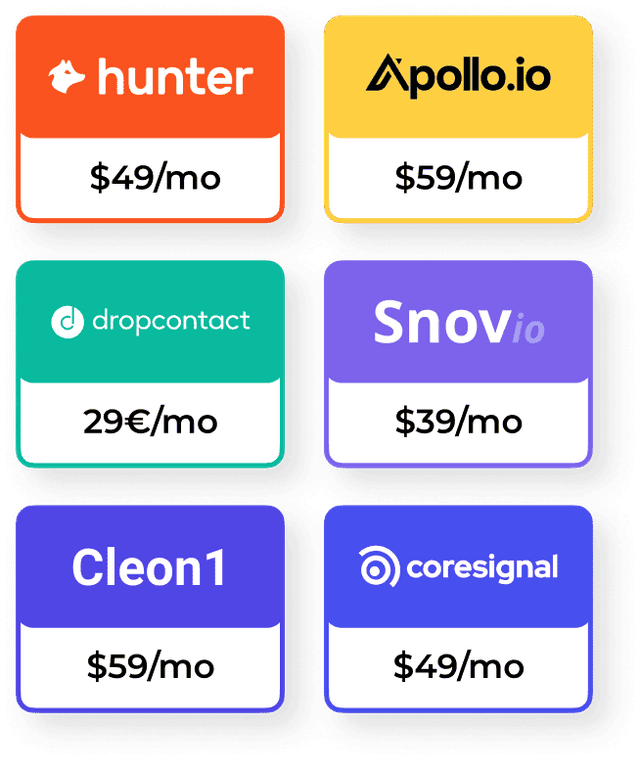
LeadContact integrates leading enrichment tools to deliver more accurate contact data—without paying for each one.


Great conversations start with the right contact.
It’s time to find yours.