
Rebecca Voglewede, PhD
S&T National Security Policy Advisor, Committee on Foreign Investment in the United States (CFIUS) @ U.S. Department of the Treasury
About
We live in a rapidly evolving world where many challenges lack clear precedents or established frameworks. I’ve honed my ability to excel under these conditions by deliberately integrating experiences from diverse career sectors, each requiring rapid situational awareness and the resourcefulness to solve unfamiliar problems. Across industry, academia, startups, and the public sector, I’ve learned to translate technical and strategic insights across very different contexts. My multidisciplinary background includes business and finance, science and technology, national security, and international relations. My bachelor’s degree and first career were in the financial sector, followed by a PhD and 12+ years of bench research working as an experimental and computational neuroscientist. In the laboratory, I investigated how networks of biological neurons learn and integrate information based on their electrical properties, their dynamical structures, and the computational operations they perform. This foundation in biological intelligence led me to work on its artificial counterpart. I moved from laboratory work at the National Institutes of Health (NIH) to the U.S. Congress, where I was selected as 1 of 6 scientists from across the U.S. by the American Association for the Advancement of Science (AAAS, publisher of the journal “Science”) to serve as in-house experts within Congressional offices as part of an inaugural ‘Rapid Response Cohort in Artificial Intelligence’. While in the Senate, I became fascinated by national security as a complex and intellectually challenging problem space that combined my multiple backgrounds together. I later joined the U.S. Department of the Treasury’s Offices of International Affairs and Investment Security, where I advise on technical, strategic, and forward-thinking solutions to national security challenges involving emerging technology and cross-border investments.
United States
Washington DC-Baltimore Area
Computer Software
Aerospace, Energy, Critical Minerals, Biotechnology, Semiconductors, Quantum Information Science, Cybersecurity, Synthetic Biology, Biosecurity, Foreign Relations, Artificial Intelligence (AI), National Security, Emerging Technologies, Defense Applications, Policy Analysis, Computational Neuroscience, Biomedical Engineering, Robotics, Surgery, Nonlinear Optics
Experience

S&T National Security Policy Advisor, Committee on Foreign Investment in the United States (CFIUS)
U.S. Department of the Treasury

Washington, District of Columbia, United States
Named as Treasury’s International Affairs 2025 Team of the Year
G20 Liaison Officer
U.S. Department of the Treasury

Co-Founder & Co-Lead
DC NatSec Affinity Group
Washington DC-Baltimore Area
Together with a few friends across the NatSec space, I run a National Security Affinity Group for the AAAS S&T Policy Fellows and alumni network of PhD scientists and engineers across several federal agencies and all three (executive, judicial, and legislative) branches of the USG.

Science & Technology Policy Fellow, Executive Branch
AAAS
Washington, District of Columbia, United States
This fellowship involves a dual appointment as both fellow and fed, serving as a Science and Technology National Security Policy Advisor within the Offices of International Affairs and Investment Security within the Department of the Treasury.
Science & Technology Policy Fellow, Legislative Branch—Rapid Response Cohort in AI
AAAS
Washington, District of Columbia, United States
The AI Rapid Response Cohort was comprised of six scientists selected from across the U.S. for their expertise and proficiency on the complexities of developing and deploying a multitude of AI technologies. This inaugural AI Cohort (part of AAAS’ 51-year history of bringing science and technology experts to the Hill) was specially designed to help policymakers and their staff understand conceptually how AI works, along with the technical, economic and social issues that may arise from its widespread deployment.

AAAS AI Fellow/Technical Advisor—Committee
United States Senate Committee on Foreign Relations
Washington, District of Columbia, United States
Served on the Asia/Indo-Pacific, Emerging Technologies, and Economic Statecraft team Advised on foreign policy surrounding AI, quantum information science, semiconductor and critical mineral supply chains, increasing energy demands, aerospace, biosecurity, and foreign investments in emerging tech
AAAS AI Fellow/Technical Advisor—Personal Office
United States Senate
Washington, District of Columbia, United States
Served as key staff supporting the Senator as Co-Lead within the Senate AI Working Group, Co-Chair of Senate Artificial Intelligence Caucus, Ranking Member of Senate Armed Services Cybersecurity Subcommittee, and Member of the Senate Select Committee on Intelligence Organized the series of nine Senate AI Insight Forums during Fall 2023 covering the intersection of AI and national security, high risk applications, workforce, transparency & explainability, privacy & liability, copyright & IP, and doomsday scenarios

Co-Founder, Women Scientist Fellows
The National Institutes of Health
Bethesda, Maryland, United States
Postdoctoral Fellow, Section on Neuronal Circuitry (NIDCD)
The National Institutes of Health
Bethesda, Maryland, United States
Key areas: Olivocochlear feedback circuits, Surgical access to the cochlea, Optical electrophysiology, Viral gene delivery My project here examined the auditory circuits that connect the brain with the cochlea and provide auditory feedback information to our ears. These circuits are thought not only to be important for protecting us from damage (such as in cases of loud sounds) but also for helping us detect signal within noise (such as paying attention to a particular speaker in a noisy environment). This work employed a combination of cochlear surgery, viral gene delivery, and imaging technique development for an in vivo surgical window to monitor electrical activity, optical sensors of calcium and voltage activity, two photon guided patch clamp electrophysiology, and biophysical modeling of neurons using Python and the NEURON simulation environment. For this work, I was awarded the NIH Intramural Research Training Award (IRTA) from the National Institute on Deafness and Other Communication Disorders (NIDCD).
NIH Science Policy Discussion Group, Author & Editor
The National Institutes of Health
Bethesda, Maryland, United States
Promoted to: Research Fellow; NIH National Research Service Award Recipient
The University of Texas at Austin
Austin, Texas, United States
Key areas: Coincidence detection; Dendritic integration, Binaural processing, Sound localization, Developmental neurobiology My project here examined how the morphology and biophysical profile of axons and dendrites within neurons of the medial superior olive influence the microsecond time frame (!) integration of auditory cues we use for horizontal sound localization. This research employed two photon excitation laser scanning microscopy, axosomatic/somatodendritic patch clamp electrophysiology recordings, gene delivery using viral vectors, immunohistochemistry, and computational modeling of neurons using Python and the NEURON simulation environment. For this work, I was awarded the NIH National Research Service Award, the NIH Pediatric Loan Repayment Award, and the Association for Research in Otolaryngology Poster Blitz Award.
Postdoctoral Director, UT Austin Women in STEM
The University of Texas at Austin
Austin, Texas, United States
Postdoctoral Fellow, Auditory Brainstem Neurophysiology
The University of Texas at Austin
Austin, Texas, United States
Business Development Consultant
Tellus Therapeutics, Inc
Durham, North Carolina, United States
Key areas: Seed Funding, Orphan Drug Development, Pre-IND FDA Meeting Preparation, Non-dilutive Funding, Pre-clinical Development, Toxicology Studies, Pharmacodynamics & Pharmacokinetics In this role, I consulted with neonatal research startup co-founders on commercialization of a breast milk-derived orphan drug designed to treat brain injuries in preterm infants. I researched non-dilutive funding opportunities to secure additional capital during their Seed to Series A ($35M) funding stage, resulting in a $182K NIH Phase I Small Business Innovative Research (SBIR) Supplement Grant. Tellus Therapeutics is a spin-out of Dr. Eric Benner’s laboratory at Duke University.

Visiting Scientist, Hippocampal Neurophysiology
Howard Hughes Medical Institute (HHMI)
Ashburn, Virginia, United States
Key areas: Hippocampal physiology, Neuromodulation, Multisensory integration, Neuroplasticity My project here at Janelia Research Campus examined neuromodulatory (noradrenergic) boosting of conjunctive input processing (plateau potential generation, burst firing) from projections onto the proximal and distal dendrites of hippocampal area CA1. This research employed two photon excitation laser scanning microscopy, patch clamp electrophysiology in acute slices, and dual electrical stimulation of two input pathways with a stereotrode.

Graduate Research Fellow, Cortical Neurobiology & Louisiana Board of Regents Fellowship Recipient
Tulane University
New Orleans, Louisiana, United States
Key areas: Cortical plasticity, Somatosensory processing, Synaptic dynamics, Aging My project here examined how new sensory experience produces divergent effects on the turnover of distal synapses of pyramidal neurons within the somatosensory cortex of young adult and aged animals: for young adults, turnover is boosted but for aged animals, the same stimulus causes the synapses to become more static. This suggests a structural correlate may exist of the brain’s “resistance” to incorporate new information successfully as we reach the geriatric stages of life. This research employed chronic in vivo two photon excitation laser scanning microscopy and intrinsic optical signal imaging to measure structural changes of neurons and blood flow activity in the cortex, both through an implanted cranial window. For this work, I was awarded the Louisiana Board of Regents Graduate Research Fellowship, given each year to the top incoming candidate of the graduate cohort.
Laboratory Technician/Manager, Hypothalamic Neurobiology
Tulane University
New Orleans, Louisiana, United States
Key areas: Acute and chronic effects of stress, Transcriptional regulation by glucocorticoids, Rapid intracellular signaling cascades, Nuclear vs. membrane-bound receptors My project here examined a rapid, protein kinase mediated intracellular signaling cascade associated with a membrane-bound, stimulatory G-protein coupled glucocorticoid receptor. This project employed adrenalectomies, chronic variable stress paradigms, and immunocytochemistry using an immortalized hypothalamic cell line. For this work, I was awarded the Tulane Newcomb Grant for Research Assistance.
Education

Tulane University
Neuroscience
The University of Texas at Austin

University of Mary Washington
Business Administration/Finance

Academy of the Holy Cross
Rebecca Voglewede, PhD's Contact Information
Phone
Find the Right Leads
Find Verified Contact Data

What LeadContact does well
Find verified emails, phone numbers, and decision-makers with 98% accuracy.

Find Leads
Find the right people by company, role, industry, location, and more.
925M+ professional profiles


Find Emails
Access verified email addresses for your target contacts.
657M+ emails


Find Phone Numbers
Get cross-validated phone data from multiple top sources.
239M+ phone numbers

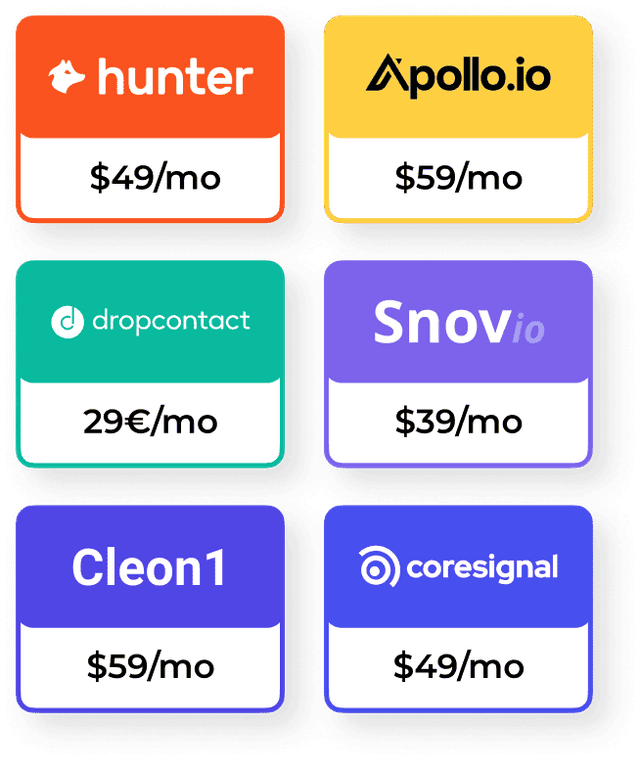
More Accurate. Lower Cost.
Find contact data in 1 tool with 98% accuracy
LeadContact integrates leading enrichment tools to deliver more accurate contact data—without paying for each one.

Great conversations start with the right contact.
It’s time to find yours.