
Rahul Banerjee
Graduate Research Assistant @ Duke University Pratt School of Engineering
About
I am a semiconductor and optoelectronics enthusiast who has been part of a variety of individual and group multidisciplinary projects. In my time at Trinity College, University of Cambridge, I developed problem solving and design skills in projects ranging from developing graphene nanoribbon devices using an atomic force microscope (AFM) to creating a 2Mb/s optical fibre link from scratch and augmenting a C++ based Mars lander simulator to be more realistic. An array of projects in my Master's year enabled me to receive a Distinction grade. These include the major MEng project where I fabricated and characterised graphene devices, an optical network design project (between the cities of London, Manchester, Glasgow, Leeds and Birmingham) and an embedded system exploration project. My experiences at Carallon, UROP and CDAC have allowed me to incorporate best practices in PCB design, research and programming. They have allowed me to leverage skills in both industry and academia while adapting them to a given project. The dynamic environments in each of these (especially during COVID and periods that have been affected by the semiconductor supply chain crisis) has provided me with the opportunity to work closely with managers and peers to hone my soft skills.
-
United States
Education Management
Plasma-Enhanced Chemical Vapor Deposition (PECVD), Origin (Software), University Teaching, Leadership, Team Management, Ellipsometry, Scanning Electron Microscopy (SEM), Physical Optics, Nonlinear Optics, HSpice, Design of Experiments (DOE), Atomic Layer Deposition, Professional Communication, Project Management, Collaborative Problem Solving, Event Planning, Community Outreach, Collaborative Work, Electron Beam Lithography, Hardware Design
Experience

Graduate Research Assistant
Duke University Pratt School of Engineering

North Carolina, United States
I am currently and in the future, will be exploring light-matter coupling (interactions), plasmonics and non-linear optics as part of my PhD research at Professor Maiken Mikkelsen's group. My research is geared towards the deterministic placement of CdSe/ZnS (core/shell) quantum dots within plasmonic MIM (metal insulator metal) cavities to explore phenomena such as weak and strong coupling alongside single emitters. This has applications in quantum information processing, single photon sources and nanophotonics.
Graduate Teaching Assistant
Duke University Pratt School of Engineering
North Carolina, United States
EASE (ECE Advocacy for Student Engagement) Chair
Duke University Pratt School of Engineering
United States
EASE (ECE Advocacy for Student Engagement) Director of Communications
Duke University Pratt School of Engineering
Durham, North Carolina, United States

First Year Representative
DOSC - Duke Optical Student Chapter
Durham, NC, USA
As the first year representative, I helped with organizing and leading sessions of optics journal clubs. Furthermore, I helped arrange a large scale outreach event known as Lasers, Lenses and Light (LLL) Day 2024 where we set up optics demonstrations (demos) and activities to create greater interest in optics in middle school students.
Hardware Engineering Intern
Carallon UK
London, England, United Kingdom
I spent time as a hardware engineering summer intern at Carallon. I conducted a variety of tasks allowing me to work through the entire process of building hardware with the aim of building a PCB that would be used to test one of the products. This presented a challenge because I had to familiarise myself with a new PCB design software known as Cadstar within a week or two which I achieved by adapting and using my prior knowledge of KiCAD and Altium. The first stage involved working on the schematic including choosing components which is particularly tricky given the component shortage crisis. I laid out the PCB based on return paths, noise filtering and slew control. Following this, I had the unique experience of manufacturing the PCB using a pick and place machine and solder oven. I learnt XJTAG which can be applied to finding faults in BGA grids and wrote BSDL. A serial interface (Teraterm) was used to surf the Linux boot-up bitstream and this was searched for a specific ethernet error by updating the firmware of the product.

Undergraduate Research Assistant (UROP) - Kinetics of CNT Reactors
University of Cambridge
Cambridge, England, United Kingdom
In this project, I worked on assembling a reactor furnace system that would be used for creating Fe nanoparticles. I collaborated with a PhD student to analyse log-normal particle size distributions (PSDs) and the parameters which affect these. Following this, I planned and helped develop a H2 rig. I had to purchase equipment on behalf of the University and get quotes for mass flow controllers (MFCs) and other equipment. While the original rig mentioned above involved air, I was responsible for setting up the H2 rig which I did to the best of my ability during COVID times. My work on this project has since been used as research preparation for an MEng research graduate, an accomplishment that I am proud of. To collect nanoparticles ranging in size from 4-8 nm, I made of use of an electrostatic precipitator where these nanoparticles would then be used to make 1-2 nm single walled CNTs. Since this collection process can be improved upon, I designed a thermophoretic precipitator on COMSOL Multiphysics, a simulation platform. While this was an early design that was used to get intuition about different geometries, it was later developed by the PhD student.
Summer Intern
CDACINDIA
Virtual (New Delhi, India)
This was a virtual internship done in the summer of 2020. I worked as part of the Artificial Intelligence and Machine learning (AI-ML) team at the company where I helped develop a machine learning algorithm in order to predict the natural language complexity of an input text based on evaluation sub-parameters.

Intern
Researcher
Hammersmith and Fulham, England, United Kingdom
I spent some time learning about marketing including using Flurry and finding trends in Excel. I also, learnt how to use the programming language Swift.
Education

Duke University
Electrical and Computer Engineering (ECE)
PhD Dissertation and Defense: Preliminary Exam: Courses: https://ece.duke.edu/masters/courses Advanced Optics, Thin Films for Emerging Applications (in Quantum Computing and Artificial Intelligence), Introduction to Solid State Physics, Waves in Matter, Digital Integrated Chips, Nanomaterials Technology Laboratory, Statistical Optics, Quantum Optics and Electronics TA: Introduction to Microelectronic Devices

University of Cambridge
Electrical and Electronics Engineering, Electrical and Information Sciences
Year 4 modules http://teaching.eng.cam.ac.uk/node/3003 Quantum and Nanotechnologies, Embedded Systems for the IoT, Project Management, Radio Frequency Electronics, Optical Fibre Communications, Power Microelectronics, Electronic Sensors and Instrumentation, Photonics Systems (including holograms) Year 3 http://teaching.eng.cam.ac.uk/node/2979 Semiconductor engineering, Photonic technology, Integrated digital electronics, Radio frequency electronics, Operations management for engineers, Switch mode electronics, Electric drive systems, Signals and systems, Systems and control, Information theory and coding Year 1 and 2 modules Electrical Engineering, Information Engineering, Thermofluid Mechanics, Materials, Mathematical Methods, Mechanics, Structures

St Joseph's College, Upper Norwood
4 A-Levels + EPQ: Mathematics - A*, Further Mathematics - A*, Physics - A*, Chemistry - A*, EPQ - A (Subject/Research question of EPQ: Can graphene based batteries replace lithium-ion based batteries in the future?) 12 GCSEs: English Language - 7, English Literature - 9, Mathematics - 9, Further Mathematics - A^ (A* Distinction)), French A, and 7 other subjects - A* (Geography, Business Studies, Physics, Chemistry, Biology, Computing, Religious Education)
Rahul Banerjee's Contact Information
Phone
Find the Right Leads
Find Verified Contact Data

What LeadContact does well
Find verified emails, phone numbers, and decision-makers with 98% accuracy.

Find Leads
Find the right people by company, role, industry, location, and more.
925M+ professional profiles


Find Emails
Access verified email addresses for your target contacts.
657M+ emails


Find Phone Numbers
Get cross-validated phone data from multiple top sources.
239M+ phone numbers

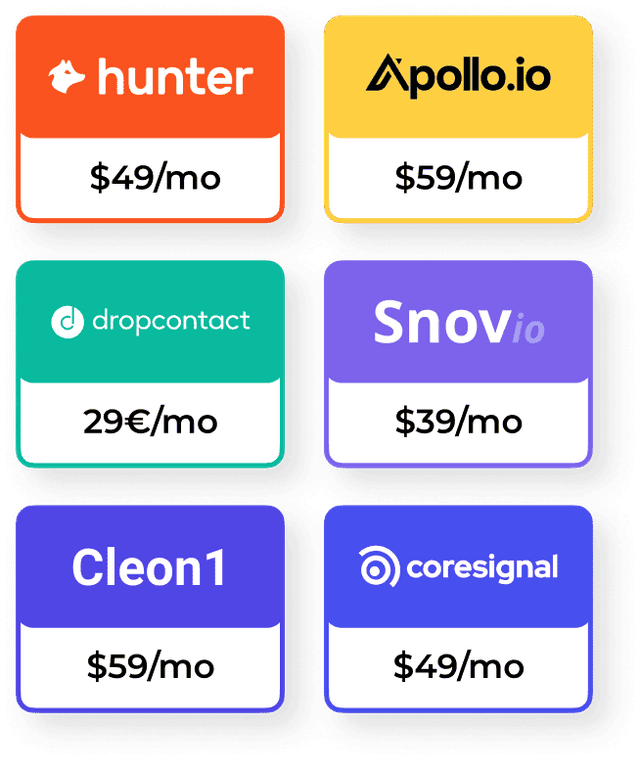
More Accurate. Lower Cost.
Find contact data in 1 tool with 98% accuracy
LeadContact integrates leading enrichment tools to deliver more accurate contact data—without paying for each one.

Great conversations start with the right contact.
It’s time to find yours.