
Patrick Freeland
Tribal Climate Resilience Liaison @ Affiliated Tribes of Northwest Indians (ATNI)
About
InterTribal climate adaptation and strategic development requires authentic relationship building, equitable access to technical capacity, and integration of highly-usable and culturally relevant data-informed planning processes. Effective synthesis of climate projections, risk assessments, and vulnerability studies within broad ecological contexts requires effective coordination and inter-institutional partnership. My work centers on establishing interdisciplinary initiatives, development and facilitation of ethical knowledge exchange networks, and increasing access and practical incorporation of climate adaptation sciences and resources. Strategic development especially maintains principles of government-to-government consultation, informed consent, and respect for Tribal sovereignty, partnership frameworks, and engagement protocols that center Indigenous rights and perspectives in climate science and policy development. T I serve as a Tribal Climate Resilience Liaison with the Affiliated Tribes of Northwest Indians (ATNI), working directly with member Tribes and Federally Recognized Tribes within the Northwest Climate Adaptation Science Center (NW-CASC) region, encompassing Washington, Oregon, and Idaho. I focus on engaging climate sciences and research to support Tribal decision-making and adaptation, bridges knowledge-systems and worldview through synthesis of ecological sciences, climate projections, risk assessments, and vulnerability studies within broad multidimensional contexts including energy, data-science, and policy. Truly effective climate resilience connects Tribal Nations, climate scientists, policy makers, and partner organizations and trusted allies m a meaningful way, to co-create practical collaborative frameworks, including the development of cross-jurisdictional governance structures and transboundary implementation. ATNI Climate serves as a critical boundary-spanning convergence point between Indigenous communities and climate adaptation resources, ensuring that Tribal voices lead climate conversations, and that adaptation strategies are informed by both traditional knowledge(s) and contemporary science. Honor. Pride. Respect. These values are the foundation of my personal and professional vocation, informing my efforts to serve my community, our Nations, and to honor our responsibilities to the lands, waters, and all that live within them. I seek the confluence of Indigenous knowledge and scientific inquiry, committed to advancing community healing, ecosystem restoration, and pragmatic approaches to climate action.
United States
Bellingham
Non-profit Organization Management
Project Planning, Emcee, Virtual Facilitation, Research, Creative Ideation, Program Evaluation, Curriculum Development, Sustainability, Digital Engagement, Strategic Planning, Strategic Communications, Relationship Building, Internal and External Communications, Community Outreach, Geographic Information Systems (GIS), Risk Assessment, Data Visualization, Capacity Building, Academic Advising, Career Counseling
Experience
Tribal Climate Resilience Liaison
Affiliated Tribes of Northwest Indians (ATNI)

Portland, Oregon, United States
The Tribal Climate Resilience Liaison at the Affiliated Tribes of Northwest Indians (ATNI) serves Federally Recognized Tribes across Washington, Oregon, and Idaho through strategic coordination between Indigenous communities and climate science organizations. This position advances Tribal sovereignty through governance infrastructure development, synthesis of climate research within broad ecological contexts, and facilitation of knowledge exchange networks that connect Tribal Nations with adaptation sciences and resources. The role requires respectful engagement with Tribal leaders, climate scientists, and partner organizations while maintaining government-to-government consultation principles and informed consent protocols. Responsibilities include supporting climate adaptation planning, coordinating regional convenings and governance structures for Tribes and Tribal organizations, conducting Tribal Nation site visits, and developing ethical engagement frameworks that center Indigenous rights and perspectives in climate science and policy development. InterTribal strategic development strengthens organizational capacity through relationship building, technical assistance, and data-informed planning processes. The Liaison synthesizes climate projections, risk assessments, and vulnerability studies examining regional climate impacts across diverse landscapes and ecosystems. This work bridges scientific inquiry with Indigenous knowledge systems to support Tribal decision-making and enables practical implementation of adaptation strategies. The position establishes cross-program coordination, facilitates knowledge exchange, and ensures accessibility and practical feasibility in climate resilience work, ultimately serving Tribal Nations in advancing their climate adaptation objectives while respecting cultural protocols and Tribal, Cultural, Data sSovereignty.

Project Consultant
As a Project Consultant, I have successfully completed several independent contracts that required a range of skills such as coordination, technical expertise, project management, organizational development, workshop facilitation and mentoring. I have worked (and continue to work) with various organizations that focus on issues such as Indigenous Peoples and Media, Climate and Environmental Justice, Educational Opportunity (including Inclusion, Diversity, Equity, and Access #IDEA), and Advanced Technology Applications.
Project Coordinator
Haskell Foundation
United States
The Rising Voices, Changing Coasts (RVCC) Hub is a coastal research project that brings together university-trained scientists and Indigenous knowledge-holders to study the interactions between natural, human-built, and social systems in coastal populated environments. The project coordinator works with project leadership, creating a framework for successful and respectful collaboration among Earth scientists and Indigenous communities; providing research opportunities for Indigenous students; and strengthening the capacity and networking of Tribal Colleges and University (TCU) systems for shared capacity to continue to facilitate similar collaborative research projects going forward. RVCC is funded by the National Science Foundation (NSF) Coastlines and People Hubs for Research and Broadening Participation (CoPe) program. This position also serves to develop the RVCC Summer Internship and serve as faculty and mentor for project interns and postdoctoral fellows.
Adjunct Faculty
College of the Muscogee Nation
Okmulgee, Oklahoma, United States
Adjunct Faculty Instructor for Ecology, Agroecology, and Tribal Climate Resilience Summer Internship Programs
Faculty
College of the Muscogee Nation
Okmulgee, Oklahoma, United States
Established in 2004, The College of the Muscogee Nation (CMN) is a member of the American Indian Higher Education Consortium (AIHEC), and was designated as a 1994 Land-Grant institution in 2014 and granted Initial Accreditation by the Higher Learning Commission (HLC) in November 2016. The Natural Resources Associate of Science Degree was established in 2019, and the Natural Resources instructor is responsible for course instruction and curriculum development, academic and career advising for students declared in the Natural Resources A.S. Sustainable Agriculture and Conservation program concentrations, as well as program coordination and institutional service.
Project Director
LiKEN Knowledge
Kentucky, United States
The Knowledge Sharing Network: Climate Education Centering Indigenous Knowledge Systems project, inline with the Indigenous Leadership in Climate Education (ILCE) Program and Rising Voices Center for Indigenous and Earth Sciences network, serves Indigenous organizations and educators leading Indigenous Youth Climate Education. The Project Director, under guidance of a Council of Indigenous Scholars and Educators and partners, leads program organization, meetings, activities, through Phase I (June 2022). Deliverables included: (1) a theory of change detailing the ”Building A Fire...” process and Knowledge Sharing Network metaphor, (2) an Indigenous Peoples and Places Risk Map, (3) an Indigenous Climate Education Bibliography, and (4) BuildingAFire.org website to host open-access interactive versions of these tools with continued roll-out planned through 2023.
Academic Support Coordinator
Western Washington University
Bellingham, Washington, United States
Student Outreach Services is committed to serving first-generation, multicultural, and non-traditional students. The Academic Support Coordinator (ASC) serves all students, and leads The Pathfinder Program designed to mentor and serve American-Indian, Alaska-Native, and other Indigenous-Identifying (AI/AN/II) students, with appreciation for individual (and shared) cultural sovereignty, to promote academic retention and excellence, and advocate for greater Indigenous representation. Duties included course and workshop instruction, program assessment and evaluation, best-practices research, and continuous professional development; this role as a component of WWU's commitment to Accessibility, Diversity, Equity & Inclusion (ADEI) led to strengthening the leadership and organizational capacity of AI/AN/II college students, especially those who focus on environmental sustainability, community development, and advancing justice and social equity.
Director
Northwest Indian College
Bellingham, Washington, United States
TRiO Student Support Services serves first-generation, low-income, and disabled students. The Director is responsible for budgetary and grant management as well as program design and execution. The Director provides supervision, recruitment and training of the program staff, and determines student eligibility. Duties also included interpersonal development through Peacemaking Circles, program advancement, assessment and evaluation, as well as grant-writing, event-planning, and community engagement.
Academic and Career Advisor for Sciences
Northwest Indian College
Bellingham, Washington, United States
The Science Advisor serves students within the Native Environmental Science program, assisting students in understanding degree requirements, planning schedules, identifying resources, and also provides necessary direction and mentorship to ensure adequate educational and career planning for the student's intended program of study. This position also served as Faculty for the Native Environmental Science Bachelor of Science program, and served as part of the retention committee to promote satisfactory academic progress and institutional advancement.
Education

Purdue University
Ecological Sciences and Engineering
Focus on human dimensions of climate change and interdisciplinary sciences as part of the Natural Resources Social Science Laboratory in the Department of Forestry & Natural Resources.
Haskell Indian Nations University
Indigenous and American Indian Studies
Focus on history, law, art, and philosophy, specific to American Indian, Alaska Native, and Indigenous Peoples’ worldview, sovereignty, sustainability, and contemporary issues.
Haskell Indian Nations University
Creative Writing
Focus on literature, poetry, short stories, and English and Indigenous languages as a communication medium and art form.
Patrick Freeland's Contact Information
Phone
Find the Right Leads
Find Verified Contact Data

What LeadContact does well
Find verified emails, phone numbers, and decision-makers with 98% accuracy.

Find Leads
Find the right people by company, role, industry, location, and more.
925M+ professional profiles


Find Emails
Access verified email addresses for your target contacts.
657M+ emails


Find Phone Numbers
Get cross-validated phone data from multiple top sources.
239M+ phone numbers
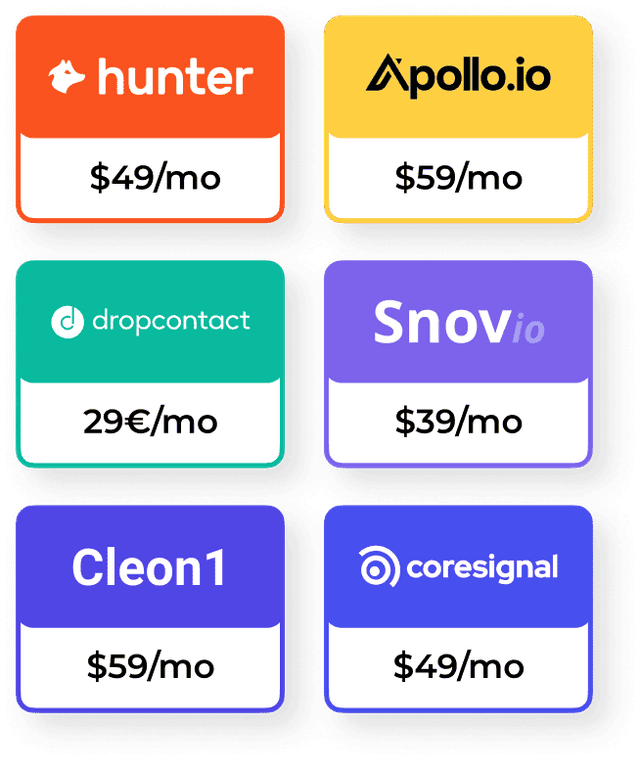
More Accurate. Lower Cost.
Find contact data in 1 tool with 98% accuracy
LeadContact integrates leading enrichment tools to deliver more accurate contact data—without paying for each one.

Great conversations start with the right contact.
It’s time to find yours.