
Nishant Chaudhari
Research Assistant @ Columbia University
About
I'm an MS student in Chemical Engineering at Columbia University, graduating in December 2026. My work sits at an intersection that most people choose one side of. I build physics-based process simulation models in Python, and I've also spent months in labs fabricating polymer membranes, running SEM, XPS, and FTIR, and physically making the systems my code tries to describe. That combination matters because when I build a model, I understand what I'm actually modeling. And when an experiment gives me a surprising number, I can usually tell you why.At the University of Houston, I modeled membrane performance in multi-stage osmotic systems — predicting pressure, flux, and energy across each stage under real, non-ideal conditions. At CSIR-National Chemical Laboratory, I engineered PVDF membranes for hypersaline desalination that achieved 99% salt rejection, then built Python-based ion-transport models to explain the mechanism.On the ML side, I've built Bayesian classifiers, ridge regression pipelines, and active learning systems from first principles, not just calling library functions, but deriving the math and knowing what the model is actually doing with the data. My tools: Python, PyTorch, scikit-learn, scipy, NumPy, TensorFlow.
United States
New York
Research
Molecular Modeling, Circular Economy, Biochemical Engineering, Forecasting, Operational Efficiency, Jupyter, Probabilistic Generative Models, Desalination, Microsoft Office, Chemical Engineering, Demand Forecasting, Chemical Technology, Sustainable Waste Management, Goniometer, Chemical Process Engineering, Operations Research, Regression Models, Energy Modeling, Active Learning, Matplotlib
Experience

Research Assistant
Columbia University

New York, United States
Project: Thermodynamic Energy Analysis of Lithium Extraction from Produced Water
Project Assistant
Columbia University
Project 1: Probabilistic ML & Ridge Regression with Active Learning - Implemented a 4-class Bayesian classifier from mathematical first principles using Python (NumPy, scikit-learn), deriving and coding maximum likelihood estimation (MLE) for class priors, class-conditional means, and full covariance matrices, achieving 87% classification accuracy on held-out test data, demonstrating probabilistic modeling rigor beyond standard library usage. - Derived and implemented L2-regularised ridge regression from closed-form analytical solution using Python (NumPy, scikit-learn), reducing test-set prediction error by 11% compared to ordinary least squares across high-dimensional feature spaces, validating the bias-variance trade-off in regularised regression under controlled experimental conditions. - Designed an uncertainty-sampling active learning pipeline in Python (scikit-learn) that reduced the labeled training data requirement by 48% while maintaining model performance within 4% of the fully supervised baseline, directly addressing the data scarcity problem central to real-world ML deployment. Project 2: Predictive Optimization of Urban Bike-Sharing Systems - Built an integrated demand forecasting framework using Poisson regression and multinomial logit discrete choice modeling on ~3.2 million NYC Citi Bike trip records and historical weather data across ~800 stations, achieving an R² of 0.81 at the station level, outperforming naïve time-series baselines and capturing peak-hour demand spikes driven by weather and temporal features. - Identified 94 high-risk stations through quantile-based risk scoring of model outputs and translated findings into concrete operational recommendations, rebalancing schedules, and capacity expansion thresholds, projected to reduce overflow and shortage events by 22% across the network.

Research Assistant
University of Houston
Project: Advanced Performance Modeling of ABPBI Membranes in Coupled Osmosis–Reverse Osmosis (COMRO) Process for Efficient Hypersaline Brine Concentration and Desalination. - Built a 4-stage physics-based process simulation model for a cascading osmotically-mediated reverse osmosis (COMRO) system using Python (scipy, NumPy, matplotlib, pandas), incorporating non-ideal membrane transport, salt rejection kinetics, and stage-wise mass and energy balance, achieving 98.3% agreement with experimental validation data across pressure drop, osmotic flux, and energy consumption profiles under hypersaline brine conditions. - Ran parametric sensitivity analysis across membrane permeability, feed salinity, and applied pressure across all 4 COMRO stages, identifying inlet pressure, stage count, and percent recovery as the dominant performance levers, directly informing experimental priorities and reducing the trial space for subsequent membrane fabrication work. - Engineered stage-resolved data visualization pipelines in Python (NumPy, scipy, matplotlib, pandas) to generate pressure profiles, osmotic flux maps, and energy consumption curves across each COMRO stage, translating raw simulation outputs into decision-ready plots used in research reporting and cross-functional team review. - Benchmarked unsupported ABPBI membranes against supported and idealized configurations using the validated 4-stage process model, demonstrating that unsupported membranes achieved 20% higher water flux than supported alternatives, a result that reoriented the experimental fabrication strategy toward unsupported architectures for all subsequent COMRO trials.

In-Plant Trainee
CSIR- National Chemical Laboratory
Pune District
Project: Development of Electrospun PVDF Membranes for High-Efficiency Desalination of Hypersaline Water Using Direct Contact Membrane Distillation (DCMD). - Fabricated electrospun PVDF polymer membranes for direct contact membrane distillation (DCMD) of hypersaline seawater, characterizing each membrane coupon in triplicate across multiple fabrication conditions, controlling electrospinning parameters and solvent composition to produce membranes with targeted porosity and fiber architecture for high-salinity separation applications. -Enhanced PVDF membrane surface hydrophobicity through a two-step chemical modification protocol, nearly doubling the water contact angle from 70–75° to 135–150° (~97% improvement), transforming the surface from partially wettable to superhydrophobic and enabling effective vapor-liquid selectivity in membrane distillation. -Developed a Python ion transport model incorporating Nernst-Planck equations to simulate ion flux and concentration polarisation across modified PVDF membranes, validated against experimental permeate conductivity measurements, with model predictions indicating a 42% reduction in total process cost (TPC) relative to the unmodified baseline. -Validated modified membranes against unmodified controls using SEM, XPS, FTIR, and contact angle goniometry, achieving 99% salt rejection, confirming surface modification as a viable, low-cost route to high-performance desalination membranes.

Undergraduate Researcher @ RVA Lab
Institute Of Chemical Technology
Mumbai
Project: Sustainable Dyeing of Cotton Fabrics from Vat Dye Derived from Eucalyptus Bark - Developed the world's first reported valorization of eucalyptus bark industrial waste as a primary vat dye source for cotton, converting a byproduct representing 30–40% of eucalyptus wood processing biomass into a functional textile colorant, eliminating reliance on synthetic dyes. - Designed and executed a 9-condition one-factor-at-a-time (OFAT) experimental programme, systematically optimising dye extraction temperature (40–100°C), extraction time (40–100 min), NaOH concentration (0.5–2%), reducing agent concentration (0–10 gpl), mordant concentration (1–5%), and dye bath pH, using UV-Vis spectroscopic analysis at each condition to identify optimal extraction parameters. - Characterized the eucalyptus dye using FTIR, phytochemical analysis, and HR-LCMS, identifying 3,8-dihydroxy-1-methyl anthraquinone-2-carboxylic acid as the primary coloring compound for the first time in the literature, elucidating the vat dyeing mechanism through alkaline reduction of its carbonyl groups to form the leuco-vat dye. - Achieved wash fastness 4/5, dry rubbing fastness 5/5, and wet rubbing fastness 4/5, exceeding commercial Vat Brown 1 dye on rubbing performance, and a light fastness rating of 7/8 versus 5/6 for the commercial standard, while delivering a 75.6% reduction in electricity consumption by eliminating high-temperature synthetic dye operations, demonstrating that waste valorization and energy savings can outweigh increased chemical inputs.
Undergraduate Researcher @ DVP Lab
Institute Of Chemical Technology
Mumbai
Project: Synthesis of Carbon Fiber from Lignin - Synthesized carbon fibers from 50:50 PAN/lignin blends as a bio-derived alternative to 100% PAN precursors — substituting 50% of the synthetic polymer raw material input with lignin, an agricultural byproduct, while targeting mechanical performance sufficient for medium-strength structural applications. - Processed PAN/lignin blends through melt spinning, thermal stabilization at 200°C, and carbonization at 1000°C, optimizing residence time and heating ramp rate at each stage, producing carbon fibers with tensile strength of 2,201 MPa and breaking extension of 8.7%, confirming viability for medium mechanical strength structural applications.
Education

Columbia University
Chemical Engineering

Institute Of Chemical Technology
Fibers and Textile Processing Technology

Kendriya Vidyalaya
Institute Of Chemical Technology
Fibers and Textile Processing Technology
GPA: 7.68/10
Columbia University
Chemical Engineering
Nishant Chaudhari's Contact Information
Phone
Find the Right Leads
Find Verified Contact Data

What LeadContact does well
Find verified emails, phone numbers, and decision-makers with 98% accuracy.

Find Leads
Find the right people by company, role, industry, location, and more.
925M+ professional profiles


Find Emails
Access verified email addresses for your target contacts.
657M+ emails


Find Phone Numbers
Get cross-validated phone data from multiple top sources.
239M+ phone numbers

More Accurate. Lower Cost.
Find contact data in 1 tool with 98% accuracy
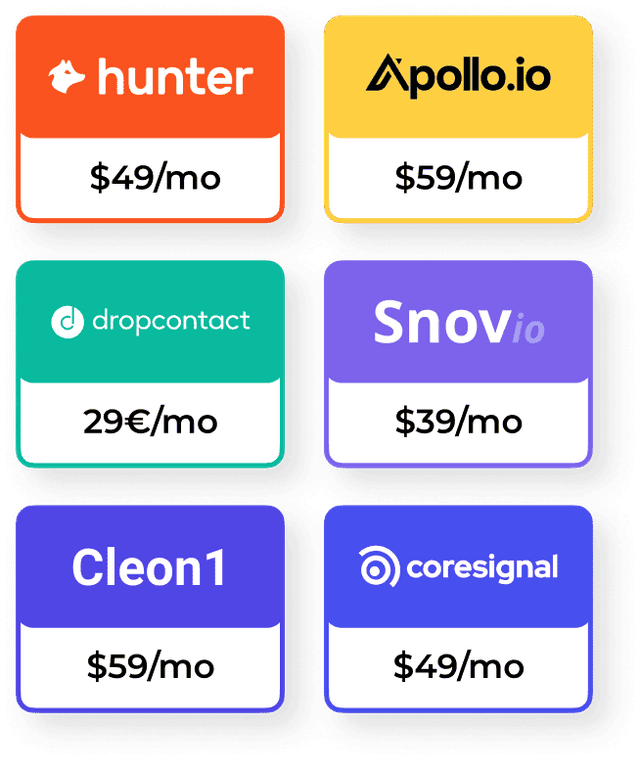
LeadContact integrates leading enrichment tools to deliver more accurate contact data—without paying for each one.

Great conversations start with the right contact.
It’s time to find yours.