
Nicolas Liem
Doctoral Researcher @ Humboldt-Universität zu Berlin (Humboldt University of Berlin)
About
Biophysicist (PhD) with specialization in enzyme kinetics and (membrane) protein characterization by chromatographic, spectroscopic, and immunological methods. Over six years of experience in crossfunctional, independent research and scientific project management.Additional trainings in GMP and business fundamentals adapt my scientific background for industry roles. Specifically, I will thrive in R&D or Quality roles requiring analytical thinking and accuracy in crossfunctional teams. I am based in Berlin and am open to relocate within Central Europe (i.e. Germany, France/Alsace, Switzerland). German: native/C2, English: C1/C2, Dutch: B2, French: B1/B2
Germany
Berlin Metropolitan Area
Biotechnology
Gibson-Assembly, PCR-Techniken, Problem Solving, Data-driven Decision Making, Sanger Sequencing, Organization Skills, Critical Thinking, Aseptic Technique, GxP, C++, Python, Aseptisches Verfahren, Kritisches Denken, Niederländisch, Französisch, Projektmanagement, Elektrophysiologie, Electrophoresis, Membrane Proteins, Protein Characterization
Experience

Doctoral Researcher
Humboldt-Universität zu Berlin (Humboldt University of Berlin)

Berlin, Germany
Biophysical and biochemical characterization of enzymes (Rhodopsin phosphodiesterases) for Optogenetics: • Generated protein structures using LLM-based tools (AlphaFold2/3) in combination with classic homology modelling • Used and optimized ELISA / CLIA immunoassays to quantify small molecule antigens • Method development on RP-HPLC to develop an enzyme kinetic assay for 8 nucleotides • Aseptic techniques in mammalian cell cultures (HEK293T, ND7/23) for delicate proteins • Transient transfection to reduce build-test-learn cycles down to 7 days • Recombinant protein expression in 2 different prokaryotic systems (E. coli, P. pastoris) for high yield • Purified membrane proteins using affinity-tags (His6x, 1D4, StrepII) and SEC (ÄKTA pure) • Protein analysis by electrophoresis (SDS-PAGE) and western blotting • Used UV/Vis spectroscopy for stationary spectra and kinetic analysis • Optical assays using fluorescence, FRET, and luminescence in whole cells • Patch-clamp electrophysiology and improvement of optoelectronic systems • Molecular cloning (Quikchange, Gibson, restriction cloning) • General wet lab work, i.e. preparation of buffers and media • Conducted AI-supported literature research (Perplexity) to screen publications at large, extract findings, and assess them manually in my capacity as a reviewer. Paralleling my experimental research, I presented my results at internal and cross-team meetings, and at international conferences. I learned to communicate my findings through scientific writing and published a peer-reviewed paper as a first author. I coordinated collaboration projects and supervised students and technicians. This position was kindly supported by a scholarship for the BIG-NSE graduate school, funded by unisyscat/Einstein-Stiftung.

PHD Student
UniSysCat - Cluster of Excellence
Berlin, Germany
Initial phase in the unisyscat Graduate School (BIG-NSE) covering intercultural and softskill seminars.

Master Thesis
Humboldt-Universität zu Berlin
Berlin, Germany
For my master thesis, I switched to Hegemann lab, where I focused on color tuning of anion channelrhodopsins by rational design. • Homology modeling and sequence alignments to tailor point mutations • Molecular cloning (Quikchange) for mutant generation • Functional characterization (action spectra) using patch-clamp electrophysiology (HEK293) • Improved optical setups using custom-built devices, accelerating a routine task in calibration 6-fold I learned patch-clamp electrophysiology for HEK293 cells, and established an automated readout system for fast calibration of a state of the art monochromator (Cairn Optoscan).

Research Internship
Imperial College London
To work on recently developed NIR voltage indicators, I joined Prof. Thomas Knöpfel's group (Laboratory for Neuronal Circuit Dynamics). • Aseptic cell culture (HEK293 cells) • Patch-clamp electrophysiology and the parallel readout of fluorescent voltage indicators (FRET) • Spectral multiplexing in all-optical electrophysiology experiments • Optimization approaches: illumination parameters, genetical engineering, transfection parameters. A great opportunity to have worked in a multinational, multidisciplinary team! Funded by the Erasmus+ internship programme.
Tutor
Humboldt-Universität zu Berlin (Humboldt University of Berlin)
I covered the fields of Physical Chemistry and Biophysics (e.g. fluid dynamics in biology and bioanalytics). For these, I prepared teaching material and taught undergrad seminars. A new professor had taken over the lecture, restructured it, and I redesigned the accompanying seminar. With my subsequential internship abroad planned, this on-site job was set up as a temporary position.

Bachelor Thesis
University of Potsdam
Potsdam, Brandenburg, Germany
For my bachelor thesis, I investigated the motile pseudo amoeba D.discoideum during cAMP chemotaxis. • Fabrication of microfluidic chips using soft lithography • Lab-on-a-chip experiments using photouncaging. • Quantitative fluorescent microscopy of actin distributions using confocal microscopy • Image analysis using custom-written image segmentation algorithms (MATLAB)
Tutor
Humboldt-Universität zu Berlin (Humboldt University of Berlin)
Berlin, Germany
I covered the fields of Physical Chemistry and Biophysics (e.g. fluid dynamics in biology and bioanalytics). For these, I prepared teaching material and taught undergrad seminars.
Education

Humboldt-Universität zu Berlin (Humboldt University of Berlin)
Biophysics
In my PhD studies, I specialized in enzyme research within cyclic nucleotide Optogenetics. • functional, spectral, and structural investigations with relevant methods • analytic skills: Critical thinking, pragmatic decision-making under uncertainty, interpretation of complex data • organizational/social skills: project management, crossfunctional teamwork, exchanging opinions in expert teams

Humboldt-Universität zu Berlin
Biophysics
Focus on experimental biophysics, molecular photobiophysics, photoreceptor research. Engineering of optogenetic actuators.
Humboldt-Universität zu Berlin
Biophysics
Nicolas Liem's Contact Information
Phone
Find the Right Leads
Find Verified Contact Data

What LeadContact does well
Find verified emails, phone numbers, and decision-makers with 98% accuracy.

Find Leads
Find the right people by company, role, industry, location, and more.
925M+ professional profiles


Find Emails
Access verified email addresses for your target contacts.
657M+ emails


Find Phone Numbers
Get cross-validated phone data from multiple top sources.
239M+ phone numbers

More Accurate. Lower Cost.
Find contact data in 1 tool with 98% accuracy
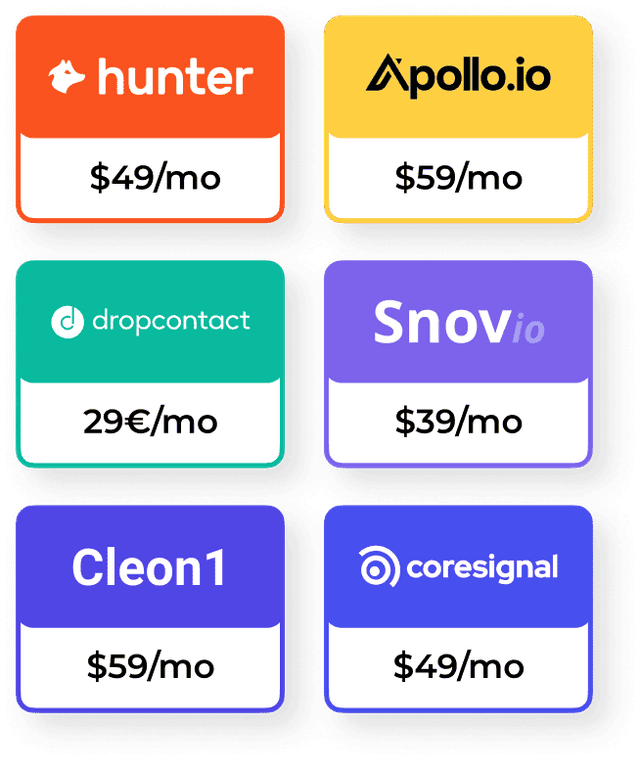
LeadContact integrates leading enrichment tools to deliver more accurate contact data—without paying for each one.


Great conversations start with the right contact.
It’s time to find yours.