
Nicholas Soures
Lead System Engineer -AI/ML Integration @ L3Harris Technologies
About
I’m an AI/ML engineer with a Ph.D. in Computer Engineering, specializing in designing intelligent systems for environments where every watt counts and every millisecond matters. From deploying custom spiking neural networks (SNNs) on analog, FPGA, and ASIC-based neuromorphic architectures to optimizing deep learning models for edge platforms, I focus on delivering low-power, low-latency AI solutions. At Bascom Hunter Technologies, I led AI/ML development on multiple government-funded SBIR programs, architecting workflows that enabled real-time analytics in resource-constrained environments. My academic work contributed to 30+ peer-reviewed publications in machine learning and neuromorphic computing and helped secure over $7M in funded research. I’m familiar with modern ML/ops infrastructure (Docker, Kubernetes, SQL, Python) and currently expanding my software development skills to include TypeScript and Go. I also enjoy mentoring students and collaborating across hardware, software, and product teams to bridge the gap between cutting-edge research and scalable, production-ready AI systems. A personal passion for neuroscience drives much of my work. After seeing my grandmother’s battle with ALS, I became fascinated by how brain-inspired computing could help us understand, model, and one day augment biological systems. Let’s connect if you’re passionate about bringing AI from research to deployment. Whether you’re hiring, collaborating, or exploring ideas, I’d be happy to discuss how we can drive impactful solutions together.
United States
Webster
Higher Education
Project Management, Technology Start-up, Communication, Problem Solving, Technical Leadership, Cross-team Collaboration, Model Optimization, Analog/Photonic Accelerators, Hardware-Software Co-Design, Time Series Analysis, Mentoring, Energy Efficiency, Grant Writing, Spiking neural network, Lifelong Learning, Docker, Kubernetes, Embedded AI, Generative AI, Machine Learning Algorithms
Experience

Lead System Engineer -AI/ML Integration
L3Harris Technologies

Lead systems engineer focused on AI/ML integration.

Postdoctoral Researcher
The University of Texas at San Antonio
Leading research on efficient temporal learning and continual learning algorithms, focusing on scalable solutions for real-time and embedded AI applications. Spearheading an NSF-funded project on adaptive neural architectures for lifelong learning in dynamic environments. Mentoring high school, undergraduate, and graduate students in advanced AI techniques and neuromorphic computing. Developing collaborative frameworks for cross-disciplinary teams, integrating AI models into hardware-constrained systems. Contributing to grant proposals and technical reports for new research initiatives in embedded and neuromorphic AI.

Machine Learning Engineer
Bascom Hunter
Designed and deployed embedded AI systems on FPGA and ASIC platforms, enabling low-power, low-latency performance for SWaP-constrained defense applications. Developed physics-informed generative models to simulate complex data environments, improving model robustness in real-world deployment scenarios. Co-developed photonic and neuromorphic accelerators for high-speed matrix operations and AI inference, pioneering novel hardware-software integration methods. Collaborated across hardware, software, and product teams to transition innovative ML algorithms from prototype to field-ready solutions. Contributed to proposals and technical roadmaps for next-generation embedded AI technologies.
Research Fellow
The University of Texas at San Antonio
Rochester, New York, United States
Ph.D. Thesis: Lifelong Learning in Spiking Networks Through Neural Plasticity - Development of energy efficient, task agnostic lifelong Pioneered energy-efficient, task-agnostic lifelong learning frameworks for spiking neural networks (SNNs), achieving up to 20% performance gains over state-of-the-art methods. Co-developed digital and analog AI accelerators for on-device learning with metaplasticity, funded by AFRL. Led ML system development for activity recognition on event-based cameras, improving temporal resolution for NSA-sponsored research. Collaborated with UT Health and Southwest Research Institute to model COVID-19 spread using SEIR and LSTM models, providing actionable insights via a public dashboard. Authored and secured ~$2M in grant funding, leading interdisciplinary research efforts across AI and neuromorphic systems. Mentored graduate students and helped design a “Brain-Inspired Computing” course, fostering the next generation of neuromorphic AI talent.

Graduate Research Assistant
Rochester Institute of Technology
Rochester, New York, United States
Achieved state-of-the-art performance in video activity recognition by developing multi-layer neural networks with 10x reductions in computation and memory requirements, enabling deployment on embedded platforms. Explored random CNN architectures for energy-efficient image processing, providing innovative solutions for SWaP-constrained environments. Conceptualized and simulated neuromorphic hardware systems (digital, analog, and photonic) to accelerate AI algorithms under NSF and AFRL funding. Evaluated Intel TrueNorth neuromorphic chips for low-power image recognition, advancing understanding of hardware-constrained AI performance. Contributed to hierarchical classification systems using transfer learning and autoencoders for NSA-sponsored projects.
Education

Rochester Institute of Technology
Computer Engineering
Courses Taken: Digital Systems Design 2, Digital Signals Processing, Analytical Topics, Brain inspired computing, Computer Vision, Digital IC design, Intro to Principles of Statistics and Data Mining, Pattern Recognition, Deep Learning, Engineering Analysis
Rochester Institute of Technology
Computer Engineering
Courses Taken: Digital Systems Design 2, Digital Signals Processing, Analytical Topics, Brain inspired computing, Computer Vision, Digital IC design, Intro to Principles of Statistics and Data Mining, Pattern Recognition, Deep Learning, Engineering Analysis

Binghamton University
Physics
Relevant Courses: Electronics 1, Mathematical Methods in Electrical Engineering, Power Systems Analysis, Intro to Python, Quantum Mechanics, Electro-Magnetic Theory, Thermo-dynamics, Optics, Classical Mechanics, Security, Discrete Math, Linear Algebra, Calculus 1-3, Ordinary Differential Equations, Partial Differential Equations
Nicholas Soures's Contact Information
Phone
Find the Right Leads
Find Verified Contact Data

What LeadContact does well
Find verified emails, phone numbers, and decision-makers with 98% accuracy.

Find Leads
Find the right people by company, role, industry, location, and more.
925M+ professional profiles


Find Emails
Access verified email addresses for your target contacts.
657M+ emails


Find Phone Numbers
Get cross-validated phone data from multiple top sources.
239M+ phone numbers

More Accurate. Lower Cost.
Find contact data in 1 tool with 98% accuracy
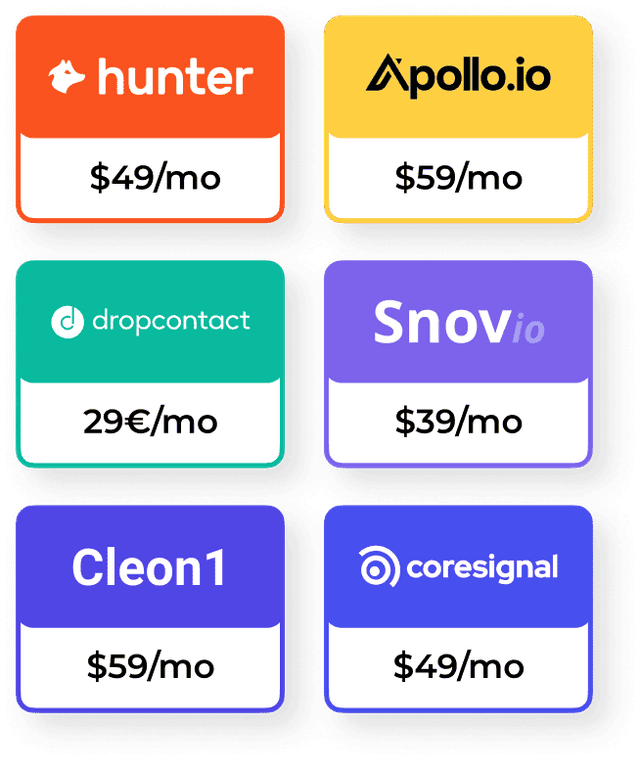
LeadContact integrates leading enrichment tools to deliver more accurate contact data—without paying for each one.


Great conversations start with the right contact.
It’s time to find yours.