
Meghna Roy Chowdhury
Graduate Research Assistant (SPARC Lab) @ Purdue University
About
I’m Meghna, a PhD student in ECE at Purdue, passionate about building applied ML solutions that bridge software intelligence with hardware efficiency. TL;DR: I'm a curious, hands-on researcher who has experience in applied ML for healthcare, circuits, and wearable technology ; always learning, always building, always open to collaboration😊 My work spans across domains like: - Healthcare AI & Wearables: low-power sensing, communication, and analysis of biopotential signals. - Circuits Optimization with ML: end-to-end ML models for circuit design and workflow integration (we filed a patent from my internship work at Qualcomm ). - Hardware Systems: hands-on experience with microcontrollers, radios, and FPGAs, applied toward low-power and embedded ML solutions. I enjoy working at the intersection of machine learning, signal processing, and embedded systems, with experience ranging from microcontrollers and FPGAs to deep learning frameworks like PyTorch and TensorFlow. Beyond research, I contribute to community leadership and creative projects, including organizing Mental Health Awareness Week at Purdue and pursuing my love for photography 📸. I'm always open to conversations — whether it’s about ML, circuits, healthcare, or collaboration opportunities. Let’s connect : https://calendly.com/meghna_rc/30-min
United States
West Lafayette
Research
Artificial Neural Networks, LLM, Serial Protocols, Computer Vision, Health Monitoring, Microcontrollers, Xilinx Vivado, Signal Processing, PPG, Natural Language Processing (NLP), JavaScript, Cascading Style Sheets (CSS), Biomedical Applications, ECG, EEG, Data Analysis, Electrocardiography (EKG), TensorFlow, Coding Experience, PSoC
Experience

Graduate Research Assistant (SPARC Lab)
Purdue University

West Lafayette, Indiana, United States
As a PhD student in ECE at Purdue, I work on applied ML for healthcare, circuits, and wearable systems, along with low-power hardware and signal processing. - ML Projects: 1. Distributed Neural Networks for Wearables (DistNN): Designing energy-efficient ML frameworks that distribute inference across low-power devices and hubs for scalable edge AI. 2. EEG Sensing & Processing: Enhancing signal quality in noisy EEG data using signal processing, ML models, and self-supervised learning. 3. Mental Health & Digital Well-being: Developing interpretable ML models for mental health prediction with efficient feature reduction and personalization. - Frequency Emanation Analysis: Applying ML and CNNs to detect and analyze rogue emanations from unintended electronic sources. -Systems & Hardware Projects: 1. Human Body Communication for ECG: Developing low-power ECG sensing systems that transmit and decode biopotential signals via human body communication, with optimized power consumption and robust signal quality. 2. EEG Dry Electrode Noise Analysis: Analyzed system parameters affecting noise in dry EEG systems, showing stability advantages over wet electrodes and identifying flicker noise for improved wearable EEG design.

ML Intern
Qualcomm
Santa Clara, California, United States
I interned in the RFA team where I: - Built ML models to solve circuit optimization problems. - Designed and implemented two novel in-house ML architectures that outperform state-of-the-art. (Filed a patent, which is under review, for both implementations)

Systems Engineer - Analytics & Insights (Research & Innovation)
Tata Consultancy Services
Mumbai, Maharashtra, India
1. Analytics in a Box: - Developed an end-to-end automated prediction system for classification and regression problems on structured data to eases the process of data augmentation, selection of best ML model and updation of model based on changing trends of data. - Technology Stack- GAN, AutoML, Adaptive ML, Front-end UI - Language- Python, HTML/CSS 2. Cogni Extract: - Developed an ML-based solution for extracting information from unstructured data to automate the manual process of data extraction. -Technology stack- MLOps (Airflow), NLP(Spacy), ML (Sklearn CRF Suite) -Programming Language - Python

Research Intern
Yuan-Ze University
Taipei City, Taiwan
- Worked under the guidance of Prof Jiann-Shin Shieh to develop an accurate and low-cost system for Depth of Anesthesia prediction using deep learning models via continuous signal data of ECG and PPG. - Performed signal processing on the biopotential signals on MATLAB. - Deep learning models were trained and tested on Python. - Archived an accuracy of 82% using ECG. Language: Python and MATLAB More details on this work can be found on: https://www.sciencedirect.com/science/article/abs/pii/S1746809421002603
Machine Learning Intern - Analytics & Insights
Tata Consultancy Services
Mumbai Area, India
- My internship was based on IoT in Transportation and Logistics. - My first task was to perform a literature survey about use cases and IoT frameworks in the Transportation and Logistics industry, and here’s what I found: Predicting the lifetime of Electric Vehicles' is an on-going problem, so there is a need for building a system to predict remaining cycle life of used and unused batteries , i.e. predicting the number of times a battery can be fully charged and discharged before the reach the end of their functional life. Through this, we can predict the rate of degradation and remaining useful life of batteries, and thereby we can determine the drivable range of the electric vehicle. - So, I worked in the Analytics and Insights department on a project to: i. Predict the lifetime of Li-ion batteries used in Electric Vehicles ii. Suggest to the user how long the vehicle can travel with the existing battery life on different terrains iii. Predict the charging time required for a particular travel destination. - I performed feature extraction and implemented various ML models and concluded the following: • Random forest regressor and Decision tree regressor are the best models to predict the remaining life in both conditions -- Average conditions provided & Exact conditions provided • K Nearest neighbor will also work well in both conditions • Neural network model works well only when exact conditions are provided • Multiple linear regression works well when the features are linearly dependent on remaining lifetime. - Language: Python

Research Internship
Indian Institute of Technology, Kharagpur
Kharagpur
- Worked with Prof. Rajat Subhra Chakraborty on the topic of 'Hardware Security Solution based on Xilinx FPGA' - Implemented a True Random Number Generator on Xilinx FPGA (Nexys 4 DDR) using Ring Oscillators as noise source and clock, Carry 4 primitive, Bit extractor, BRAM and UART. - The randomness was tested and using NIST Test. - Visualised the randomness in on-board LEDs, we increased the sampling time to 4s. • Hardware: Xilinx Nexys4 DDR (Artix 7) • Software: Vivado 2018.3

Summer Intern
Indian Institute of Technology, Bombay
Mumbai Area, India
Worked under the guidance of Prof Virendra Singh as a part of a project to create an IOT based robust weigh scale using IIT Bombay-produced microcontroller AT89C51A. Tool : Thingspeak Language : Embedded C Tool: Keil
Education

Purdue University
Electrical and Computer Engineering

Vellore Institute of Technology
Electronics and Communications Engineering
Meghna Roy Chowdhury's Contact Information
Phone
Find the Right Leads
Find Verified Contact Data

What LeadContact does well
Find verified emails, phone numbers, and decision-makers with 98% accuracy.

Find Leads
Find the right people by company, role, industry, location, and more.
925M+ professional profiles


Find Emails
Access verified email addresses for your target contacts.
657M+ emails


Find Phone Numbers
Get cross-validated phone data from multiple top sources.
239M+ phone numbers

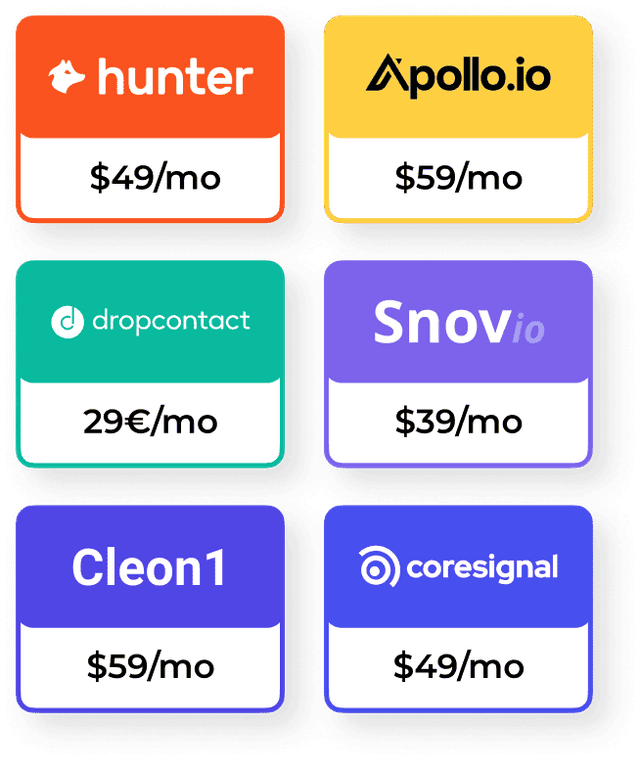
More Accurate. Lower Cost.
Find contact data in 1 tool with 98% accuracy
LeadContact integrates leading enrichment tools to deliver more accurate contact data—without paying for each one.

Great conversations start with the right contact.
It’s time to find yours.