
Marcoita Gilbert, PhD, DABT
Product Development Champion (Director of Regulatory Affairs) @ Facet Life Sciences
About
Someone once told me that science underpins almost every facet of the human experience--from obtaining an in-depth understanding of our bodies, our very nature and the world around us, to existing sustainably in an ever-changing world. Indeed, this could not be more true. What drives me? My passion centers on utilizing my talents as a life scientist to help address important questions related to human health, and to serve as catalyst for improving our overall quality of life.
United States
Raleigh-Durham-Chapel Hill Area
Pharmaceuticals
Toxicology, Nonclinical Regulatory Strategy, in Vitro Toxicology, Toxicologic Pathology, Western Blotting, Immunofluorescence, Biochemistry, Immunohistochemistry, Cell Culture, Confocal Microscopy, Physiology, Molecular Biology, Immunocytochemistry, Microscopy, Neuroscience, Research, Molecular Cloning, DNA construct design/sequencing, Mammalian/Bacterial cell culture, Manuscript writing skills
Experience

Product Development Champion (Director of Regulatory Affairs)
Facet Life Sciences


Director, Regulatory Affairs and Product Development--Nonclinical
Cardinal Health
Raleigh-Durham-Chapel Hill Area
Leader in nonclinical drug development and FDA, EMA, and Health Canada regulatory strategy. Provides innovative solutions and regulatory submissions for all aspects of pharmaceutical, biologics, advanced therapy products, and device development from discovery through post-approval maintenance.

Regulatory Toxicologist
Allucent
Cary, North Carolina, United States
Serves as the lead nonclinical regulatory strategist on cross-functional drug development teams. Provides nonclinical expertise and interacts with various regulatory authorities (FDA, EMA, Health Canada, etc.) on behalf of Drug Sponsors and clients as part of regulatory Agency meetings. Provides scientific and regulatory leadership in nonclinical study design, development of non-GLP and GLP protocols, interpretation/evaluation of study results, and reporting Works with internal drug development teams to write, edit and format submission documentation to ensure high quality Agency meeting packages, and CTD nonclinical sections of INDs, NDAs, and other applications.

Scientific and Regulatory Specialist
Camargo Pharmaceutical Services
Durham, NC
Research Scientist
Camargo Pharmaceutical Services
Durham, NC
Talented and enthusiastic Regulatory Scientist! At Camargo, I: Author and contribute to various regulatory and clinical documents (specialized in 505(b)(2) regulatory submissions), including Feasibility analyses, Pre-IND meeting packages, INDs, NDAs, iPSPs, safety updates and Orphan Drug Requests. Participate in a number of interactions with the FDA on behalf of clients on a regular basis, including Pre-IND, EOP2, Pre-NDA, Type A and C meetings. Work with Camargo Strategy Leads to spearhead/direct projects taking place in all stages of drug development (including postmarketing), and offer support and regulatory strategy to clients in need of regulatory advice.
Pharmaceutical Research Scientist Intern
Camargo Pharmaceutical Services
Raleigh-Durham, North Carolina Area
I was one of only four postdoctoral students selected to join the team at Camargo Pharmaceutical Services; I am both humbled and honored to be able to work with such friendly, knowledgeable people! Camargo Pharmaceutical Services continues to afford invaluable industry experience by allowing me to work closely with research services team members as they guide clients through the various stages of drug development. Achievements: •Author and contribute to various regulatory and clinical documents (specialized in 505(b)(2) regulatory submissions), including Feasibility reports, DSURs, Pre-IND meeting packages, INDs, NDA and Orphan Drug Requests. •Review and edit regulatory, preclinical and clinical study documents for clarity, accuracy, scientific soundness, content and grammar •Conduct extensive literature searches, and prepare technical reports for nonclinical and clinical efficacy and safety. •Assist in the detailed analysis and reporting of nonclinical pharmacology and toxicology studies.

Regulatory Affairs Intern--Duke Translational Medicine Institute
Duke University Health System
Raleigh-Durham, North Carolina Area
•Review and learn from a variety of regulatory documents, including INDs, IDEs approved by FDA, Pre-IND meeting requests and annual reports. •Wrote a complete IND for an investigator sponsored Phase II trial studying the combined effect of one oncology product with anti-androgen drugs; the introductory section of one IDE (in-vitro diagnostic product). •Attended an IRB meeting on the review of new clinical protocols, renewals and amendments of INDs and IDEs.

Postdoctoral Fellow
The University of North Carolina at Chapel Hill
My current research entails obtaining an understanding of key neural mechanisms underlying illicit drug use during pregnancy resulting in altered craniofacial morphology within the developing fetus and early postnatal individuals. As a postdoc, I hope to make significant contributions to this area, and to provide answers important to reproductive biology. Previously, I was within an environment that furthered our understanding of neurological changes associated with adolescent drug abuse; now, I’m excited to expand my research experience with studies rendered towards neuroteratogenesis! Here at UNC-Chapel Hill, I was awarded NIH-based financial support to investigate early prenatal drug exposure-induced cerebral cortical thickness alterations and associated fiber tract and structural connectivity changes in postnatal individuals. In these studies, following maternal drug exposure on gestational days (GDs) 7 and 8.5, and GDs 7-11.5, the brains of juvenile, adolescent and adult mice are assessed using atlas-based MRI analysis techniques that help us determine regional brain morphology and cortical thickness changes. This work tests the hypothesis that neuromorphological changes result from early prenatal drug exposure, that these altered patterns vary dependent upon maternal exposure time, and that these changes persist across a variety of postnatal time periods assessed. Additionally, we employ DTI to identify fiber tract and structural connectivity alterations among adult subjects, and test the hypothesis that maternal drug treatment results in exposure stage-dependent pathology involving major white matter tracts. This work is an investigation of the cellular pathology underlying early prenatal drug exposure-induced cortical thickness changes. Focusing on neuroteratogenesis, this training enables me to apply state of the art imaging methodologies to important to teratogenicity research questions while pursuing my research interests further!
PHD Candidate
The Brody School of Medicine at East Carolina University
My research involved understanding mechanisms underlying the compulsion to abuse illicit substances, neuropathologies accompanying drug abuse, and manners in which altered gene/protein expression contribute to the maintenance of this disease. Like other illicit drugs, cannabinoids produce similar cognitive impairments in which physiological mechanisms responsible remain poorly understood. Strikingly, brain regions involved in alcohol and drug addiction extensively overlap with those that underlie other vital functions, such as learning and memory. Here, I determined the extents to which cannabinoids persistently alter neuronal morphology in the adolescent telencephalon, and identifyed mechanisms whereby cannabinoids disrupt activity-regulated gene/protein expression that underlie developmental deficits in memory formation. Daily cannabinoid exposure persistently alters proper vocal learning during periadolescence, and these changes are strongly correlated with improper dendritic spine maintenence within regions responsible for stereotyped song. I’ve examined the role of cannabinoids in acutely disrupting induced Arc/Arg3.1 expression, interfering with recognition memory of an auditory stimulus, and altering dendritic spine densities associated with learning, and found that: 1) cannabinoids differentially influence Arc/Arg3.1 expression in primary versus secondary, integrative sensory regions, suggesting the cannabinoid system has a role in higher-order processing of sensory stimuli, 2) spine density increases in memory-related areas are reversed by cannabinoid pretreatment, indicating relationships between cannabinoid-reduced Arc expression, altered spine morphology, and inability to encode/consolidate sensory stimuli during learning. This work is unique and clinically relevant to the area of drug abuse; it is among the first to associate distinct, irreversible physiological changes with the psychoactive effects known to occur with abuse of this drug class.

Sales Associate
Walmart
While in high school and throughout my undergraduate years at East Carolina University, I worked at Wal-Mart. This experience has proven invaluable to me. Working at Wal-Mart, I learned many valuable principles through sustained, real-world, goal-oriented interactions with a diverse group of individuals. Achievements: **Was awarded Star Cashier four times for exemplary service** •Built trust, valued others, communicated effectively, focused on the customer, openly collaborated with others, demonstrated high integrity. •Maintained professional internal (and external) relations that meet Wal-Mart's core values. •Proactively established and maintained effective working team relations with all departments within the store. •Was willing to complete any other tasks as assigned from time to time by any manager. •Ensured that each customer received outstanding service by providing a friendly environment, maintaining solid product knowledge, and all other aspects of customer service. •Adhered to all company policies, procedures, and business ethics codes and ensured they were communicated and implicated. •Assisted in ringing up sales at registers, bagging merchandise, well-versed in operation of all departments within the store.

Undergraduate student researcher
East Carolina University
Greenville, North Carolina Area
Through my research as a neuroscience and biochemistry undergraduate student, I participated in studies aimed at elucidating the relationship between reduced morphine efficacy and increased mu-opioid receptor phosphorylation in a neuropathic pain model, and helped determine that significant increases in periaqueductal PKCγ in morphine tolerant rats partly lay the foundation for at-level neuropathic pain.
Education

East Carolina University
Neuroscience
East Carolina University
Biology/Chemistry
Marcoita Gilbert, PhD, DABT's Contact Information
Phone
Find the Right Leads
Find Verified Contact Data

What LeadContact does well
Find verified emails, phone numbers, and decision-makers with 98% accuracy.

Find Leads
Find the right people by company, role, industry, location, and more.
925M+ professional profiles


Find Emails
Access verified email addresses for your target contacts.
657M+ emails


Find Phone Numbers
Get cross-validated phone data from multiple top sources.
239M+ phone numbers

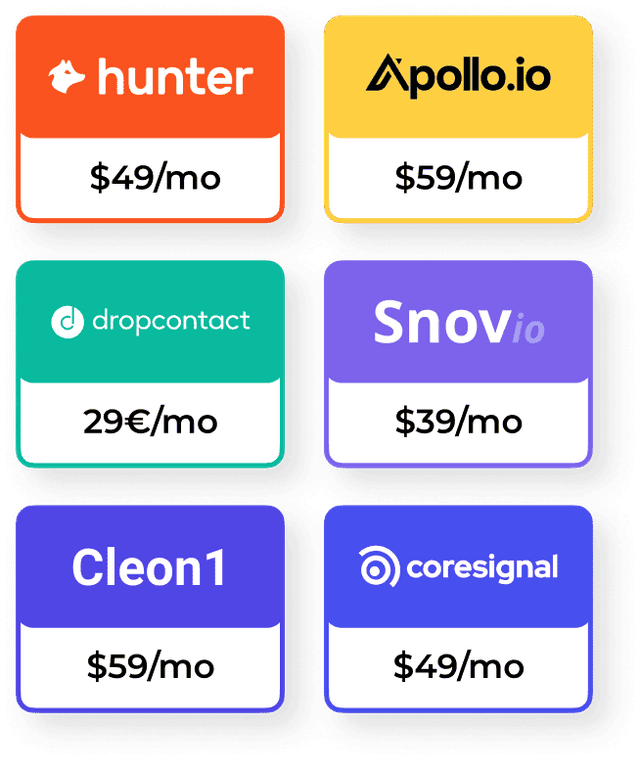
More Accurate. Lower Cost.
Find contact data in 1 tool with 98% accuracy
LeadContact integrates leading enrichment tools to deliver more accurate contact data—without paying for each one.

Great conversations start with the right contact.
It’s time to find yours.