
Lindsey Fernandez, PhD
Science and Politics Fellow @ Eagleton Institute of Politics
About
Currently a postdoctoral researcher at the University of Pennsylvania in the lab of Ravi Radhakrishnan where my work focuses on developing clinically actionable models of heterogeneous cancers. Passionate about global health and health equity.
United States
Philadelphia
Government Administration
Organizational Development, Science Policy, Leadership, Team Building, University Teaching, Precision Medicine, Cellular Communications, Cell Biology, Genomics, Biology, Biochemistry, Artificial Intelligence (AI), Cancer, Cancer Biology, Data Modeling, Statistical Data Analysis, Computer Vision, Research, Data Analysis, Statistics
Experience

Science and Politics Fellow
Eagleton Institute of Politics

New Brunswick, New Jersey, United States

Board Member
National Postdoctoral Association
Advocacy Committee Liaison 2024-2025 Resource Development Committee Liaison 2025-2026

Postdoctoral Researcher
University of Pennsylvnaia
Philadelphia, Pennsylvania, United States
Investigating the role of exosomes and their glycoprotein and micro-RNA cargo to cancer immunity, progression, and patient sensitivity to treatment Developing a patient-specific modeling framework for clinical decision making in combination chemotherapy. - Framework uses mathematical modeling to simulate cell-signaling networks that control tumor growth and response to therapy, and leverages patient molecular profiles to personalize its predictions. - Developing an AI-enhanced version to accelerate performance and discovery of novel relationships between biochemical parameters in signaling pathways and treatment sensitivity. - Developing an agent-based version to investigate the impact of tumor heterogeneity and biomechanics on treatment sensitivity in collaboration with two graduate students. - Created in collaboration with physician researchers in the International Society of Paediatric Oncology.

National Postdoc Association Liaison
Penn Postdoc Association
Co-President
Penn Postdoc Association
Elected and served as co-president of the association for a two-year term from 2022 to 2024
Co-Chair of Advocacy Committee
Penn Postdoc Association
Philadelphia, Pennsylvania, United States
The committee advocates for policy changes to address the needs of postdoctoral researchers across the university. The committee is currently working with university administration to improve the Penn Postdoc Health Insurance Plan and place postdoc representatives on University committees.

Part-time Lecturer
University of Pennsylvania
Philadelphia, Pennsylvania, United States
Designed and taught a graduate-level bioengineering course, "Special Topics in Bioengineering: AI for Precision Medicine"
Co-Chair, 2023 NCI Junior Investigators Meeting
National Cancer Institute (NCI)
Co-President
Penn Science Policy & Diplomacy Group
Philadelphia, Pennsylvania, United States
Most students in science receive little to no training in how to communicate science to non-scientists, how to advocate for the continued role of science in policymaking, or how science contributes to global diplomacy. To address this gap, the Penn Science Policy and Diplomacy Group creates opportunities for students and other early-career scientists at the University of Pennsylvania to get hands-on training and experience in the fields of science communication, policy, and diplomacy.
Treasurer
Penn Science Policy & Diplomacy Group
Philadelphia, Pennsylvania, United States
Planning Committee Member, 2022 NCI Junior Investigators Meeting
National Cancer Institute (NCI)
Planned and held the NCI's annual conference for early-career cancer researchers in collaboration with team members from across the NCI's Cancer Systems Biology Consortium (CSBC), Physical Sciences-Oncology Network (PS-ON), Big Data Scientist Enhancement Program (BD-STEP), Metastasis Research Network (MetNet), and Cancer Intervention and Surveillance Modeling Network (CISNET).
Predoctoral Researcher
University of Pennsylvania
Department of Bioengineering, Penn Institute for Computational Science (PICS)
Create hybrid multiscale models of signaling pathways and gene networks involved in cell fate switching between proliferative and differentiative states in cancer. Led to 1 publication in progress, 1 travel award, 1 upcoming poster presentation, and 2 upcoming conference talks. Design and construct a patient-specific multiscale modeling framework for clinical decision making in combination chemotherapy in collaboration with physician researchers in the International Society of Paediatric Oncology (SIOP), resulting in 1 publication in progress and 2 poster presentations. Generate an agent-based model for tumor heterogeneity and biomechanics in nephroblastoma, resulting in 1 publication in progress. Developed computational methods for quantifying and predicting the regulatory role of chromatin looping in neural differentiation and disease, resulting in 2 publications and 1 poster presentation.
Chief Technology Officer
SelfCerve, LLC
Philadelphia, Pennsylvania, United States
Led the design of the sensing and image analysis systems for SelfCerve, a self-administered cervical cancer screening device for use in low- and middle- income regions where women do not have ready access to pap smears and HPV testing. Device created by four-person, all-UPenn team of one MD/PhD candidate, one MD candidate, one MBA candidate and myself, in collaboration with faculty in the Helen O. Dickens Center for Women and the Department of Mechanical Engineering and Applied Mechanics Created a proof of concept machine learning algorithm for identifying precancerous and cancerous cervical features using a colposcopy training data set for physicians. Re-demonstrated algorithm on data set of images we later created from a pelvic model obtained with project funds. Presented at numerous business plan and product design competitions alongside my teammates, resulting in partial funding through the following awards: Integrated Product Development iDesign 2016 Finalist, PennVention 2016 Semifinalist, Bay Area Global Health Innovation Challenge 2016 Finalist, and Penn Wharton Innovation Fund Award 2016 Won full funding for our project for the next two years by individually writing a funding proposal and winning $110k for my team through the Massachusetts General Hospital Ambulatory Practice of the Future’s 2016 Primary Care Student Prize. Alongside teammates, developed and submitted a patent for our device, incorporated to open project to non-academic funding, worked with product development company Smithwise to create a clinic-ready prototype, developed a multi-stage clinical testing plan, and obtained IRB approval for testing at the Hospital of the University of Pennsylvania. Trialing of the device continues, led by medical school classmates and collaborating clinicians.
Education

University of Pennsylvania
Bioengineering
NSF Graduate Research Fellow, 2017-2020 HHMI-NIBIB Interfaces Training Program in Translational Medical Imaging and Informational Sciences, 2015-2017 (T32 award funding concurrent bioengineering and pre-clinical medical school courses) PhD student in Ravi Radhakrishnan's lab, developing heterogeneous multi-scale models of cancer and combination chemotherapy

The Johns Hopkins University
Computer Engineering, Biomedical Engineering
Tau Beta Pi, Full Departmental and University Honors
Lindsey Fernandez, PhD's Contact Information
Phone
Find the Right Leads
Find Verified Contact Data

What LeadContact does well
Find verified emails, phone numbers, and decision-makers with 98% accuracy.

Find Leads
Find the right people by company, role, industry, location, and more.
925M+ professional profiles


Find Emails
Access verified email addresses for your target contacts.
657M+ emails


Find Phone Numbers
Get cross-validated phone data from multiple top sources.
239M+ phone numbers

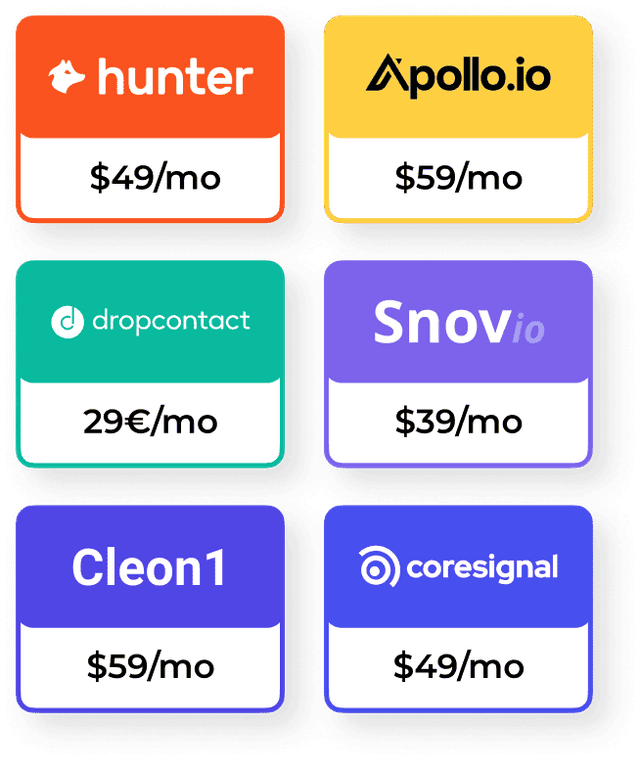
More Accurate. Lower Cost.
Find contact data in 1 tool with 98% accuracy
LeadContact integrates leading enrichment tools to deliver more accurate contact data—without paying for each one.

Great conversations start with the right contact.
It’s time to find yours.