
Jay V.
Director, Regulatory Affairs @ Canon Medical Informatics
About
I lead U.S. regulatory strategy for complex medical devices and AI-enabled SaMD. My focus is on high-risk, data-based decision-making in areas where guidance is complex and evolving, and judgment drives outcomes. My work spans AI/ML SaMD, advanced imaging, and software-integrated medical devices—particularly technologies where regulatory strategy directly shapes product design, clinical evidence, and long-term growth. Trained as a computational physicist (PhD, Harvard) and former industry clinical scientist, I bring deep technical fluency to imaging technologies, radiation-based clinical applications, AI/ML regulatory risk, and complex software models. My 25 years of experience span FDA, NIST, academia, startups, and global multinationals. This cross-sector background allows me to integrate clinical validation, technical complexity, and evolving FDA frameworks into science-based regulatory strategies. Core Expertise • FDA strategy for AI/ML SaMD • Complex digital health, software-integrated devices, and hardware-software combinations • Imaging and image-guided therapy (CT, PET-CT, CAD, cardiac SaMD, radiation therapy) • FDA submissions: premarket strategy, content development, and direct agency interactions • Clinical validation of complex algorithms and real-world evidence integration • Medical affairs leadership and KOL engagement • Regulatory leadership across startups and multinationals I am a Fellow of the Regulatory Affairs Professionals Society (RAPS) and Vice Chair of the Fellows Program. I serve on the RAPS Editorial Advisory Committee and the board of the RAPS SoCal Local Networking Group. I am Co-Editor of Global Fundamentals of Medical Device Regulations and From X-Rays to AI: Navigating U.S. Regulation of Radiological Health, contributing to how the profession approaches modern regulatory challenges. I occasionally teach university courses on FDA regulatory strategy, and regularly serve as an invited speaker or panelist at RAPS, OCRA, and other industry forums on AI/ML SaMD regulation, regulatory intelligence, medical device validation, and career development. Coursera: https://www.coursera.org/learn/communicating-and-negotiating-with-fda-medical-devices
United States
Irvine
Medical Device
Board Governance, Communication, Negotiation, Business Strategy, Medical Devices, Regulatory Submissions, Image Quality, Mathematical Modeling, Medical Imaging, Biomedical Engineering, Imaging Science, Regulatory Affairs, Mathematica, Regulatory Science, Computed Tomography, Matlab, Computer Aided Diagnosis, Project Management, Digital Image Processing, Image Processing
Experience

Director, Regulatory Affairs
Canon Medical Informatics

US regulatory lead for Vitrea, Canon Medical Informatics’ advanced imaging software portfolio including AI/ML SaMD, cardiac imaging, and structural heart planning applications. Own FDA strategy, regulatory pathway, Q-Sub strategy, claims development, ad/promo review, and regulatory positioning. Partner with R&D, clinical, quality, engineering, product, and commercial teams to align product development, validation strategy, labeling, and promotional positioning with evolving FDA expectations and business priorities. • Own end-to-end US regulatory strategy and execution, including Q-sub and 510(k) strategies for Class II SaMD • Interface directly with FDA to align on regulatory pathway, clinical needs, and AI/ML considerations • Drive a company-wide initiative regulatory efficiency initiative focused on reducing development-to-NPI time by integrating regulatory strategy, claims architecture, evidence generation, validation planning, and FDA readiness earlier in product development • Build and manage a lean, high-performing regulatory team supporting software submissions, AI governance, advertising and promotion, and lifecycle compliance • Advise cross-functional leadership on regulatory compliance, software lifecycle documentation, AI risk controls, and advertising and promotion. • Architect enterprise-wide regulatory claims framework, linking product capabilities, evidence generation, and labeling strategy to empower scalable, defensible claims development across the portfolio • Engage in internal and external thought leadership efforts on digital health policy and AI/ML regulation

Advisory Board Member and Instructor
UCSC Silicon Valley Extension
Advisory Board Member, Regulatory Affairs and Medical Device Quality and Design certificate programs. Sept. 2025-present. Taught REGLX.402, “Communicating and Negotiating with the FDA,” May-June 2024. Created Coursera “Communicating and Negotiating with the FDA: Medical Device Focus,” launched June 2026.

Director of Regulatory Affairs
RefleXion Medical
Regulatory strategy, submissions, and ad/promo at a venture-backed unicorn startup for SCINTIX®, the first PET/CT-LINAC and an FDA Breakthrough-designated, De Novo radiotherapy platform. • Led regulatory engagement with FDA across multiple programs, supporting platform evolution and expansion strategy. • Supported final stages of De Novo DEN220014, Q submissions, and early stages of platform expansion 510(k) K252071. • Provided regulatory leadership in design reviews, risk management, and inspection readiness during product development and early commercialization.

Principal Regulatory Affairs Strategist, Canon Medical Informatics
Canon Medical Systems -former Toshiba Medical Systems
Minnetonka, Minnesota, United States
In this role, I • Designed regulatory strategy and authored US premarket submissions for Canon Medical's portfolio of medical image postprocessing software. • Trained global R&D teams on regulatory considerations in upstream R&D and product development. • Transitioned the company to use of FDA's eSTAR format. • Obtained 510(k) clearances of Vitrea Open Rib and an update to Vitrea CT Cardiac Analysis (41 days).
Senior Manager, Medical Affairs - Clinical Scientist, Canon Medical Systems USA
Canon Medical Systems -former Toshiba Medical Systems
Tustin, California, United States
I continued to develop and manage Canon's translational research collaborations in radiology, cardiology, and medical physics, with an emphasis on deep learning based technologies for CT reconstruction and multi-energy CT, as well as ultra high resolution CT imaging. However, I wore many hats, and worked on everything from marketing to new product introductions to regulatory strategy. For example, I • Supported the US launch of Canon's deep learning spectral CT technology • Managed a pilot study supporting the usability of UV-C disinfection lamps with Canon CT systems • Managed research collaborations on deep learning reconstruction and ultra high resolution CT • Contributed to regulatory and scientific strategy for approximately twenty FDA premarket submissions.
Manager, Medical Affairs - Clinical Scientist, Canon Medical Systems USA
Canon Medical Systems -former Toshiba Medical Systems
Tustin, California
In this role, I • managed scientific collaborations with clinical sites across the US, resulting in multiple publications and conference abstracts clinically validating the benefits of Canon CT technology • supported strategy, data collection for, and preparation of numerous regulatory submissions • managed the first US launch of Canon's deep learning reconstruction algorithm • authored white papers (see below) on Canon technology.
Associate Director, CDRH Office of Science and Engineering Laboratories (Acting)
FDA
White Oak, MD
During eighteen months on detail as a strategic manager of FDA's medical device research arm, I • forecasted technology trends based on mining and analyzing data from FDA databases. • led strategic reviews of FDA's research by the neurology and gastroenterology device review divisions. • helped develop policy for the Medical Device Development Tool (MDDT) program, and served as an internal consultant for FDA scientists wishing to qualify MDDTs. • conducted the first ever inventory of ongoing FDA medical device research, including building the database to do it. • managed internal communications efforts, and conducted outreach efforts to professional societies. • interacted with Congressional staffers (see photo). • mentored a postdoctoral fellow working toward consistency in regulating combination products.
Physicist, CDRH Division of Radiological Health
FDA
White Oak, MD
I held a variety of roles in FDA's Center for Devices and Radiological Health (CDRH) including regulator, researcher, and administrator. In my final eighteen months at FDA, I detailed as an Associate Director of CDRH's medical device research arm, the Office of Science and Engineering Laboratories (OSEL). I was involved in a variety of projects relating to strategic planning for the organization: developing technology forecasts (which included mining data), facilitating external reviews of OSEL research, developing communications and outreach materials, conducting the first inventory of ongoing research in OSEL (including building the database to do it), and developing policy for the Medical Device Development Tool program. I also mentored a postdoctoral policy fellow. Before that, I was a senior regulatory review scientist (Dec. 2014-July 2016), having been promoted from a regulatory review scientist (Sept. 2010-Dec. 2014). My work centered on radiological medical devices and associated software. FDA review involves leading and serving on teams of physicians, scientists, and engineers who evaluate the data that manufacturers submit in support of their applications. I led or provided consulting expertise on hundreds of premarket and compliance reviews, including 510(k)'s, 513(g)'s, de novos, IDEs, INDs, MDDTs, EIRs, AROs, recalls, and trade complaints. I also contributed to writing and updating guidance documents, regulations, and international standards pertaining to CT, and served as FDA liaison to standards groups and professional organizations. Throughout my FDA tenure, I engaged in research on methods to validate CT imaging performance using computer model observers.

Assistant Professor, Department of Physics and Astronomy
Bucknell University
Lewisburg, PA
I spent a year as a tenure-track professor of theoretical physics at Bucknell, a liberal arts college in Pennsylvania with a vibrant physics department. My duties included teaching, research and service. In particular, I • Taught and helped develop classes for physics majors, engineering and pre-medical students, and non-scientists, including quantum mechanics, a class on "How Things Work" (lecture and laboratory), and introductory classical mechanics. • Published research on potential engineering applications of graphene. • Obtained over $300k in federal grant funding. • Made invited scientific presentations at other universities and conferences. • Supervised research students. • Performed service and outreach, including speaking to high school students, serving on the external speaker committee to invite speakers and organize special department events, and helping refine Bucknell's physics curriculum.

National Research Council Postdoctoral Fellow
National Institute of Standards and Technology (NIST)
Gaithersburg, MD
During my postdoc in what was then NIST's Electron and Optical Physics Division, I • Led theoretical and computational work to design experiments via which ultracold atoms could simulate relativistic electrons, or be used to build new types of transistors. Published both articles as first author in Physical Review Letters. The work was featured in "Physics World," and later inspired multiple experiments at national laboratories. • Wrote a white paper on "atomtronics" that served as support for the Army Research Office offering a $21 million funding competition in the area. Later competed for, and received part of this funding. • Supervised an undergraduate student, who co-authored a publication.

Summer Research Intern, Science and Engineering Apprenticeship Program
The George Washington University
Bethesda, Maryland
As a high school student and college freshman, I did summer research in radiation biophysics in the lab of the late Dr. Charles E. Swenberg, a physicist at the Armed Forces Radiobiology Research Institute. We conducted experiments to measure the effect of various radioprotectant drugs on DNA conformation, as well as radiation-induced strand breakage.
Education
Harvard University
Theoretical and Mathematical Physics
As a graduate student, I • Performed and published research in theoretical quantum mechanics, on applying scattering theory to understand and predict the behavior of cold atom and mesoscopic systems. • Served as a teaching fellow for graduate classical dynamics and undergraduate quantum mechanics, and twice as the head teaching fellow for an introductory class on the physics of music and sound (lecture and laboratory). • Supervised two senior theses; both students were co-authors on journal articles. My thesis advisor was Prof. Eric J. Heller.
Harvard University
Physics
My graduate coursework included quantum mechanics, electrodynamics, statistical mechanics, general relativity, quantum optics, group theory in particle physics, partial differential equations, and laboratory methods. Although I was on a fellowship, I volunteered to be a teaching assistant for a graduate course in classical mechanics and nonlinear dynamics.
University of Maryland
Physics
I attended UMCP on a full merit scholarship. I did undergraduate and graduate-level coursework in physics, and significant undergraduate coursework in chemistry and applied mathematics. I was a teaching assistant for an introductory class on "How Things Work." I did summer research in thin film deposition as well as nonlinear dynamics and chaos. I graduated magna cum laude, with general honors, and as a member of Phi Beta Kappa.

Richard Montgomery High School
I attended an intense public school magnet program with a focus on the liberal arts. My accomplishments included four gold medals on the National Spanish Exam, including a national-level score (1997). I spent three summers doing research at the Armed Forces Radiobiology Research Institute (AFRRI) as an intern in the George Washington University's Science and Engineering (SEAP) program. At the end of high school, I received an National Advanced Placement Scholar award, a National Merit Scholarship, and the Maryland Distinguished Scholarship, in addition to the Banneker-Key full merit scholarship to the University of Maryland.
Jay V.'s Contact Information
Phone
Find the Right Leads
Find Verified Contact Data

What LeadContact does well
Find verified emails, phone numbers, and decision-makers with 98% accuracy.

Find Leads
Find the right people by company, role, industry, location, and more.
925M+ professional profiles

Find Emails
Access verified email addresses for your target contacts.
657M+ emails


Find Phone Numbers
Get cross-validated phone data from multiple top sources.
239M+ phone numbers
More Accurate. Lower Cost.
Find contact data in 1 tool with 98% accuracy
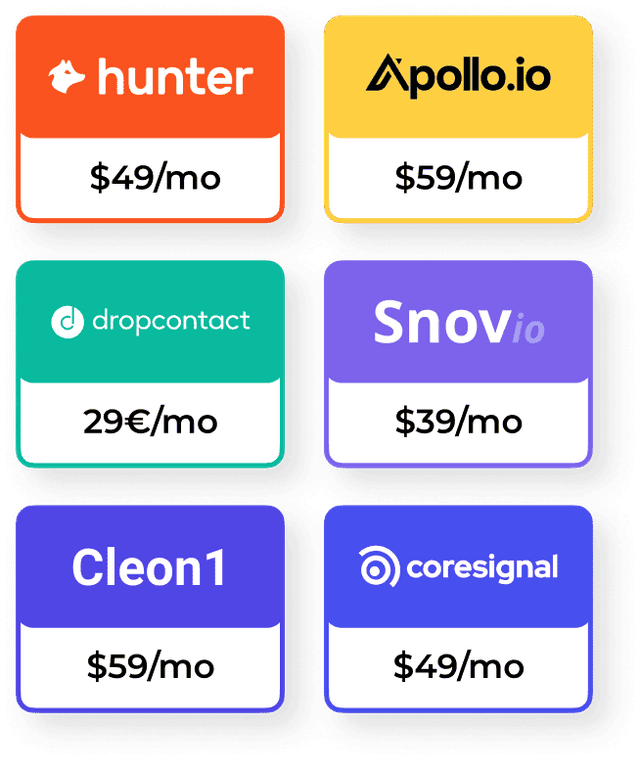
LeadContact integrates leading enrichment tools to deliver more accurate contact data—without paying for each one.

Great conversations start with the right contact.
It’s time to find yours.