
Juan Francisco B.
DSP Process design @ Merck Healthcare
About
I am an experienced biochemist and biophysicist with expertise in membrane proteins, structural biology, and biological nanopore technology. Skilled at developing innovative research methods and managing complex projects, with a strong publication record in high-impact journals and successful collaborations across academia and industry. During my DPhil in Biochemistry at the University of Oxford, I pioneered the use of styrene-maleic acid (SMA) polymers to generate Lipodisq nanoparticles (SMALP) — membrane mimetics that maintain native protein-lipid interactions for purification and functional analysis. My research demonstrated the potential of Lipodisqs for lipidomics applications and as novel drug delivery vehicles. Additionally, we solved at high-resolution (1.07 Å) the structure of a microbial rhodopsin using X-ray crystallography. Currently, I am a postdoctoral researcher at EPFL, focusing on advancing biological nanopore technologies.
Switzerland
Lausanne Metropolitan Area
Higher Education
Downstream Processing, Good Manufacturing Practice (GMP), Good Laboratory Practice (GLP), cGMP practices, GRP, GxP, Process Optimization (Manufacturing), Chromatography, Viral Clearance, Filtration, Process Analytical Technology, Affinity Chromatography, Standard Operating Procedure (SOP), Cross-functional Collaborations, ELN, Nanodiscs, Student Supervision, Biophysics, Membrane protein, Nanobiotechnology
Experience

DSP Process design
Merck Healthcare

Biotech Development Center, Fenil-sur-Corsier
Development and optimization of purification process for new biological entities. Advanced laboratory experiments for DSP process developments such as lab-scale chromatography, filtration (TFF/UF-DF), sterile filtration and associated process runs. Maintaining accurate records of experiments and contributing to project documentation. Troubleshooting routine operational issues and propose practical adjustments to improve process robustness and throughput. Collaboration with cross-functional teams to support process development projects. Participation in team meetings to discuss progress, challenges and next steps.
Scientist
EPFL
Losanna
Working on biological nanopores both on their structural characterization as well as their use for novel biotechnological use for detection or sequencing small (bio)polymers or (bio)molecules. Also involved in the supervision of several graduate, undergraduate, master and visiting students. Formerly, Correspondant à la sécurité (CoSEC) for the wet lab unit (2021-2024)

Postdoctoral Researcher
University of Lausanne - UNIL
I have been working on the mechanisms of sensing and homeostasis of intracellular ATP and phosphate in eukaryotic microorganisms. I focused on two projects. The first one consisting of the protein expression and purification of a multimeric complex from yeast which is able to produce polyphosphate (PolyP) and the second one consisting of studying the effect of nutrient deprivation on GPCR and G-protein signalling in yeast. I received a "Special Award for Outstanding Dedication in Practical Teaching" for the help, support and assistance of the practical work (TP) for bachelor students during Covid.
Internship
EPFL
Laboratoire de chimie physique des polymères et membranes
Characterize the localisation and dynamics of a membrane-embedded receptor, expressed in a stable cell line, using confocal microscopy under the supervision of Dr Luc Veya and Prof. Horst Vogel.
Education

University of Oxford
Biochemistry
I have demonstrated that Lipodisqs (or SMALPs), which are coin-shaped nanoparticles produced in the presence of lipid and a copolymer of styrene-maleic acid (SMA), can be used for membrane protein purification and drug delivery. • The use of a wide range of biophysical technique and native mass spectrometry have allowed the characterization of the activity, the oligomeric state and the identification of native ligands in a range of membrane proteins. • Assessed the potential of the Lipodisq nanoparticles as drug delivery vehicles • Elucidated the structure of a photoreceptor from a microbial source using X-ray crystallography at high resolution (1.07 Å) • Demonstrated that lipid extraction using Lipodisq provides a viable route to lipidomics studies with minimal perturbation of the organism. Supervision of several undergraduate, master and visiting students. Chemistry, physics and biology tutorials for undergraduate students.
EPFL
Molecular and Biological Chemistry
Main fields of study covered by the qualification: Analytical and bio-analytical chemistry Biological chemistry Computational quantum chemistry Inorganic chemistry Catalysis Organic chemistry Organic structure and reactivity Retrosynthesis Physical chemistry Photochemistry Blocks chosen: Computational chemistry: Applied molecular quantum chemistry Computational methods in molecular quantum mechanics Biological chemistry and Biophysics: Cellular signalling Chemical biology Nanobiotechnology and biophysics Inorganic Chemistry: Catalysis for energy production Catalyst design for synthesis Inorganic reactivity Optional lectures: Photochemistry Food Chemistry Pharmacological Chemistry Mass Spectrometry Chemistry of small biological molecules Law and Technology
EPFL
Chemistry and Chemical Engineering
Juan Francisco B.'s Contact Information
Phone
Find the Right Leads
Find Verified Contact Data

What LeadContact does well
Find verified emails, phone numbers, and decision-makers with 98% accuracy.

Find Leads
Find the right people by company, role, industry, location, and more.
925M+ professional profiles


Find Emails
Access verified email addresses for your target contacts.
657M+ emails


Find Phone Numbers
Get cross-validated phone data from multiple top sources.
239M+ phone numbers

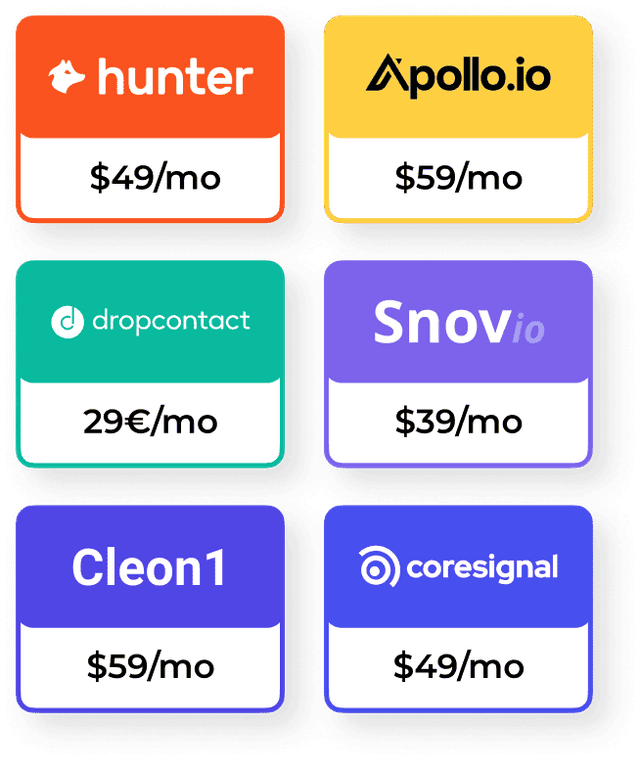
More Accurate. Lower Cost.
Find contact data in 1 tool with 98% accuracy
LeadContact integrates leading enrichment tools to deliver more accurate contact data—without paying for each one.

Great conversations start with the right contact.
It’s time to find yours.