
Hiromi Shikata
Full Stack Engineer, Engineering Manager

About
I am 20 years experienced a full stack engineer who loves development & automation. Open to work for full-remote, 16hours per week position. - like: LLM, CleanArchitecture, DDD, TDD, DevOps, DocumentAutomation, Rust, TypeScript, Go, Python, CI/CD, Testing automation - don't like: Ruby, PHP, iOS, Windows, Java, ec2, vpc
-
Japan
Program Development
SST, Dynamo DB, AWS CloudFormation, Amazon Relational Database Service (RDS), Github Actions, Github Projects, React.js, shadcn, Flutter, Golang, Kubernetes, GitHub Atom, cdk, TypeScript, Go, Software Development, TDD, Rust, Python, Ansible
Experience

Full Stack Engineer, Engineering Manager
AI product project at Japanese startup company
Remote
Full Stack Software Engineer (2 days/week)
Self-Employed (client: start-up company in urban development)
tokyo, remote, ...
Ubuntu, TypeScript, Dart, Express, Flutter, firestore, Postgres (CloudSQL), Clean Architecture, Micro Service Architecture, Monolithic Repository, Feature Flags, firebase, fireauth, firebase functions, firebase config, Prisma 2, OpenAPI, Docker, Docker Compose, CloudSQL, Google App Engine, CircleCI, GitHub, GitHub Issues, GitHub Projects, github-flow, Zapier, Slack Role:Team member (freelance) Assignment:Development Project size:Initially 3 eng. 35 at the most - The mobile application had no CI/CD environment and needed to have testable lines. I've set up the auto deploy. and the integration testing phase. - Members worked from different places via Slack. Information was scattered and we could not prioritize tasks so I introduced a task management tool. - I introduced Prisma to the project and changed to a monorep structure. The CI cost became critical so I changed it to only execute jobs with diffs. - Due to the team expansion, developing with only part-timers seemed lack of speed so I supervised the oversea eng. hiring process and created a multicultural team. I set up rules for RT meetings based on everyone's time zone and started 1-on-1s/scrum. - A large amount of work was also left behind. Thus, I introduced an online assistant service as a communication hub and outsourced some of the manual tests, paperworks etc. The team grew again and it seemed motivation had decreased so I re-organized the team by hiring a PM with a Scrum background. No one was yet capable of sorting out the req. and the deadline was close. I hired more PMs to avoid the ambiguity between business and devs. - At the end I could not have a general view of the project so I introduced some organizational changes. (PMs attending the 1-on-1s while I kept sharing other long-term subjects to the team, etc) - Received positive feedback: I managed to restructure the team based on the company's philosophy and hired developers with higher skills than the avg. JP eng. with only 1/3 of the cost.
Full Stack Engineer, Engineering Manager
Food delivery aggrigation service project at startup company
Remote
Full Stack Engineer (4 days/week)
Self-Employed (client: major consumer electronics manufacturer)
Tokyo, Japan
Ubuntu,AWS CloudFormation, RedShift, AWS Redshift, AWS CloudFormation, AWS Batch, AWS CodePipeline, AWS CodeBuild, AWS CodeCommit, ShellSpec, Bazel, Docker, BitBucket, JIRA, Slack Role:Team member Assignment:Development Project size:5-7 engineers - I've been assigned to improve the data lake which was already operational. - Deployments and testing were operated manually so I automated the processes. - Reluctant to make it similar to Atlassian with the AWS environment, I decided to automate using AWS CodeBuild, CodePipeline, CodeCommit. - Deploying and testing on a data lake was an interesting project with many considerations that differed from normal application development. - Due to the large amount of data used in the integration testing, I've placed the data for each version in s3 and built it so that the data version would be specified in the test codes. - The team used a mob programming approach, so members used to exchange a lot. Thus, I've proposed, as an experiment, to go for a trunk-based development. - Since there were a lot of Shell parts in the execution, I adopted ShellSpec as the test framework and created a sample to build and test wth Bazel.
Back End Developer(3days/week)
Self-Employed (client: web service company)
Tokyo, Japan
Linux(ubuntu, Alpine), TypeScript, Node.js, koa, Swagger, CleanArchitecture, DDD, TDD, TypeORM, MySQL5.6, Redis, GitHub, CircleCI, Slack, Jest, Docker, docker-compose, OpenAPI, AWS ECS(Fargate), AWS ElastiCashe, AWS RDS, GitHub projects, Scrum, 1on1, KPT Role:Team member Assignment:Development Project size:4-6 engineers - My first task was to choose the right technologies for the project: language, FW, middleware, libraries, tools, etc. - I was responsible for the design, implementation, testing, reviewing codes and the DevOps part for the backend. - I decided to go with RESTful for I/F, Clean architecture for the application, GitLab flow, DDD and TDD for the development process. - Also responsible for the team building and improving its management processes: 1-on-1 meetings, KPTs, study sessions, etc. - Offshore team was also under my responsibilities: daily meeting, sharing project designs, task managements, etc. - Had been requested to also organize the business side of the team, this task ended unsuccessful, unfortunately.
Infrastructure Engineer & Software Engineer (3days/week, including 2days remote work)
Self-Employed (client: AI startup company)
Tokyo, Japan
Linux(ubuntu, AMI), MongoDB, Redis, GitHub, CircleCI, Slack, Docker, Ansible, Terraform, docker-compose, Artillery, Serverless, DynamoDB, TypeScript, CleanArchitecture Role:Team member Assignment:Development Project size:20 employees, 3 application engineers - The infrastructure environment of the system had been built by one application engineer, alone. Due to the company's rapid growth, it needed to be improved. - For database redundancy, I've migrated to Atlas, MongoDB. - I built a new cache server with ElasticCache. - I have designed the system to have an application server scalable. - More specifically, initially built on AWS EC2, I've switched to Docker and replaced on AWS ECS (Fargate) - Additionally, all new environments were built with Terraform to prohibit manual changes, to be a safe environment which can be erased and created at any time. - There was no possibility to use Serverless in the environment, so I've tried to have the same usability as the framework. - The client had created a repository dedicated to the infrastructure and prepared the field so I could implement it freely. Therefore, I was able to guarantee the stability after changes, reduce workload and sustain reproducibility by checking/testing in auto the containers and code lines - The corporate representatives have requested to find a Slack bot with specific instructions (organizing "shuffle lunches") but unfortunately there weren't any available. Thus, I've created one and received great feedback.
Back End Developer & Infrastructure Engineer (3days/week, including remote)
Self-Employed (client: IoT startup company)
Tokyo, Japan
Linux(ubuntu), Python2, Python3, Flask (Flasgger), TypeScript, koa, Swagger, DynamoDB, GitHub, CircleCI, Slack, AWS Lambda, Docker, Serverless, Ansible, Terraform, CleanArchitecture Role:Team member Assignment:Development Project size:6 developers (including 1 server side) - The project was about rebuilding the API server using AWS Lambda with python, in order to facilitate the management. - The backend was built without using FW (Lambda, API Gateway) and automation was in place using API. Yet the maintenance was quite a labor so the client wanted to introduce Serverless FW to the system. - The design was quite simple but it highly depended on external services, thus testing seemed difficult: at that point, there was no testing available so I restructured the system, added some CI/CD such as automated testing and automated deployment, etc. - By adopting the Clean Architecture for the new design, I achieved 100% coverage in unit tests regarding the domain layer. - There was not much documentation so I’ve created one by linking FW and Swagger, hosted on CI and the ones that could not be displayed using markdown such as sequence diagrams, I’ve made sure they could be rendered in either html or js format for maintainability. - To prevent issues, I’ve migrated from python2 to python3, introduced and typehint and used mypy analysis. - I’ve also successfully created an automated development environment building process using Ansible on Ubuntu and on MacOS.
Infrastructure Engineer (1days/week)
Self-Employed (client: HR startup company)
Tokyo, Japan
Linux(ubuntu), Python3, GitHub, CircleCI, Slack, Docker, nginx, Ansible, Jupyter Notebook, Terraform, AWS SageMaker, AMI Role:Team member Assignment:Development Project size:3 - With the help of a company who built an engine with machine learning, the client has requested to create an A/B testing environment to improve the accuracy of the engine and its embedded part. - SageMaker has been used based on the client's request and its future availability. - The overall environment for the infrastructure was built with terraform. Parts from SageMaker that are not yet compatible with Terraform were built with the AWS client. - In order to have Ansible and Docker for the development environment, I've built the docker image with Ansible. - The client request was only on the infrastructure and there was no application implementation, but I've introduced CI/CD. In this way, the learning process is launched as soon as the AI engine codes are pushed to Git.
Back End Developer (4days/week)
Self-Employed (client: Ads tech startup company)
Tokyo, Japan
Linux(ubuntu), Go, Golang, Echo, Goswagger, MySQL, Aerospike, Redis, GitHub, CircleCI, Slack, GoSwagger, Docker, SchemaSpy, Ansible, docker-compose Role: Team member Assignment: Development Project size: 25 developers - The aim of this project was to build an ad-broadcasting service and its administration panel to manage the broadcasted contents, in golang. - The project had been already created and the base was already there as I joined. - During the second half of the project, I had the opportunity to redesign the API service for the administration panel: I adopted the Clean Architecture and redesigned it to be testable and easy to modify. - Since there was no swagger nor docker development environment, I created it from scratch and introduced it to the project. - As the team was composed of many young members, I felt it was necessary to improve their knowledge of team design, development tools and flows, so I held several events to improve their skills during lunch and after work. - Since there were no documents nor scripts for building the development environment, I created a playbook for Ubuntu and Mac using Ansible and shared it with the team members.
Back End Developer (4days/week)
Self-Employed (client: Fintech company)
Tokyo, Japan
Linux (Ubuntu, alpine), Kotlin, spark, exporsed, MySQL, GitHub, Backlog, CircleCI, Slack, Swagger, API Blueprint, Gradle, Docker, AWS ECS Fargate, SchemaSpy Role: Team member Assignment: Development Project size: 2 members - Built an API server in Kotlin. - CI integration and environment setup: the project had been developed to the halfway point, but there was no CI nor automatic deployment system and the API/DB designs were still incomplete. - I created documents and created an environment so that the latest document could be continuously referred to by anyone in the team through CI. (No document on DB designs was available and communication problems were starting to occur between different teams.) - Since we didn't have enough front-end team members, I also investigated and resolved errors for js codes. - The client has decided the in-house development was too risky: the development was then assigned to outsource resources and the internal team was disbanded.
Hiromi Shikata's Contact Information
Phone
Find the Right Leads
Find Verified Contact Data

What LeadContact does well
Find verified emails, phone numbers, and decision-makers with 98% accuracy.

Find Leads
Find the right people by company, role, industry, location, and more.
925M+ professional profiles

Find Emails
Access verified email addresses for your target contacts.
657M+ emails

Find Phone Numbers
Get cross-validated phone data from multiple top sources.
239M+ phone numbers
More Accurate. Lower Cost.
Find contact data in 1 tool with 98% accuracy
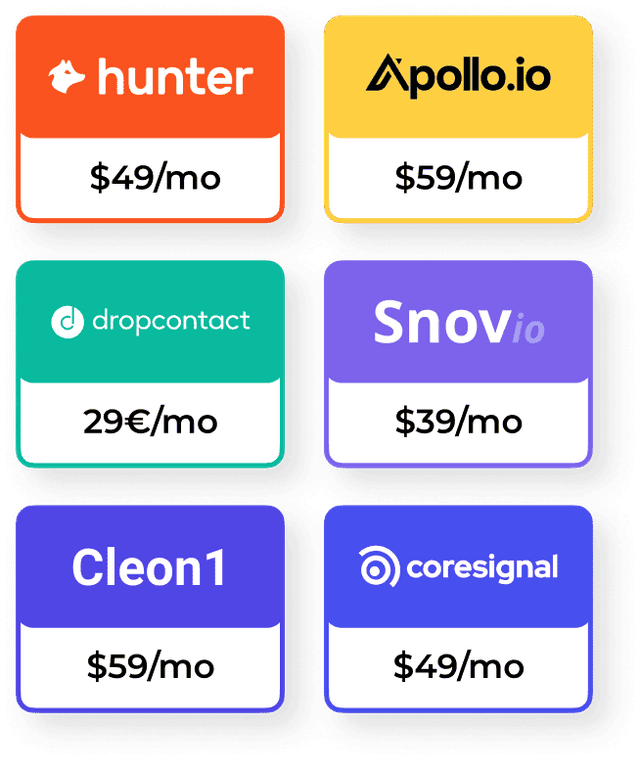
LeadContact integrates leading enrichment tools to deliver more accurate contact data—without paying for each one.

Great conversations start with the right contact.
It’s time to find yours.