
Hashem Koohy
Group Head & Principal Investigator, Computational & Systems Immunology @ University of Oxford
About
My research interests are driven by the biological questions and lie at the intersection of biology, mathematics and computer science. My previous work has been on developing mathematical and machine- learning techniques to address questions focused on transcriptional regulation such as developing an alignment-free model for comparison of cis-regulatory modules in the fruit fly D. melanogaster genome, genome-wide detection of regulatory regions in the human genome, as well as detection and removal of bias in DNase I Hypersensitive data. My current interest is centred on understanding the regulatory mechanisms behind the huge diversity of antigen receptor repertoire in both B and T lymphocytes. I am particularly interested in how our adaptive immune system is deteriorated as we age. Specialties: Machine learning, mathematical modelling, bioinformatics, Analysis of high throughput sequencing data with specific attention on chromatin accessibility data (DHS and ATAC-Seq), Systems Biology, Research Planning. Programming Languages: Python (developed a few python packages) and R. Also experienced in C++, Java and Perl
United Kingdom
Oxford
Research
Bioinformatics, Molecular Biology, Mathematical Modeling, Biochemistry, Scientific Writing, Machine Learning, Computational Biology, Python, R, C++, Genomics, Java, Perl, Transcriptional Regulation, Gene function, Epigenetics, Antigen receptor repertoire, B and T lymphocytes, Scikit-Learn, Artificial Neural Networks
Experience

Group Head & Principal Investigator, Computational & Systems Immunology
University of Oxford

I lead a multidisciplinary research group at Oxford, where we combine immunology, AI, systems biology, and structural modelling to decode how T cells interpret molecular information and shape adaptative cellular immunity. I also founded ImmSilico, a consultancy supporting researchers, biotech teams, and organisations in designing smarter experiments, integrating complex datasets, and applying modern AI tools to accelerate immunology discovery. I also host Unravelling T Cell Recognition a research-focused webinar series that brings together leading scientists to discuss seminal advances at the intersection of T cell biology and artificial intelligence. My mission is to bridge research, technology, and communication, ultimately advancing our understanding of adaptive immunity while empowering the next generation of scientist and innovators.

Group Head In Computational Biology
Oxford University
Junior Group Leader
MRC Weatherall Institute of Molecular Medicine, University of Oxford
John Radcliffe Hospital,
Machine learning and integrative analysis of high throughput sequencing data in cancer immunotherapy.

Honorary Research Fellow In Computational Biology
University of Warwick
Coventry, United Kingdom
I have capitalised a collaboration between WSB mathematicians, Cardiff University Immunologists and Babraham Institute Immunologists to investigate the changes in diversity of antigen receptor repertoire over time (age) and between individuals (and replicates) from different conditions such as healthy vs infected or immunized.

Postdoctoral Fellow In Computational Biology
The Babraham Institute
Babraham Institute, Cambridge
As a member of the Nuclear Dynamics Programme (led by Dr. Peter Fraser), I was in charge of integrating the large genomics data into supervised and un- supervised machine learning techniques to further explore: a) the mechanisms underlying the diversity of the antigen receptor repertoire in mouse B lymphocytes, and b) the chromatin changes associated with age.

Postdoctoral Researcher in Machine Learning Applications in Transcriptional Regulation
Wellcome Sanger Institute
Sanger Institute, Cambridge
I was in charge of developing machine learning techniques for further understanding of transcriptional regulation. Specifically, I developed a multivariate Hidden Markov Model (named Composure) for genome-wide detection of regulatory regions in human genome. I also discovered the sequence specificity of DNase Hypersensitive enzyme and presented a Position Weight Matrix model for the removal of the resulting bias.
PhD Student
Warwick Systems Biology
Coventry, United Kingdom
1- Developed an alignment-free (mathematical) model for comparison of cis-regulatory modules in D.melanogaster genome. 2- Implemented the model in C++ in a dynamic programming paradigm to tackle it very intense computation space. 3- Used model to predict the likely regulatory regions associated to fly olfactory systems and the most likely transcription factors.
Education

University of Warwick
Systems Biology
Developed an alignment-free (mathematical) model to compare the functionality cis-regulatory modules. Implemented the model in C++ using a dynamic programming approach. I used the model to predict the regulatory regions associated to the D. Melanogaster olfactory systems as well as the underlying transcription factors.
University of Warwick
Mathematical Biology
An MSc degree in Mathematical biology: courses included: Mathematical Modelling, Statistics/Bioinformatics, Molecular Simulations, Numerical Methods, Data Acquisition. Projects included: 1- Simulation of spatio-temporal protein distribution with GDF (with Dr. Markus Kirkilionis). 2- Decoding calcium signals in human myometrium (with Dr. Anatoly Shmygol). 3- Measurement of DNA persistence length (with Prof. Alison Rodger).
Hashem Koohy's Contact Information
Phone
Find the Right Leads
Find Verified Contact Data

What LeadContact does well
Find verified emails, phone numbers, and decision-makers with 98% accuracy.

Find Leads
Find the right people by company, role, industry, location, and more.
925M+ professional profiles

Find Emails
Access verified email addresses for your target contacts.
657M+ emails


Find Phone Numbers
Get cross-validated phone data from multiple top sources.
239M+ phone numbers

More Accurate. Lower Cost.
Find contact data in 1 tool with 98% accuracy
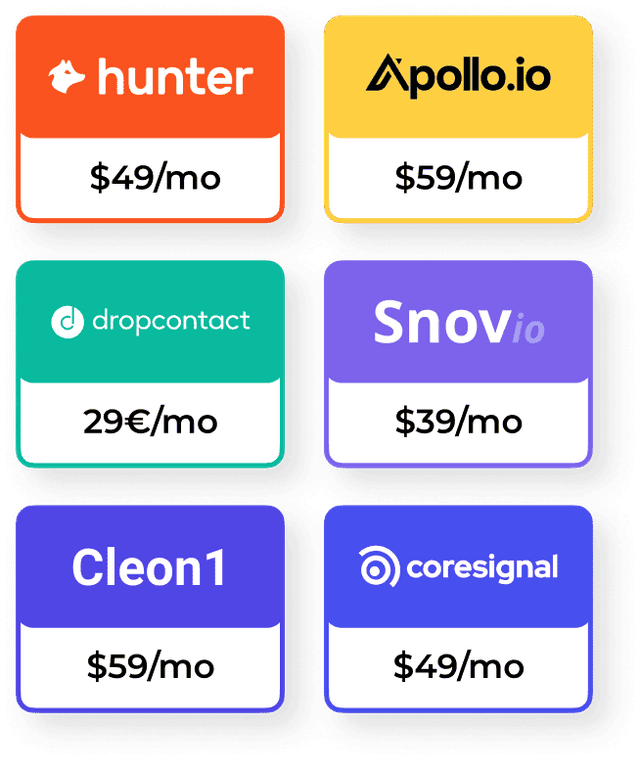
LeadContact integrates leading enrichment tools to deliver more accurate contact data—without paying for each one.

Great conversations start with the right contact.
It’s time to find yours.