
Floyd Mwansa
National Consultant – Private Investment & De-risking Specialist @ FAO
About
I am a Senior Development Economist and Statistician/Data Scientist with a proven history of leading complex evaluations and policy analyses for the world's most prominent development agencies. With over 16 years of experience, I specialize in Monitoring and Evaluation, Results Measurement, Research, Statistics, Project Management and Delivery, Public Financial Management, and Economic Analysis. My career has been defined by a commitment to rigor and accuracy, having successfully managed M&E systems for multi-million-dollar portfolios, including the massive infrastructure and institutional strengthening projects under the Millennium Challenge Corporation (MCC). Currently, I operate as a consultant engaged with organizations within the UN systems such as UNDP, UN Women, and the UNIDO. My recent work focuses heavily on the critical niches of Financial Inclusion, Gender Statistics, Climate Finance. I have been instrumental in assessing data landscapes across East Africa and the SADC region, developing training manuals for National Statistics Offices, Central Banks and other development partners. Beyond the field, I am committed to academic rigor and capacity building, serving as a Part-Time Lecturer and Researcher in Public Finance and Taxation at the University of Lusaka for the past ten years. My approach to consultancy is holistic. I combine the strategic oversight of a former Director with the technical hands-on skills of a researcher. I am proficient in a full suite of analytical tools—from STATA and SPSS to ArcGIS and Python—allowing me to handle every stage of the project lifecycle, from survey design and digital data collection (ODK) to complex econometric analysis and high-level reporting. I help organizations not only measure their results but understand the economic narratives driving them.
Zambia
Lusaka
Higher Education
Risk Assessment, Risk Management, Climate Finance, Communication, Reform, Scorecard, Written Communication, Policy reforms, Corporate Reporting, Strategic Leadership, Skill Development, Project Implementation, Private Sector Development, Management, Leadership, Knowledge Management, Project Coordination, Strategy, Problem Solving, Program Development
Experience

National Consultant – Private Investment & De-risking Specialist
FAO

Lusaka, Zambia
• Strategy Development: Designing a comprehensive De-risking Strategy and Investment Roadmap to facilitate private sector co-investment in the Maize, Soybean, and Livestock value chains under the GCF Readiness Programme. • Financial Engineering: Identifying and recommending technical and financial de-risking instruments, including Partial Credit Guarantees (PCGs), weather-indexed insurance, and blended finance structures to improve project bankability. • Technical Diagnosis: Applying the "Risk Waterfall" approach to categorize and rank investment barriers, utilizing FAO-UNDP SCALA guidelines to translate climate risks into core business opportunities. • Stakeholder Facilitation: Convening high-level Multi-Stakeholder Validation Dialogues with "Champion" investors, commercial banks, and government regulators (BoZ, PIA) to secure preliminary co-investment commitments. • Policy Alignment: Providing strategic recommendations for regulatory reforms and tax incentives to align private sector activities with Zambia’s Third Generation Nationally Determined Contributions (NDC 3.0), National Adaptation Plan (NAP), Comprehensive Agriculture Transformation Support Programme (CATSP/NAIP II) and Climate-Smart Agriculture Investment Plan (CSAIP).

National Consultant – End of Program Evaluation
UNIDO
Lusaka, Zambia
The consultant's activities, as a National Evaluation Consultant for UNIDO, focused entirely on conducting a Terminal Evaluation (TE) for the Zambian Industrial Training Academy (ZAMITA) Phase II project in Zambia. This work was organized into three distinct phases: inception, fieldwork/data collection, and reporting. During the inception phase, the consultant’s activities involved a detailed desk review of all project documents (including the Logical Framework and annual reports) and defining the evaluation's specific methodology and action plan. The second and most crucial phase involved data collection and fieldwork primarily in Ndola, Zambia, though also coordinating around Lusaka. The consultant applied the approved data collection methods, which included conducting numerous semi-structured interviews and potentially group discussions with project beneficiaries and stakeholders. The final phase concentrated on reporting and incorporation of feedback. The consultant's core accomplishment was the preparation of the final terminal evaluation report. This comprehensive document detailed the assessment of all required evaluation criteria (including progress to impact, project design, gender mainstreaming, and environmental/social safeguards), clearly outlining the findings on the project’s causality, barriers, and challenges.

Financial Inclusion and Gender Statistics Consultant
UN Women
Nairobi, Kenya
The consultancy's primary activities centered on data consolidation, analysis, and capacity building concerning gender and financial inclusion statistics within East Africa. As an International Consultant for UN Women's ESARO, I was tasked to conduct a thorough investigation into the current availability of gender-related financial inclusion data in the region's countries, building upon prior collaborative work with SADC that established a regional report and a technical toolkit for gender data measurement. A key activity involved leveraging the SADC toolkit as a foundation to develop a more generic training toolkit grounded in global best practices, specifically designed to guide the mainstreaming of gender into financial inclusion and asset ownership data collection systems across the globe. Furthermore, the consultant was responsible for producing actionable recommendations for improving data utilization and identifying future research avenues. Part of the major accomplishments for this consultancy include production of a 20 paged Status Report on Financial Inclusion and Gender in selected East African countries (Kenya, Rwanda, Uganda and Tanzania) utilising the 2024 World Bank Findex data, International Monetary Fund 2024 Financial Access Survey data and the FinScope demand side data.

National Consultant - Project Baseline Survey, Gender Analysis and Gender Action Plan
United Nations Development Programme (UNDP)
Lusaka, Zambia
The focus of the Baseline survey conducted was to gather comprehensive data and insights on the current state of infrastructure, service delivery, gender situation analysis and socio-economic conditions in Meheba and Mayukwayukwa resettlement schemes which houses the refugees, former refugees and host community members. The assignment's main tasks are as follows: Desk Review: A thorough analysis of policy documents e.g. the new Resettlement Policy, previous assessments, and relevant reports will be conducted to understand the existing infrastructure challenges and policy frameworks governing resettlement schemes. This also involved reviewing national and international guidelines, past feasibility studies, and reports from government agencies and NGOs. Household Surveys and Community Consultations: Structured questionnaires were administered to a representative sample of households to collect quantitative data on infrastructure needs, access to services, and socio-economic conditions. Focus Group Discussions (FGDs): FGDs were conducted with key community groups, including women, youth, persons with disabilities, and other vulnerable groups, to capture their perspectives on infrastructure challenges and development priorities. Key Informant Interviews (KIIs): Interviews were conducted with Line Government Ministries, local authorities, NGOs, community leaders, and other stakeholders to gain expert insights into the infrastructure gaps, social economic needs, and potential interventions. Field Observations and Infrastructure Assessments: Site visits were conducted to assess the current state of infrastructure, including roads, schools, healthcare facilities, water supply, and sanitation systems. Gender and Social Inclusion Analysis: A detailed assessment was conducted to examine the role of women, youth, and other vulnerable groups in infrastructure development and access to services.
Financial Inclusion Gender Statistics Consultant
FinMark Trust
Midrand, Johannesburg, South Africa
Providing strategic support to in the implementation of “Enhancing the use of gender-disaggregated data by SADC regulators and FSPs to mainstream gender in regional development” project to support regulators to understand the importance of gender disaggregated data as well as the critical role gender plays in financial inclusion and economic inclusion, and development of tools required to engage, encourage and even mandate FSPs to collect relevant disaggregated data at source. The specific tasks includes the following; Gender Disaggregated Data (GDD) Gap analysis for banking and mobile money indicators for the SADC region and the development of the manual to guide collection and analysis GDD to assist Central Banks across the SADC region.
Climate and Agricultural Finance Expert
United Nations Development Programme (UNDP)
Lusaka, Zambia
The scope of work involved research, consultations and analytics to help the UNDP team meet its objectives around private sector engagement and crowding-in finance for climate adaptation for Climate Resilience Agricultural (CRA) practices. Specifically, the work focused on identifying bankable on-farm CRA investments in close consultation with Financial Service Providers (FSPs), smallholder farmers, farmer associations and Government through the Ministry of Agriculture and Green Economy, including other stakeholders. Part of the specific tasks performed includes the following: • Desk review: Review existing literature to identify adaptation practices and investments used by targeted agricultural and livestock producers; • Needs assessment: Engagement with farmers, livestock producers and local agricultural stakeholders to understand their adaptation needs and preferences and identify practices/investments that address climate risks effectively for specific value chains; • Demand for credit and willingness to invest: Assessment of the willingness of agricultural and livestock producers in targeted areas to invest in recommended CRA practices, and their capacity and readiness to take on additional loans for these ‘bankable’ investments. This was done by undertaking the agricultural finance analysis diagnostic for the targeted areas; • Economic viability analysis: Determine economic viability of CRA practices and investments and identify interventions with a sufficient return on investment to qualify as 'bankable’; • Consultations with financing partners: Assisted the UNDP team with undertaking consultations with FSPs to convince them in developing products to farmers for the identified bankable adaptation interventions; and • Assess market size: Estimation of potential market size for identified CRA practices and technologies within targeted catchment areas.
National Evaluation Consultant
United Nations Development Programme (UNDP)
Lusaka, Zambia
National consultant and lead evaluator responsible for conducting the end-of-term evaluation of the Promoting Human Security Through Sustainable Resettlement Programme in Zambia. The Programme utilised a combined humanitarian and development approach and was implemented by the UNDP and UNHCR in collaboration with the Department of Resettlement (DoR) within the Office of the Vice President. The Evaluation was conducted following the performance criteria specified in the UNDP Evaluation Guidelines (Relevance, Coherence, Effectiveness, Efficiency, Sustainability, Human Rights, Gender and Management and Monitoring). The Evaluation process included many tasks such as desk review, development of data collection tools (both quantitative and qualitative), data collection, data analysis, report writing, and presenting of findings to stakeholders.
Financial Inclusion and Gender Statistics Consultant
UN Women
Kenya, Nairobi
Establishment of international best practices in financial inclusion statistics and development of statistical methodologies to guide collection and analysis of financial inclusion data in SADC region. Specific tasks performed include: • Desk review of international best statistical practices for collection and analysis of Financial Inclusion data; • Bi lateral consultation with relevant users and producers of financial inclusion statistics within SADC to access data completeness and quality of available data; • Design of Indicator Matrix with detailed measurement protocols; • Preparation of overview report on status of financial inclusion in the region; • Preparation of statistics training materials; and • facilitation of workshop to build capacity of National Statistics Office and Central Bank officers from SADC member countries.

Analytics and Research Consultant
AB Bank Zambia
Lusaka, Zambia
Provided Analytics and research expertise to design and implement brand health measurement. The consultancy involved design of data collection platforms, data management and analytics. The major output was to provide recommendations on how best AB Bank can reach out to its clients to meet their expectations. Furthermore, the research measured awareness, usage and uptake of the available financial services offered by AB Bank. The research was designed to feed into the continuous improvement cycle for informed decision making to improve product design business performance

Monitoring, Evaluation and Research Expert
WWF Zambia
Lusaka, Lusaka Province, Zambia
Provided Review of WWF Zambia 2022 – 2026 Strategy using OECD/DAC evaluation criteria to provide lessons learnt, recommendations and guide the implementation of the next phase. The consultancy also included data analysis, report writing for 2023 Baseline Survey conducted in all WWF Zambia operation areas in Zambia. Furthermore, the outputs from both Strategy review and Baseline Survey, were used as an input in the development of Research and Learning Agenda for WWF Zambia.

Agricultural Finance Policy Analysis Expert
FSD Zambia
Lusaka, Lusaka Province, Zambia
This consultancy was a two-in-one assignment. The first part involved further data analysis and report finalization for Rural and Agricultural Finance (RAF) Report; validation and editing of the 5 deep dive reports ; and developing results summaries. On the other hand the second part focused on the supply-side and involved desk review/deep dive of available literature on smallholder agricultural finance issues in Zambia; primary data collection; policy mapping and analysis; data analysis and synthesis; report writing; and dissemination of findings and recommendations.
Research Expert
FSD Zambia
Lusaka, Zambia
Provided focused technical expertise to selected research projects for FSD Zambia which include: • Annual impact assessment survey; • Impact of Covid-19 on small holder farmers in Zambia; • Impact of Covid-19 on operations of Savings Groups in Zambia; and • Women and youth in Financial Inclusion Baseline survey.
Director - Analytics
FSD Zambia
Lusaka, Zambia
The Director - Analytics is a senior management position reporting to the FSD Zambia Chief Executive Officer. The Director - Analytics leads and oversees: a) Monitoring and Results Management (MRM) by supporting the implementation of FSD Zambia activities through a strong MRM system as well as measuring and communicating results, itself contributes to the delivery and communicating of improved results and impacts. The FSD Zambia MRM system applies a Making Markets Work for Poor People (M4P) approach and is designed to manage the ambitious systemic-change objectives of the programme; b) Management of all aspects of FSD Zambia research. This involves managing a cross-cutting research agenda (which includes but is not limited to the FinScope demand side survey, geospatial mapping of the locations of financial services access points, and market access reviews), as well as engaging with external researchers, encouraging national research agendas which relate to FSD Zambia work, and providing overall leadership and support for thematic area research projects (at times taking on a direct research role); and c) Management, development and implementation of a wide range of knowledge management activities, building market capacity to collect quality data, access and analyse it, use information to spur innovation in supply, demand, and policy change, and bring rigor to the way FSD ZAMBIA measures long-term outcomes and impact.
Education

University of East London
Data Science
Floyd Mwansa's Contact Information
Phone
Find the Right Leads
Find Verified Contact Data

What LeadContact does well
Find verified emails, phone numbers, and decision-makers with 98% accuracy.

Find Leads
Find the right people by company, role, industry, location, and more.
925M+ professional profiles


Find Emails
Access verified email addresses for your target contacts.
657M+ emails


Find Phone Numbers
Get cross-validated phone data from multiple top sources.
239M+ phone numbers

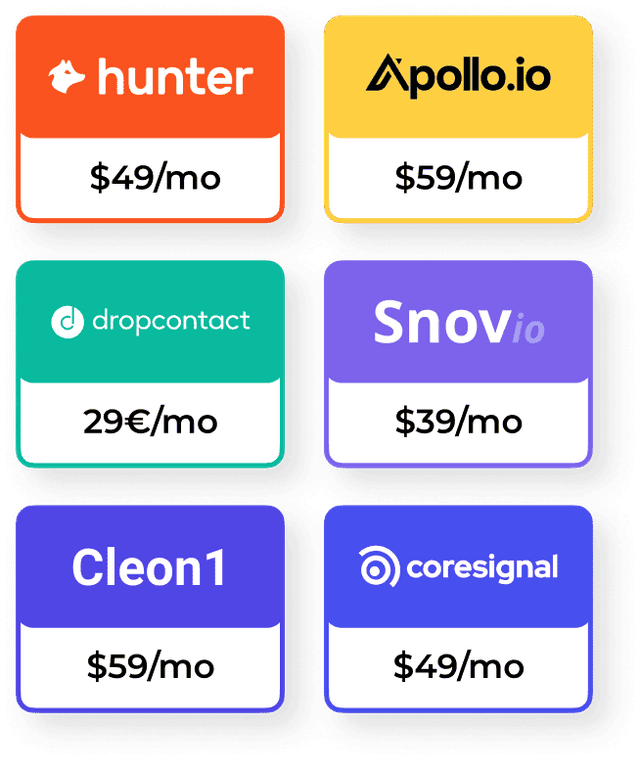
More Accurate. Lower Cost.
Find contact data in 1 tool with 98% accuracy
LeadContact integrates leading enrichment tools to deliver more accurate contact data—without paying for each one.

Great conversations start with the right contact.
It’s time to find yours.