
Dr. Elliott More CEng
Founder @ Viable Pathway
About
Climate Transition Plan specialist I’m a mechanical engineer turned climate strategist who’s scaled from designing HVAC systems to shaping net-zero pathways for cities, and now, guiding corporates through climate transition planning. Along the way I earned a PhD, published work on cognitive biases in strategy, and built a reputation for combining rigour with foresight. Today, I help organisations turn ambition into credible action: building robust GHG inventories (Scopes 1–3), aligning with SBTi and IFRS S2/CSRD, and developing scenario-based roadmaps that are financially grounded and execution-ready. My focus is on translating complex modelling into clear board-level decisions. I’m based in Sydney and open to advisory and leadership roles in climate transition planning, sustainability strategy, and net-zero delivery. If your organisation needs a plan that can withstand investor, regulatory, and operational scrutiny, let’s connect.
Australia
Sydney
Management Consulting
Expert Advisor, Climate Transition Planning, Due Diligence, Net-Zero Emissions, GRESB, NZAOA, Decarbonisation, GHG Protocol, Net Zero Inveatment Framework, SBTi, CRREM, Building Services, Sustainable Development, Sustainability, Mechanical Engineering, Research, Foresight, Business Strategy, Technology Roadmapping, Corporate Sustainability
Experience

Founder
Viable Pathway

Sydney
Built and am launching a projection engine to generate TCFD/AASB-aligned transition plans. Automate scenario modelling that translates emissions pathways into sequenced action plans. it will produce 80% ready transition plans supporting IFRS S2/ISSB disclosure needs and investor due diligence.

Associate - Decarbonisation
Edge Impact
Sydney, New South Wales, Australia
AASB S2 compliance and Climate Transition Action Planning

Independent Consultant specialising in GHG Emissions, Net Zero Strategies and Data Strategies
E More Consulting
Australia
I can help you and your organisation to get to grips with all things GHG emissions. I have 15 years experience working first as a mechanical engineer, then a GHG specialist, and finally a strategic sustainability consultant for international pension companies and banks. Current clients include IMF, EIBG, and Ramboll.

Sustainability Consultant
Ramboll
Denmark
Assisting European Investment Bank with their internal emission reduction ambitions

Board of Advisors
comundo
Copenhagen, Capital Region of Denmark, Denmark
Technical sustainability advisor to proptech scale-up
Decarbonisation and Digitilisation lead
Ramboll
København, Capital Region, Denmark
In my team, we help property companies to develop a net zero strategy. I’m usually working with companies or funds with large property portfolios. We help them measure their baseline, then pick a reduction target and target year, and finally co-create a roadmap to achieve it. This roadmap is made up of lots of initiatives, some are at the technical level like renovations or energy management, others are at the strategic level, like revising their acquisitions and divestments, or entering into CPPAs. Then finally we advise on appropriate carbon removals for the final 5 percent that the company can’t eliminate. I provide the clients with independent advice along this whole process, but often the clients are lacking coherent data, and also need help developing a data and metering strategy.
Strategic Sustainability Consultant
Ramboll
København, Capital Region, Denmark
Advising clients on a range of sustainability areas, mainly focusing on strategies to achieve carbon-neutral neighbourhoods and large building portfolios
Senior Consultant
Arup
København, Capital Region, Denmark
Working with cities to help them transform into net zero carbon cities by 2050.
Senior Engineer
Arup
Copenhagen Area, Denmark
Developed energy strategy for UN17 Village. Coordinated engineering dRofus information for Bispebjerg Hospital. Designed ventilation systems for Bispebjerg Hospital. Led the evaluation of energy infrastructure for Surrey County Council.
Senior Lecturer
Arup
London, England, United Kingdom
Senior lecturer in the Mechanical Services Graduate course for Arup University, for both UK and Europe regions. The 5 day course helps develop mechanical graduates during their first year and is part of a programme designed to provide a complete overview of the basics of mechanical services design. Elliott leads the days teaching centred on renewable and low carbon energy, its application to buildings, and the selection criteria for various technologies. Particular technical focus will be on combined heat and power, the use of biomass, and ground source heating and cooling. By the end of the course, participants will be able to: Define renewable energy and low carbon energy supplies. Describe the concepts of carbon emissions in the context of energy demand and supply. Prepare a basic energy balance calculation for a building to assess renewable and low carbon options. Describe the concept of cogeneration for heat and power and the correlation to carbon emissions. Undertake basic CHP feasibility thermal and power calculations. Prepare basic schematics for integrating CHP in to total building system. Understand CHP operational issues and the concept of ESCo and district based. Carry out preliminary calculations for sizing biomass boiler systems. List the differences between solid fuel, oil and gas boilers – physical constraints, location and flue emissions. Identify the biomass fuel options, their source, carbon content, emissions and spatial requirements Recognise the current and future suitability of biomass fuelled CHP. List the principles for using the ground and ground water as a renewable energy source. Describe the energy balance requirements for ground source systems and the different options for ground source heating and cooling. Perform basic selection calculations for integration of ground source systems in to buildings. Compare system options and make recommendation based on preliminary assessment. Explain system implications on building design.
Sustainable design lead (Denmark)
Arup
Copenhagen Area, Capital Region, Denmark
Designing buildings, neighbourhoods & transport systems that materially contribute towards the UN Sustainable Development Goals.
Mechanical Engineer
Arup
London, United Kingdom
Chartered Building Services Engineer.

European CAP Programme Manager
C40 Cities
Copenhagen, Capital Region, Denmark
European CAP Programme Manager, working directly with city officials across Europe & some of Middle East to help them develop a Climate Action Plan which is consistent with the 1.5°C Paris Agreement.

Advisor
Mendeley
Act as a representative for Mendeley at the University of Cambridge.
PhD Researcher
University of Cambridge
Cambridge, United Kingdom
This research was motivated by the challenge facing manufacturing firms from global resource constraints. There is consensus that manufacturing firms need to address non-labour resource productivity and adopt alternative business models that are less reliant on the linear consumption of resources. For firms to make this transition, a firm’s senior decision makers must be aware of the long-term strategic threat posed by resource constraints during the strategy process. The process should thus raise decision makers’ awareness and prompt a re-evaluation of the firm’s strategy and business model. The environmental scanning activity is the opportunity for threats in the external environment to be identified, however some argue that generic strategy processes, having been developed during an era of resource abundance, fail to highlight this strategic threat. This research investigated these claims by first examining how a generic strategy process prompts decision makers to identify resource constraints in the external environment. Next the research explored how strategic awareness could be improved with foresight and systems thinking tools. The research successfully demonstrated that strategic awareness can be improved by introducing foresight approaches and a systems thinking perspective into the environmental scanning activity. The key implication of the research is to confirm that strategic awareness can be improved even within a time-constrained strategy workshop.
Education
University of Cambridge
Strategic Foresight
I explored how cognitive biases inhibit rational decision-making about the future. I worked with a strategy consultancy firm to review the quality of foresight in senior execs in manufacturing firms. I also conducted a comparative analysis between UK and Chinese firms (spending 6 months in Beijing, hosted at Tsinghua University). I developed and tested an improved foresight process (with the help of the strategy consulting firm) and determined a material improvement in both the quality and breadth of foresight exhibited by decision makers.
University of Cambridge
Engineering for Sustainable Development
There is a growing recognition and acceptance that society needs to develop new pathways to achieve a more sustainable future. This is driving elements of government policy, business strategy and technical innovation, recognising that the past and present strategies of industrial societies have led to unacceptable damage of the physical environment and inequalities both within “developed” communities and with the rest of the non-industrialised world. The goal is to achieve economic progress, ecological protection and social justice. Engineers are responsible for providing fundamental services in the delivery of infrastructure as well as manufactured products synonymous with the modern world. Consequently they have a professional duty to design systems and technologies more sustainably to adapt to and mitigate impacts from anthropogenic climate change, resource depletion, waste generation and pollution, poverty and inequity.

University of Warwick
Mechanical Engineering
First Class Honours Third year project on liquid jet impact won IMechE Award for Institution Best Project. I project managed my fourth year group project on an innovative solar powered air conditioning system
Lund University
Sustainable Cities
How can we shape our urban development towards sustainable and prosperous futures? This course explores sustainable cities as engines for greening the economy in Europe and around the world. We place cities in the context of sustainable urban transformation and climate change. We connect the key trends of urbanization, decarbonisation and sustainability. We examine how visions, experiments and innovations can transform urban areas. And we look at practices (what is happening in cities at present) and opportunities (what are the possibilities for cities going forwards into the future). This course was launched in January 2016, and it was updated in September 2021 with new podcasts, films and publications. The course is produced by Lund University in cooperation with WWF and ICLEI – Local Governments for Sustainability who work with creating sustainable cities. The course features researchers, practitioners and entrepreneurs from a range organisations.
Dr. Elliott More CEng's Contact Information
Phone
Find the Right Leads
Find Verified Contact Data

What LeadContact does well
Find verified emails, phone numbers, and decision-makers with 98% accuracy.

Find Leads
Find the right people by company, role, industry, location, and more.
925M+ professional profiles


Find Emails
Access verified email addresses for your target contacts.
657M+ emails


Find Phone Numbers
Get cross-validated phone data from multiple top sources.
239M+ phone numbers

More Accurate. Lower Cost.
Find contact data in 1 tool with 98% accuracy
LeadContact integrates leading enrichment tools to deliver more accurate contact data—without paying for each one.


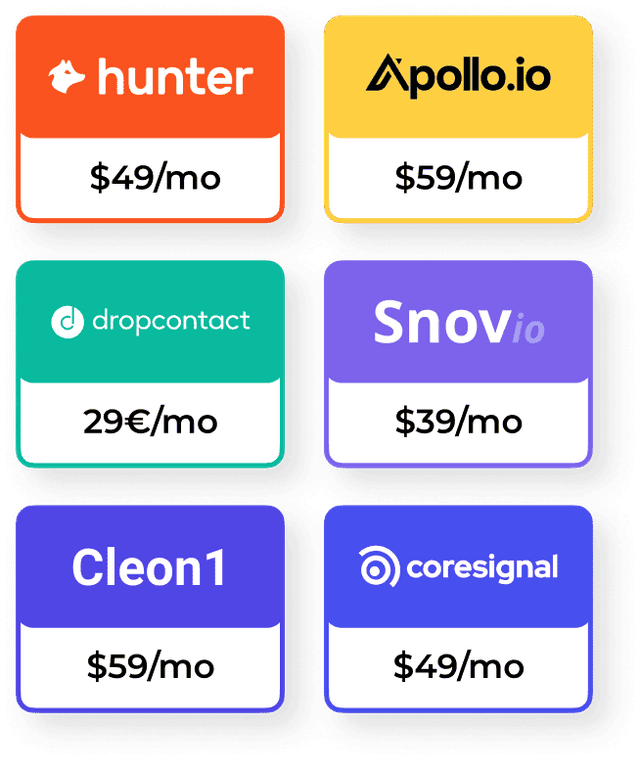
Great conversations start with the right contact.
It’s time to find yours.