
Divya Murthy, PhD
Scientific Editor @ iScience
About
As an Assistant Professor (Research) at Brown University, I apply my PhD in Biotechnology and 8+ years of postdoctoral research experience in cancer biology to investigate the role of metabolites on the survival, metastatic potential and aggressiveness of pancreatic and breast cancer. My mission is to advance the understanding of tumor microenvironment-mediated metabolic reprogramming and identify novel therapeutic targets and biomarkers for this deadly disease. I have a strong background in molecular and cellular biology, proteomics, and metabolomics, with multiple peer-reviewed publications in diverse scientific journals. I am proficient in various techniques such as LC-MS/MS, RNA-Seq, CRISPR-Cas9, and Reverse Phase Protein Arrays. I am also skilled in scientific writing, communication, and collaboration, having authored and co-authored several manuscripts and worked with multidisciplinary teams. I am passionate about applying my knowledge and expertise to contribute to the field of cancer research and improve patient outcomes.
United States
Providence
Research
Oral Communication, Nucleic Acid, RNAseq, Cancer Stem Cells, Microsoft Office, RNA, Protein Isolation, Blotting, Academic Research, Molecular & Cellular Biology, Assay Development, Protein Purification, Cancer Research, Adobe Illustrator, Adobe Photoshop, Immunocytochemistry, Fluorescence Microscopy, Confocal Microscopy, Written Communication, Interpersonal Communication
Experience
Scientific Editor
iScience

Rhode Island, United States

Assistant Professor at Department of Pathology and Laboratory Medicine
Brown University
Providence, RI

Staff Research Associate
Baylor College of Medicine

Research Instructor
University of Nebraska Medical Center
Postdoctoral Research Associate
University of Nebraska Medical Center
Omaha, Nebraska, United States
Tumor microenvironment-mediated metabolic reprogramming in pancreatic cancer. I work on understanding the role of metabolites on the survival and aggressiveness of pancreatic cancer. My work deals with: • Identification of metabolites by Liquid Chromatography based metabolomics (LC-MS/MS). • Identification of genes that potentially promote an aggressive cancer phenotype in pancreatic cancer using Chromatin Immunoprecipitation and RNA-Seq • Proteome analysis using mass spectrometry. • Developing CRISPR-Cas9-based knockout models. Technical Skill set: • Phospho-proteomic studies in pancreatic cancer cells using Reverse Phase Protein Arrays • Tumor cell culture and in-vitro drug testing using spectroscopic and fluorescence microplate assay • Biomarker assay using immunohistochemistry, western blot, and quantitative real-time PCR assays. • LC-MS/MS-based metabolomic studies • Development of tumor organoid-based model system. • GSEA of biological datasets to determine biologically and statistically significant set of genes. https://aacrjournals.org/cancerdiscovery/article/doi/10.1158/2159-8290.CD-23-0334/730024/Vitamin-B6-competition-in-the-tumor https://www.mdpi.com/1422-0067/24/8/7304 https://www.sciencedirect.com/science/article/pii/S2213231722000738?via%3Dihub https://www.nature.com/articles/s41388-021-02132-6 https://www.gastrojournal.org/article/S0016-5085(21)03159-0/fulltext?referrer=https%3A%2F%2Fpubmed.ncbi.nlm.nih.gov%2F https://www.sciencedirect.com/science/article/abs/pii/S0304383520303815?via%3Dihub https://rupress.org/jem/article/217/7/e20190745/151806/SIRT1-NOX4-signaling-axis-regulates-cancer https://www.frontiersin.org/articles/10.3389/fphys.2018.00335/full https://link.springer.com/protocol/10.1007%2F978-1-4939-7665-2_8 https://www.sciencedirect.com/science/article/pii/S1535610817302544?via%3Dihub https://www.sciencedirect.com/science/article/pii/S0304383517302902?via%3Dihub https://www.bioscience.org/2017/v22/af/4543/fulltext.htm

Graduate student
Institute of genomics and integrative biology (CSIR)
New Delhi, India
The project focused on understanding the melanosome and mitochondria dynamics during pigmentation under the guidance of Dr. Rajesh S. Gokhale. • Delineated the role of autophagic machinery in melanosome biogenesis and degradation. • Characterized a non-canonical role of autophagic protein MAP1LC3B in mediating movement of melanosomes during melanogenesis. • Identified the motor protein (kinesin) that mediate translocation of melanosomes in melanocytes. • Explored the melanosome-mitochondria crosstalk during melanogenesis using a compendium of tools and techniques including mass spectrometry, mammalian cell culture, and extensive confocal based microscopy. • Utilized organotypic culture derived from human subjects for isolation of melanocytes to validate cell line-based findings. Technical Skill set: • Organelle isolation and its biochemical characterization • In vitro biochemical assays • Molecular biology techniques: Cloning of mammalian genes, site directed mutagenesis, recombinant protein expression in E.coli, protein purification and enzyme activity studies, protein-protein interaction studies by co-immunoprecipitation and protein pull down assays, DNA and RNA isolation and purification. • FACS-based studies • Extensive training in confocal based microscopic analyses of subcellular organelles and structures; and live cell imaging to understand organelle dynamics and kinetics. https://journals.plos.org/plosbiology/article?id=10.1371/journal.pbio.3001634 https://www.tandfonline.com/doi/full/10.1080/15548627.2017.1327509 https://www.sciencedirect.com/science/article/pii/S0006349515009923?via%3Dihub https://www.sciencedirect.com/science/article/pii/S0958166913000232?via%3Dihub

Collaborative Project
Goethe University Frankfurt
Institute of Biochemistry II, Frankfurt Am Main, Germany
Elucidating the role of PLEKHM2 in melanosome trafficking on cytoskeletal tracks in melanocytes. • Collaborated on a research project to elucidate the role of the adaptor protein, PLEKHM2 (SKIP), in mediating movement of melanosomes within melanocyte. • Performed exogenous overexpression and confocal-based experiments to study subcellular localization of PLEKHM2 on melanosomes. • Extensively employed microscopy to analyze subcellular organelles and structures, and live cell imaging to understand organelle dynamics and kinetics. https://www.biorxiv.org/content/10.1101/2021.03.11.434917v1

Master Student
The Maharaja Sayajirao University of Baroda (MSUB), Vadodara
Vadodara, India
Cytokine expression profiling in Caco-2 and RAW 264.7 cell lines exposed to Lactobacilli isolates to evaluate their probiotic effect. • The project aimed at understanding the modulation in the cytokine profiles of pro- and anti-inflammatory cytokines in Caco-2 colon carcinoma cell lines and RAW 264.7 macrophage cell lines stimulated with various Lactobacilli isolates. • Isolated various Lactobacilli strain from different sources, stimulation of Caco-2 and RAW 264.7 cell lines with the Lactobacilli isolates. • Performed bacterial adhesion assays and semi-quantitative PCR-based cytokine profiling. The project yielded interesting findings. I observed significant immunomodulation on stimulation with various Lactobacilli isolates implicating them as potential probiotic candidates. Technical expertise attained: • Mammalian cell culture, semi-quantitative PCR, bacterial adhesion assays.
Education

Institute of genomics and integrative biology (CSIR)
Biotechnology

The Maharaja Sayajirao University of Baroda (MSUB), Vadodara
Biotechnology

Delhi University
Biochemistry
Divya Murthy, PhD's Contact Information
Phone
Find the Right Leads
Find Verified Contact Data

What LeadContact does well
Find verified emails, phone numbers, and decision-makers with 98% accuracy.

Find Leads
Find the right people by company, role, industry, location, and more.
925M+ professional profiles


Find Emails
Access verified email addresses for your target contacts.
657M+ emails


Find Phone Numbers
Get cross-validated phone data from multiple top sources.
239M+ phone numbers

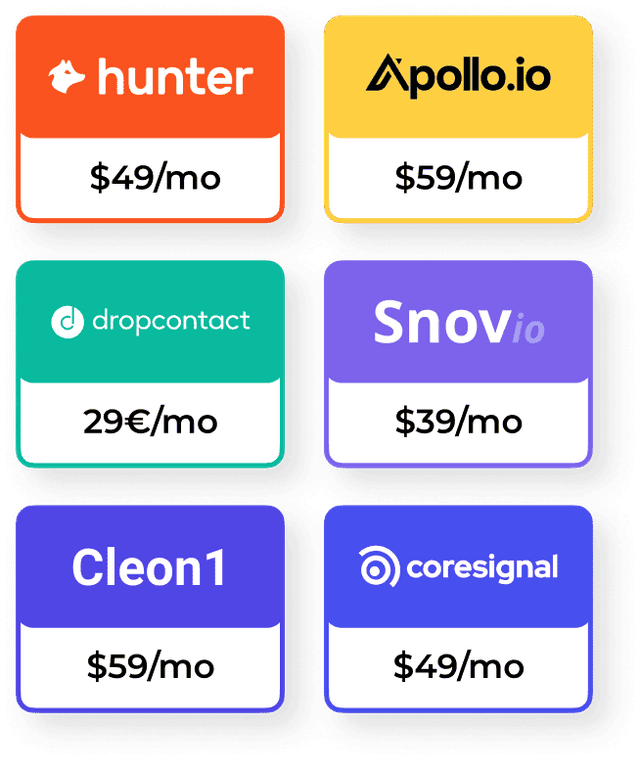
More Accurate. Lower Cost.
Find contact data in 1 tool with 98% accuracy
LeadContact integrates leading enrichment tools to deliver more accurate contact data—without paying for each one.


Great conversations start with the right contact.
It’s time to find yours.