
Cheng-Yao Lo
Professor @ National Tsing Hua University
About
Dr. Lo received his Ph. D. degree from The University of Tokyo (2009, Japan). His professional training includes thin-film optics, optoelectronic devices, CMOS semiconductors, MEMS, and printed electronics. He was an engineer at Taiwan Semiconductor Manufacturing Company (TSMC) during 2001-2005, where he was responsible for process integration for the solicitation.Dr. Lo works in the field of strain engineering after joining National Tsing Hua University (NTHU) since 2010, particularly for applications in force/pressure/stress/strain/tactile sensing, distinguishing himself from other research teams with organic/inorganic/composite materials-based process, device, and systems. He is active and famous in the international society with 150+ peer-reviewed academic publications/presentations and 10 patents.Dr. Lo was granted twice the Outstanding Young Scholar Project by Ministry of Science and Technology (MOST), several industrial projects including AU Optronics (AUO), Industrial Technology Research Institute (ITRI), Jabil, MOS Technology, General Silicones, Harvest Precision Innovations, WinTek, Powerchip Semiconductor Manufacturing Corporation (PSMC), and Avary (Zeng Ding Tech. Group), and TSMC.In addition to industries, he devotes himself to international partnerships and education, with joint projects with Institute of Science Tokyo (formerly Tokyo Institute of Technology), University of Auckland, Ritsumeikan University, University of Paris-Saclay, and University of Rennes.He is active and famous in international societies and holds memberships in IET and ASME, and is recognized as a senior IEEE member. He is also editorial team member of various international journals.
Taiwan
Hsinchu City
Research
Associate editor in IEEE
Experience
Professor
National Tsing Hua University

Dr. Lo focused on developing capacitive force/stress/pressure/strain/tactile sensing devices and systems based on elastomeric materials. The capacitive tactile sensor (CTS) developed by Dr. Lo composes novel structures, exhibiting multifunctions (normal force, shear force, and shear angle detections). In this serial work, several noticeable CTS improvements were announced: the detection sensitivity was enhanced by optimizing the elastomer characteristics, the spatial resolution was enhanced by reducing the required capacitors in a sensing unit from horizontal to vertical, the (shear angle) detection accuracy was improved by shaping the electrodes from squares to sectors. In addition, many solutions were provided to support the spatial resolution and detection sensitivity enhancements. Dr. Lo also proposed ideas to simultaneously decouple signals between the normal and shear forces and to provide add-on functions such as rotational angle detection. Dr. Lo also pays attention to developing strain lithography for strain optoelectronic applications. Novel 2D isotropic mechanical straining method was proposed and proved effective, which shows practical operation than conventional 3D pneumatic ones. Together with operation flexibility, by pre-straining or post-straining the elastomer, electromagnetic modulations (by mechanical forces) that act like metamaterials are possible.

Director
Office of Global Affairs at National Tsing Hua University
Hsinchu City
Director Division of International Talent Cultivationn
Acting Associate Vice President
Office of Global Affairs at National Tsing Hua University
Hsinchu City

Senior Engineer
TSMC
Taiwan
Mr. Lo was responsible for 90nm- and 45nm-node process integration in the research and development team, particularly in improving the manufacturing yield related to self-aligned silicide (salicide) on 12-inch Si wafers. Mr. Lo invented novel test keys that indicate leakage currents in the lightly-doped drain (LDD) region in transistors. This invention provided evidence through wafer acceptance testing (WAT), which helped the module teams (thin film and etching) perform process optimization. Eventually, the first yield breakthrough of 90nm-node on the 12-inch Si wafer in TSMC was in part attributed to these contributions. Cumulatively, Mr. Lo published one international conference and two international journal papers, and was granted three U. S. patents in this period.
Education

The University of Tokyo
"Large-Area MEMS Flexible Colour Pixel Sheet by Roll-to-Roll Printing Technology"
Under the supervision of Dr. Hiroshi Toshiyoshi and Dr. Hiroyuki Fujita at the University of Tokyo, Mr. Lo designed, evaluated, fabricated, analyzed a microelectromechanical system (MEMS)-based color filtering device as his Ph. D. work. Mr. Lo collaborated with the VTT Technical Research Centre of Finland on the topic of gravure printing, which supported manufacturing the device in part. In this period, Mr. Lo published 10 international conferences and three international journal papers.
Cheng-Yao Lo's Contact Information
Phone
Find the Right Leads
Find Verified Contact Data

What LeadContact does well
Find verified emails, phone numbers, and decision-makers with 98% accuracy.

Find Leads
Find the right people by company, role, industry, location, and more.
925M+ professional profiles


Find Emails
Access verified email addresses for your target contacts.
657M+ emails


Find Phone Numbers
Get cross-validated phone data from multiple top sources.
239M+ phone numbers

More Accurate. Lower Cost.
Find contact data in 1 tool with 98% accuracy
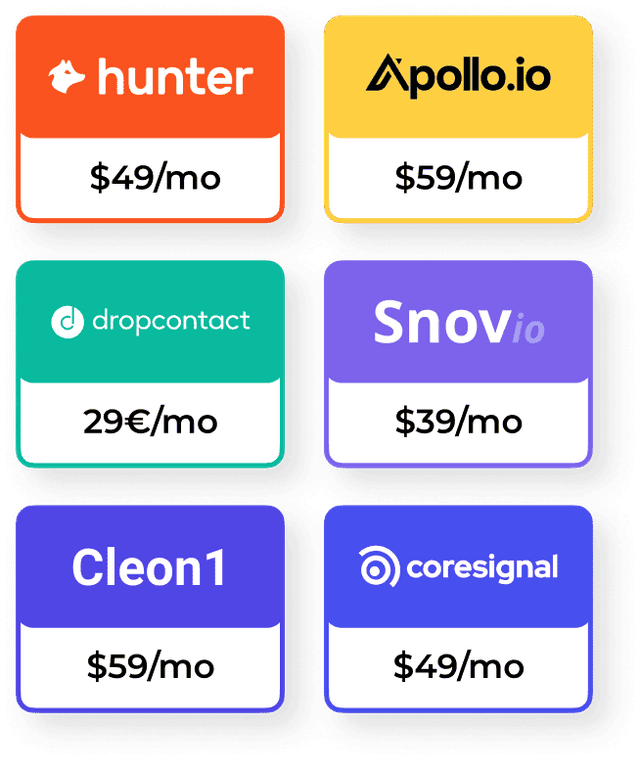
LeadContact integrates leading enrichment tools to deliver more accurate contact data—without paying for each one.


Great conversations start with the right contact.
It’s time to find yours.