
Charles Rodde, PhD
Co-founder
About
I initially worked 4 years as a researcher in the aquaculture sector, investigating mainly two topics that were 1) substituting fish meal and oil in farmed fish diet and 2) developing methods to estimate and select for individual feed efficiency in fish. Once my PhD completed, I decided to join the insect industry as a nutrition R&D manager in Malaysia. My conviction is that insect farming is the most powerful solution to make aquaculture, and more generally world food production, more sustainable. My work mainly focuses on black soldier fly nutrition and zootechny at larval stage. I develop and implement research projects but also provide technical support and expertise at industrial scale. Moreover, I investigate innovative applications of insect products in fish farming. I am currently open to new collaborations!
Malaysia
Greater Kuala Lumpur
Farming
Administration, Gestion budgétaire, Insect farming, Data science, Research and development, Project management, Nutrition mouche soldat noire, Zootechnie mouche soldat noire, Analyse prédictive, Simulation performances économiques, Formulation nutritionnelle, Phénotypage de précision, Génétique, Nutrition aquacole, Gestion de projets, Travail d’équipe, Gestion du stress, Puissance de travail, Programmation, Résolution de problèmes
Experience

Co-founder
Mandible Agritech Sdn. Bhd.
Région métropolitaine de Kuala Lumpur

Elected member (treasurer) of AFFIA Executive Committee
AFFIA: ASIAN FOOD & FEED INSECT ASSOCIATION

Région métropolitaine de Kuala Lumpur
Elected member of the Executive Committee of the Asian Food & Feed Insect Association. Initially vice-treasurer from 2022 to 2024, then treasurer. Key responsibilities: -Ensuring the association's financial health by optimising the revenue-cost balance. -Participating in strategic decision-making for the association’s policy. -Leading the scientific program of the annual Asian Insect Industry and Research Forum, the association’s flagship event and key revenue-generating initiative.
R&D Manager
ENTOFOOD
Région métropolitaine de Kuala Lumpur
My role focused on designing, managing, and deploying R&D projects related to nutrition and production performance of black soldier fly (BSF) larvae, with a strong emphasis on industrial applicability and technology transfer to production facilities. On the nutrition side, I optimised larval diets to maximise growth performance, product quality, and farm profitability. This included the industrial validation of new ingredients, taking into account nutritional value, cost, regulatory compliance, and supply constraints. I also designed and deployed industrial-scale feed formulations adapted to different larval development stages, based on locally available raw materials. In parallel, I quantified nitrogen flows at farm level and developed operational solutions (ingredient selection, probiotics) to reduce gaseous nitrogen emissions, supporting environmental performance and occupational safety requirements. From a production perspective, I optimised key rearing parameters (feeding rate, larval density) to support data-driven operational decisions and improve overall production efficiency. Beyond insect production, I delivered technical analyses to support positioning and commercial strategy for insect-derived products in aquaculture. Key outcomes: -Increased larval growth by ~20%, improving throughput and unit production costs -Reduced gaseous nitrogen emissions by 30% through nutritional and process optimisation -Introduced new raw materials enabling a doubling of insect farm production capacity -Developed an automated feed formulation tool for BSF -Built a predictive model to forecast larval growth and proximate composition based on diet -Advanced the definition of mineral requirements in BSF larvae -Published an industry-facing article on the nutritional value and health benefits of BSF oil (https://www.feedandadditive.com/digital-magazines/Alternative_Proteins/April2023/48/) -Delivered technical presentations at interprofessional and scientific conferences
Doctorant/PhD student
CIRAD / WorldFish / Ifremer
Région de Montpellier, France/Malaisie
PhD -Selective breeding for individual feed efficiency in aquaculture. In partnership with CIRAD, Ifremer (France), and WorldFish (Malaysia) I focused on improving individual feed efficiency in European sea bass and Nile tilapia by developing selective breeding strategies applicable at industrial scale. Improving feed efficiency reduces feed costs and environmental impact in aquaculture, but is technically challenging due to the difficulty of measuring individual feed intake in group-reared fish. The research addressed this challenge through two complementary approaches: 1) Developing practical methods to estimate individual feed efficiency that can be implemented in large-scale breeding programs. 2) Identifying indirect phenotypic traits that reliably predict feed efficiency and are easier to measure and select for. The work was conducted on two biologically contrasting species to ensure that the proposed breeding strategies were robust and transferable across fish species. Experimental trials were carried out at Ifremer (France) for European sea bass and in Malaysia for Nile tilapia, with the support of WorldFish. This project also involved technology transfer in selective breeding from France to Malaysia and the management of a team of ten aquaculture workers during research trials. This work delivered practical solutions to drastically reduce the constraints associated with selective breeding for feed efficiency. In Nile tilapia, results enabled a reduction of approximately 85% in both the cost and duration of selective breeding programs, making the trait realistically improvable under commercial breeding conditions. In European sea bass, the project led to the identification of the most feed-efficient natural population, providing a strong basis for immediate genetic improvement strategies. The results were validated through peer-reviewed scientific publications, ensuring methodological robustness while supporting technology transfer and industry adoption.
Stagiaire recherche/Research internship
Ifremer
Palavas-les-Flots
L’objectif de ce stage était d’évaluer l’impact de sources alternatives de protéines et de lipides dans l’alimentation du bar européen sur les performances zootechniques. Ce travail s’inscrivait dans le programme NINAqua ("Nouveaux ingrédients pour de nouveaux aliments aquacoles"), un projet collaboratif réunissant Ifremer, INRAE, l’Institut Pasteur et des industriels producteurs de matières premières et d’aliments pour animaux, avec Le Gouessant Aquaculture comme leader du consortium industriel. L’objectif était d’identifier des ingrédients plus durables que les farines et huiles de poisson, en vue de leur remplacement total dans les aliments aquacoles. Les sources alternatives testées comprenaient des végétaux terrestres, des protéines animales transformées, de la spiruline, des extraits de levure et des hydrolysats d’insectes (mouche soldat noire). Les extraits de levure et les hydrolysats d’insectes se sont révélés les plus prometteurs, avec les meilleures croissances et indices de conversion alimentaire. The objective of this internship was to assess the impact of alternative protein and lipid sources in the diet of European sea bass on zootechnical performance. This work was conducted within the NINAqua program ("New Ingredients for New Aquaculture Feeds"), a collaborative project involving Ifremer, INRAE, the Institut Pasteur, and industrial partners producing raw materials and animal feeds, with Le Gouessant Aquaculture leading the industrial consortium. The aim was to identify more sustainable alternatives to fish meal and fish oil, with the goal of their complete replacement in aquaculture feeds. The alternative protein sources evaluated included terrestrial plant ingredients, processed animal proteins, spirulina, yeast extracts, and insect hydrolysates (black soldier fly). Yeast extracts and insect hydrolysates showed the most promising results, achieving the highest growth rates and best feed conversion ratios.
Stage d'observation/Observation internship
Moulin de Barzeix
Thalamy (Corrèze)
Le but de ce stage était d'étudier le fonctionnement global d'une exploitation piscicole produisant des salmonidés d'eau douce : truite arc-en-ciel, truite fario, omble de fontaine. The objective of this internship was to study the operations of a freshwater farm rearing salmonids: rainbow trouts, brown trouts, brook trouts.
Stagiaire recherche/Research intern
CNRS
Villiers-en-Bois
Thématique de recherche : Etude de l'ontogenèse des aptitudes de plongée et de chasse des jeunes éléphants de mer, de leur survie lors de leur première migration, et des causes de mortalité précoce de ces derniers. Travail réalisé au sein de l'équipe "Prédateurs marins" du centre d'études biologiques de Chizé, encadré par Christophe Guinet, dans le cadre du programme de recherche européen "Early life" portant sur l'écologie des mammifères marins lors de leur première année de vie. Compétences développées : programmation de scripts de manipulation de plusieurs millions de données, analyse statistique et visualisation de ces dernières sur les logiciels R et Matlab. Research topic: Study of the ontogenesis of the diving and hunting skills of the young elephant seals, of their survival over their first migration, and of the causes of premature mortality. Work conducted within the team “Marine predators” at the Centre for biological studies of Chizé, supervised by Christophe Guinet, as part of the European research program “Early life” focused on the marine mammals ecology during the first year of their life. Improved skills: computer programming to develop scripts for big data management and curation (millions of data), statistical analysis and visualisation of these data using R and Matlab.

Bénévole/Volunteer
NatureScot
Beinn Eighe
Participation au travail de gestion d'une réserve naturelle situé dans les Highlands en Ecosse. Conduite d’inventaires de la biodiversité locale : espèces d’insectes, essences d’arbres, et comptage par observation directe des populations de cerfs élaphes. Involvement in the management of a natural reserve located in the Highlands (Scotland). Monitoring of the local biodiversity by conducting inventories: insect species, tree species, and direct observation counting of the red deer populations.
Education

L'Institut Agro Rennes-Angers
Agronomie
Cursus "Agronome", spécialité "Sciences halieutiques et aquacoles", option "Aquaculture". Agronomy curriculum, with a specialisation in fisheries and aquaculture sciences.

University of Montpellier
Sciences agronomiques/Agricultural sciences
Charles Rodde, PhD's Contact Information
Phone
Find the Right Leads
Find Verified Contact Data

What LeadContact does well
Find verified emails, phone numbers, and decision-makers with 98% accuracy.

Find Leads
Find the right people by company, role, industry, location, and more.
925M+ professional profiles


Find Emails
Access verified email addresses for your target contacts.
657M+ emails


Find Phone Numbers
Get cross-validated phone data from multiple top sources.
239M+ phone numbers

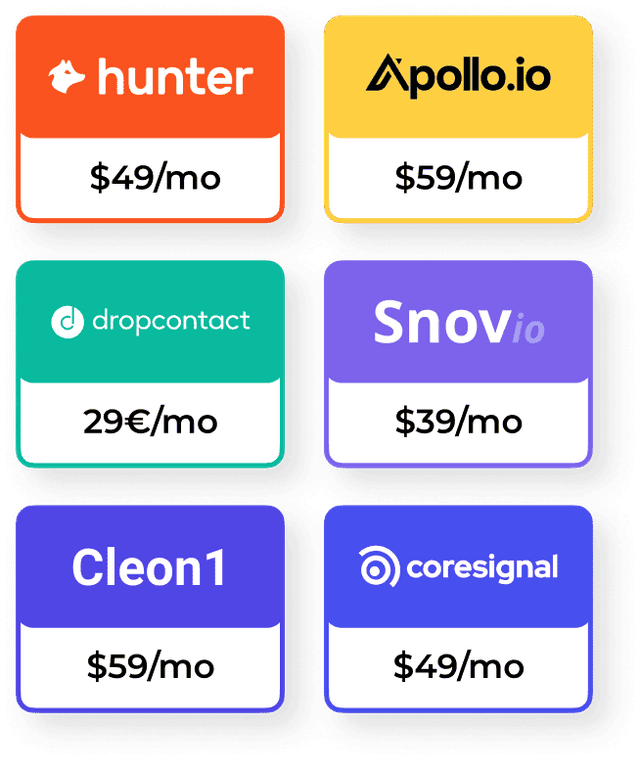
More Accurate. Lower Cost.
Find contact data in 1 tool with 98% accuracy
LeadContact integrates leading enrichment tools to deliver more accurate contact data—without paying for each one.


Great conversations start with the right contact.
It’s time to find yours.