Alexander Castillo
Mechanical Design Engineer - Exteriors @ Tesla
About
I’m a Mechanical Design Engineer at Tesla, working on exterior trim pieces. I have an intense passion for engineering, so I jump at any opportunity to learn and enjoy teaching when I can, both to help others and to continue growing myself. I have experience investigating the properties of 2D semiconducting materials, contributing to solar car and boat racing teams, designing experimental subsystems to test superconducting materials for next-generation particle accelerators, and providing solutions for products in the defense industry. With each of my projects, there have been complex and challenging problems that often pushed me out of my comfort zone, but they also gave me some of my best learning experiences and the chance to collaborate with amazing people. Whatever my next project may bring, I’m excited for the opportunity to grow as an engineer.
United States
San Francisco Bay Area
Automotive
Plastic Part Design, CATIA, Engineering, Project Management, Research, Analytical Skills, Problem Solving, AutoCAD, Geometric Dimensioning & Tolerancing, Design for Manufacturing, MATLAB, C++, Python (Programming Language), Nanomaterials, Inventor, Solid Edge, CAD
Experience

Mechanical Design Engineer - Exteriors
Tesla

Fremont, CA

Mechanical Engineering Intern
L3Harris Technologies
Santa Rosa, California, United States
Mechanical Engineering Intern
L3Harris Technologies
Santa Rosa, California, United States
Mechanical Design Lead | BERKlean (T-PREP Maker Design Studio Project)
UC Berkeley College of Engineering
Berkeley, California, United States
BERKlean Maker Design Studio (MDS) project was part of a 3 week intensive short-course for incoming Berkeley Engineering transfer students. The goal of the MDS course was to teach students to rapidly ideate, design and prototype innovative engineering systems by implementing the “Sprint" design process. In the process students would also gain an understanding of how to approach societal-scale problems and develop skills in hardware sensing/actuation and data analysis. Each team was given six problems to chose from: Smart Energy & Environment Smart Mobility , Smart Water, Smart Health, Smart Structures, Smart Security . My team decided that with the pandemic it would interesting to focus on health and sanitation especially for those in our community that lack appropriate access. Considering it was to only be a prototype we decided to narrow our scope to Berkeley and its high-density urban environment. We eventually decided on a smart handwashing station and looked into prior ventures and determined what we believed went wrong with the design and implementation. We also contacted stakeholders in the community including the City of Berkeley, officials from the local transit systems (AC Transit and BART) and nonprofits that focus on the homeless. After the information collecting and determining what capabilities we wanted from the station I was tasked with the mechanical deign of the station. I also had determine the best way to accommodate the sensors and electronics and provide a functional modular system with future enhancements in mind. The end result was the BERKlean handwashing that is capable of tracking and reporting water/soap levels and current location. With its design it should provide an easily repairable and cheaper alternative than the for profit competitors currently on the market.

Mechanical Engineering Intern
SLAC National Accelerator Laboratory
Menlo Park, California, United States
In particle accelerators, particle beams are accelerated with the use of radio frequency (RF) cavities. The size and shape of each cavity is vital as these factors determine the cavities desired resonant frequency. The RF cavities function by first accepting an input RF pulse which is then amplified by the cavity and used to accelerate or maintain the speed of charged particles as they transition from one cavity to the next. The RF pulses also cause local heating, which in turn produces stress on the cavity that results in deformities such as dislocations to develop in the material. For the purpose of investigating these imperfections as they form in superconducting materials used in superconducting radio frequency cavities (SRF), the group I was working with is developing the Cryogenic RF-pump / X-ray Probe (C-RFX) instrument. For my portion of the project, I prepared CAD models and drawings for the Experimental Arm a mechanical representation of a subsystem in the C-RFX. The experimental arm was made to test two sets of mechanical adjusters that would both theoretically provide the same 100 micron resolution when under vacuum. This will allow the team to gain an understanding of any necessary alterations and considerations that will go into the final C-RFX and the potential insights that would be acquired from use of the C-RFX could then assist in the development of new cavities with improved efficiency and higher acceleration gradients. Throughout the project I worked with a team of scientists from an assortment of disciplines that provided input on different aspects of the instrument. I would then have to determine if their requests were feasible and how they would be reflected in the experimental arm. Throughout the process I also consulted with manufacturers to see what changes I could perform to make some of the more complex parts easier to machine. By the end I manged to finalize the design of the experimental arm and prepare it for manufacturing.

Treasurer | Society of Hispanic Professional Engineers (SHPE) California Solar Regatta Team
San Joaquin Delta College
Stockton, California, United States
The California Solar Regatta is an event funded by the Sacramento Municipal Utility District (SMUD) to promote innovation and renewable energy. Each years teams from across the state come together to compete in two events one for colleges and the other for high schools. These events have subcategories focused on innovation, performance and design.The team I worked with represented my community college's chapter of The Society of Hispanic Professional Engineers (SHPE). When I entered the project the team had been on a one year hiatus that left the boat in a state of disrepair and behind our competitors. The first year (2019) I participated we made the decision as a team to not start from scratch as this might hurt us in one of the reuse, reduce, recycle categories, so instead we decided to modify and repair what we could. Once the boat was operating we tested it and realized it had a large turning radius and that there was a significant amount of drag caused by the outriggers. Since I was one of the members that examined the boat on its first test run I lead the reshaping of the outriggers so they would only support the boat when cornering and thus minimize drag on the long straight stretches of the race. I also helped install a centerboard that reduced our turning radius from around 25ft to less than 3ft. That gave us the best maneuverability in the entire competition and would have allowed us to win the slalom race had it not been for one of our competitors compensating for their lack of maneuverability with greater speed. The second year (2020) I worked on the research and acquisition of new parts by determining if they were compatible with what we planned and if their improved performance was worth the expense. Unfortunately the pandemic prevented us from racing the improved boat.

Materials Science Research Intern
Center for Energy Efficient Electronics Science
Berkeley, California, United States
For this internship I worked with the Zettl Research group and studied atomically-thin two-dimensional crystals. My main focus was on using mechanical exfoliation to produce mono- and few-layer flakes from bulk crystals and then use an optical microscope to locate and measure samples to determine if they met size and layer requirements. I then prepared the samples for electron-beam lithography were we would etch the design of the electrical devices used to test the material properties of the crystals. The main materials we were studying at the time were transition metal dichalcogenides (TMD) which display semiconducting properties with the characteristics of the band gap changing based on the layers of the material. The goal was to identify more 2D nano-materials and add them to the expanding inventory for future exploitation in flexible transparent energy efficient electronics.
Education
University of California, Berkeley
Mechanical Engineering
University of California, Berkeley
Mechanical Engineering

San Joaquin Delta College
Electrical Engineering | Mechanical, Aerospace, and Manufacturing Engineering
Alexander Castillo's Contact Information
Phone
Find the Right Leads
Find Verified Contact Data

What LeadContact does well
Find verified emails, phone numbers, and decision-makers with 98% accuracy.

Find Leads
Find the right people by company, role, industry, location, and more.
925M+ professional profiles


Find Emails
Access verified email addresses for your target contacts.
657M+ emails


Find Phone Numbers
Get cross-validated phone data from multiple top sources.
239M+ phone numbers

More Accurate. Lower Cost.
Find contact data in 1 tool with 98% accuracy
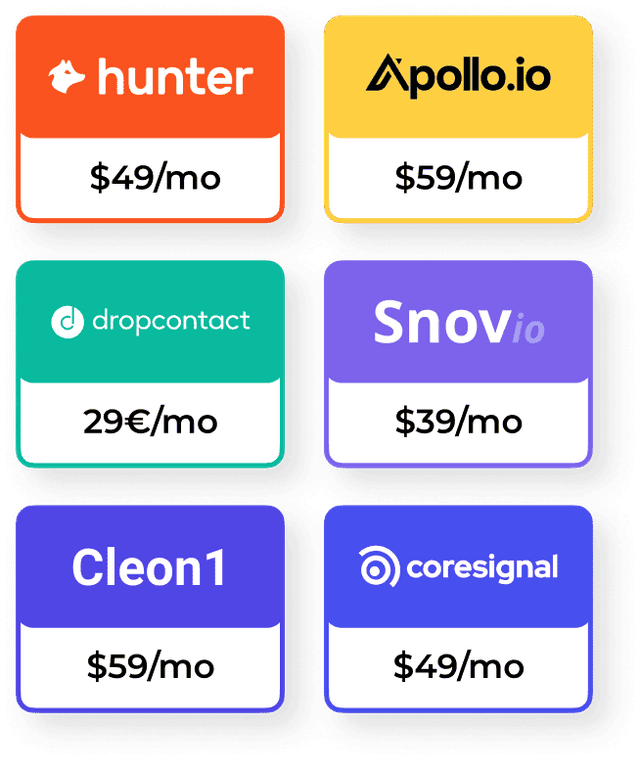
LeadContact integrates leading enrichment tools to deliver more accurate contact data—without paying for each one.

Great conversations start with the right contact.
It’s time to find yours.